
Overview
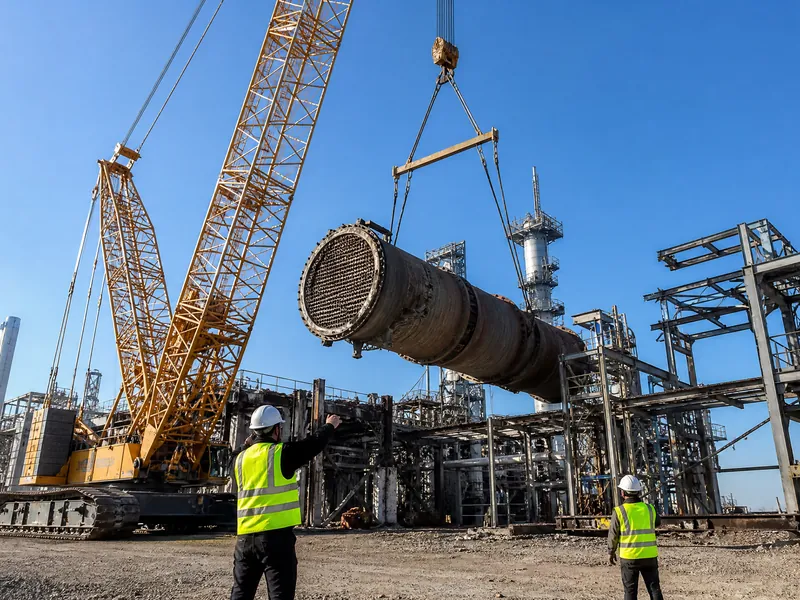
Our crews navigate complex networks of process piping, storage tanks, and contaminated soil to eliminate environmental liabilities. We deploy specialized containment systems to prevent airborne dispersion while extracting heavy metals, volatile organic compounds, and legacy insulation materials. Every phase of the abatement process is meticulously engineered to protect site personnel and surrounding communities from exposure. By integrating environmental remediation directly into the dismantling sequence, we prevent cross-contamination and keep facility closures moving forward without regulatory delays.
The work
Isolating Toxic Compounds Within Heavy Manufacturing Infrastructure
Heavy industrial facilities often conceal layers of toxic substances accumulated over decades of continuous operation. Before any heavy machinery can begin crushing concrete or shearing steel, our crews must establish absolute control over these hidden liabilities. We construct negative pressure enclosures around highly contaminated zones, utilizing industrial-grade high-efficiency particulate air filtration units to scrub the exhaust. This rigorous isolation prevents microscopic hazards from migrating into clean areas or escaping into the surrounding environment. Workers wearing advanced respiratory protection and impermeable suits meticulously strip away dangerous coatings, sealants, and insulation materials from structural members. The extracted substances are immediately sealed within specialized, leak-proof containers to eliminate any possibility of secondary exposure. By systematically clearing these hazards room by room, we transform a highly dangerous environment into a clean shell ready for aggressive mechanical demolition. This methodical approach ensures that subsequent dismantling activities do not inadvertently release trapped toxins, protecting both the workforce and the local ecosystem.
Method and sequence
Extracting Volatile Organics From Abandoned Process Piping
Refineries and chemical processing plants rely on intricate networks of piping that inevitably retain volatile organic compounds long after operations cease. Draining these systems is rarely sufficient, as viscous sludges and hardened residues cling stubbornly to interior surfaces and valve assemblies. Our technicians employ high-pressure hydro-blasting and specialized chemical flushing techniques to scour the internal geometry of these complex networks. We capture all effluent generated during this process, routing it into temporary holding vessels for rigorous characterization and subsequent neutralization. When dealing with highly reactive or flammable remnants, we introduce inert gases into the piping to displace oxygen and eliminate the risk of spontaneous combustion during cutting operations. Flanges are carefully unbolted rather than torched, and open ends are immediately capped and sealed.
- Cold cutting techniques prevent ignition of residual vapors.
- Continuous atmospheric monitoring detects invisible gas accumulations.
- Spill containment berms capture any unexpected fluid releases.
This exhaustive purging process is absolutely critical for preventing explosions when excavators eventually shear through the metal framework.
Supporting trades
Other capabilities we bring to a site
Asset Recovery
Industrial Demolition USA provides comprehensive asset recovery services as an integrated component of our…
Scrap Metal Recovery
Industrial Demolition USA executes large-scale scrap metal recovery as a fundamental part of our heavy…
Concrete Crushing & Recycling
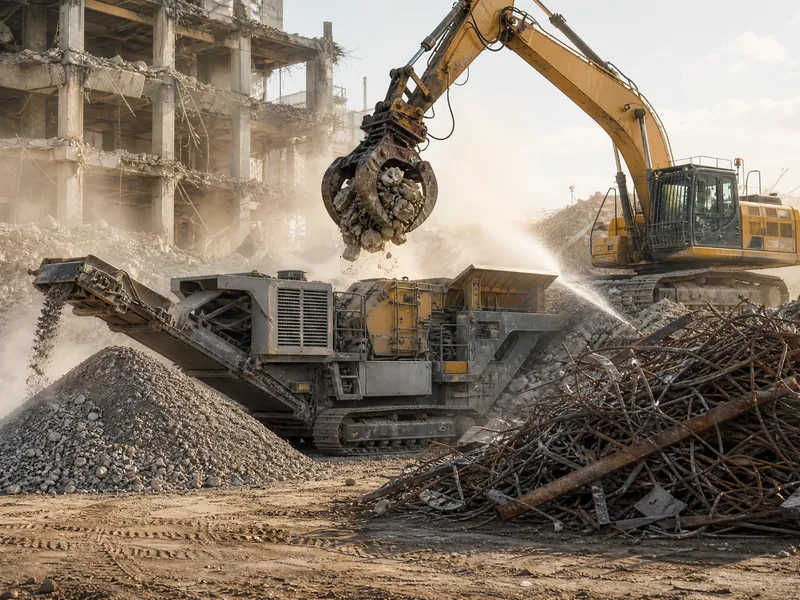
Industrial Demolition USA provides high-capacity concrete crushing and recycling services to support our heavy…
Hazards and controls
Containing Airborne Particulates During Structural Dismantling Operations
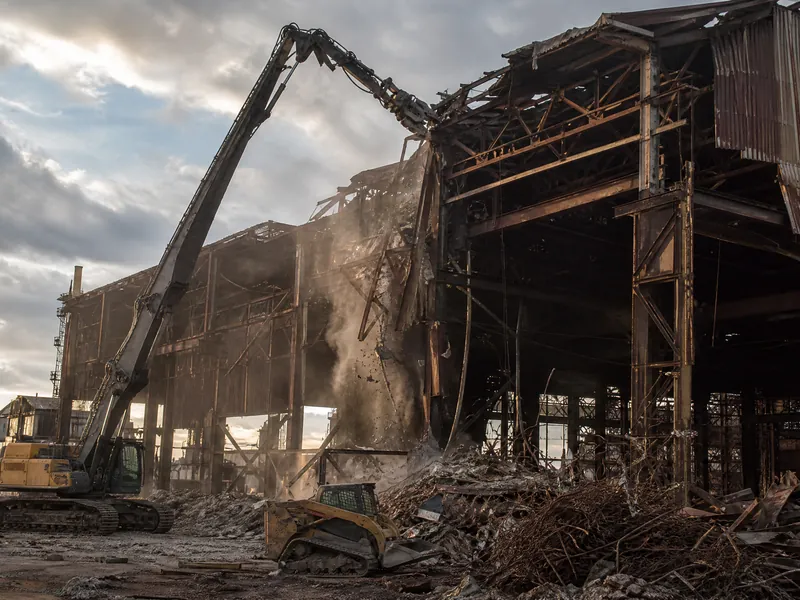
The physical destruction of industrial buildings inherently generates massive quantities of dust, which becomes a severe liability when the structure contains legacy hazardous materials. To combat this, we deploy aggressive dust suppression and particulate capture systems throughout the active abatement zones. High-capacity misting cannons project atomized water droplets that bind with airborne contaminants, forcing them to drop harmlessly to the ground where they can be collected. In areas where water usage must be restricted due to reactive chemicals, we utilize localized vacuum extraction systems positioned directly at the point of work. These units capture debris the exact moment it is dislodged from the substrate. We also apply specialized encapsulating polymers to friable surfaces, locking down loose fibers and preventing them from becoming airborne. Continuous perimeter air monitoring stations provide real-time data on particulate concentrations, ensuring our containment strategies remain effective under changing wind conditions. This relentless focus on atmospheric control prevents hazardous dust from migrating beyond the property line.
Permits and notification
Neutralizing Corrosive Residues In Industrial Storage Tanks
Decommissioning massive storage tanks requires confronting the highly corrosive and toxic sludges that accumulate at the bottom over years of industrial use. These vessels cannot simply be cut apart while containing concentrated acids, caustic bases, or heavy petroleum bottoms. Our crews initiate the process by establishing secure access points and deploying intrinsically safe pumping systems to extract the bulk liquids. We then introduce neutralizing agents specifically formulated to counteract the chemical properties of the remaining residue, rendering it stable enough for manual extraction. Technicians enter these confined spaces under strict atmospheric monitoring, utilizing specialized squeegees and vacuum trucks to remove the final layers of hardened sludge. The interior surfaces are subsequently pressure washed and tested to verify that all corrosive threats have been eliminated. Only after the tank is certified completely clean do we authorize the use of thermal cutting torches or hydraulic shears to dismantle the steel shell. This careful sequencing prevents dangerous chemical reactions.
Salvage and recovery
Managing Heavy Metal Contamination In Subsurface Structures
Industrial operations frequently leave behind a legacy of heavy metal contamination that permeates concrete foundations, trenches, and subsurface soil. Lead, cadmium, and chromium can leach deep into porous materials, requiring aggressive remediation strategies before the site can be repurposed. We utilize specialized scarifying equipment to mill away the contaminated surface layers of concrete floors, capturing the resulting dust in sealed vacuum systems. When the contamination extends into the underlying soil, our excavators carefully remove the impacted earth in precise layers, guided by continuous soil sampling and laboratory analysis. This targeted excavation prevents the unnecessary removal of clean soil while ensuring that all hazardous metals are completely eradicated. The excavated material is stabilized using proprietary chemical binders that prevent the metals from leaching, allowing for safer handling and transport. We also dismantle and extract underground storage tanks and their associated piping, meticulously inspecting the surrounding excavation for historical leakage. By thoroughly addressing these subsurface liabilities, we deliver a clean site ready for future development.
Logistics
Sequencing Abatement To Accelerate Facility Teardown Timelines
Integrating hazardous material abatement with heavy structural demolition requires precise logistical coordination to maintain project momentum. Treating these two phases as entirely separate operations often leads to severe delays and escalating costs. Instead, we sequence our abatement teams to work just ahead of the heavy demolition crews, creating a continuous flow of cleared structures ready for immediate teardown. As soon as a specific unit is certified free of hazardous materials, the excavators move in to bring it down, while the abatement technicians advance to the next zone. This staggered approach maximizes site utilization and drastically reduces the overall project timeline. We also identify opportunities to recover valuable metals and machinery during the abatement phase. Any uncontaminated copper, aluminum, or specialized alloys we extract can be processed for a salvage credit, which directly reduces the net cost of the overall demolition project. By seamlessly blending environmental remediation with aggressive dismantling, we provide a highly efficient solution for retiring complex industrial assets.
Service lines
Demolition work this supports
Common questions
Questions owners and engineers ask
What methods are used to prevent toxic dust from escaping the site?
We establish absolute atmospheric control using negative pressure enclosures and industrial-grade high-efficiency particulate air filtration systems. These units continuously scrub the air within the work zone, capturing microscopic hazards before they can migrate. Additionally, we deploy atomized misting cannons and localized vacuum extraction at the point of work to suppress and collect particulates the moment they are generated. Continuous perimeter monitoring ensures these containment strategies remain effective throughout the project.
How do you prepare highly flammable storage vessels for dismantling?
Vessels containing flammable residues undergo a rigorous purging and neutralization process before any cutting occurs. We extract all bulk liquids and sludges using intrinsically safe pumping equipment, then flush the interior with specialized chemical agents. To eliminate the risk of spontaneous combustion, we introduce inert gases to displace oxygen within the tank. The atmosphere is continuously monitored, and we rely exclusively on cold cutting techniques until the vessel is certified vapor-free.
Can valuable equipment be recovered from highly contaminated zones?
Yes, our crews are trained to carefully decontaminate and extract valuable machinery and alloys from hazardous areas. We meticulously clean these assets to meet strict environmental standards before removing them from the containment zone. The value of these recovered materials is then applied as a salvage credit, which reduces the net cost of the overall facility closure. This recovery process is seamlessly integrated into the abatement sequence to maintain project efficiency.
What happens to the hazardous substances once they are extracted?
Extracted substances are immediately sealed within specialized, leak-proof containers directly at the point of removal to prevent any secondary exposure. These containers are rigorously labeled and staged in secure, temporary holding areas on site. We coordinate with specialized transport logistics to move these materials to licensed treatment and processing facilities. Every step of this chain of custody is meticulously documented to ensure absolute compliance with all environmental regulations.
How do you address toxic chemicals that have soaked into concrete foundations?
When toxic chemicals or heavy metals permeate porous concrete, surface cleaning is insufficient. We deploy heavy-duty scarifying and milling equipment to physically grind away the contaminated upper layers of the foundation. This aggressive mechanical removal is performed under strict dust control protocols, capturing all contaminated debris in sealed vacuum systems. If the contamination has penetrated completely through the slab, we will break out and remove the affected concrete entirely.
Ready to price the teardown?
Eliminating toxic liabilities from aging manufacturing plants requires a contractor with specialized expertise and rigorous safety protocols. Industrial Demolition USA provides the technical capability to neutralize these threats and keep your facility closure on schedule. Contact us at 954-740-1983 or electricalequipmentbuyers@gmail.com to discuss your project requirements and request a comprehensive evaluation.