
Overview
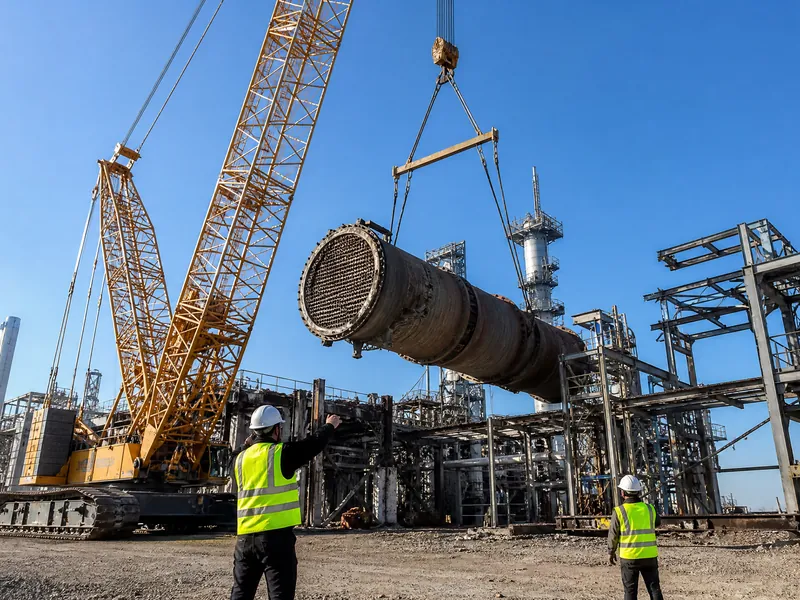
We manage the entire lifecycle of the wrecking project, from initial environmental abatement and site clearing to final concrete crushing and scrap metal recovery. Our project managers understand the specific logistical challenges of working in the Great Plains, including navigating active rail corridors and managing high wind exposures during elevated dismantling operations. We deploy specialized heavy equipment to safely bring down massive structures, ensuring that the footprint is left clean and ready for redevelopment or new industrial use.
The work
Dismantling Aviation And Manufacturing Facilities
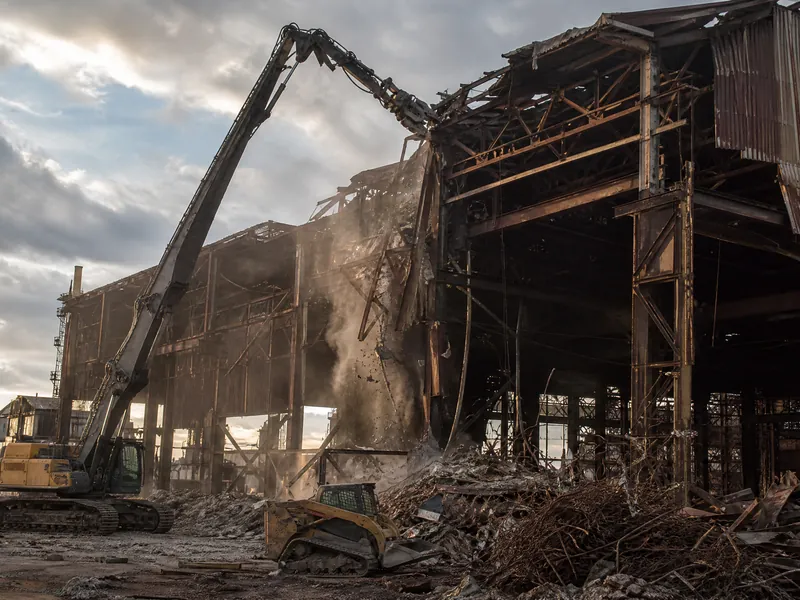
Wichita and the surrounding regions host a massive concentration of aviation manufacturing and heavy industrial assembly plants. Retiring these sprawling facilities requires precise dismantling techniques to protect adjacent active production lines. Our crews execute selective interior demolition and complete structural teardowns of wide-span hangars and specialized testing chambers. We systematically remove heavy overhead bridge cranes, massive structural steel trusses, and reinforced concrete foundations originally engineered to support immense dynamic loads.
The expansive clay soils prevalent across much of Kansas dictate our approach to foundation removal and site grading. When we extract deep concrete footings, the resulting voids must be properly managed to prevent future soil instability. We utilize heavy excavators equipped with hydraulic hammers to break apart these massive substructures. The resulting concrete rubble is crushed on-site to a specified aggregate size, providing a stable, engineered fill material that mitigates the effects of the expansive clay and prepares the site for immediate redevelopment.
Method and sequence
Retiring Grain Elevators And Food Processing Plants
Agricultural infrastructure forms a significant portion of the industrial landscape throughout the state. Decommissioning towering concrete grain elevators and large-scale food processing plants presents unique engineering challenges. These structures are often heavily reinforced and situated in tight clusters along active rail lines, demanding controlled demolition methods to prevent damage to neighboring silos. We deploy high-reach excavators and specialized concrete processing attachments to systematically reduce these monolithic structures from the top down, eliminating risks associated with uncontrolled collapse.
Food processing facilities require rigorous environmental remediation before structural demolition can commence. We handle the safe removal of residual organic materials, ammonia refrigeration systems, and specialized processing equipment. Our abatement teams strip out miles of stainless steel piping and insulated paneling. The structural steel and non-ferrous metals recovered during this phase are segregated and processed for scrap metal recovery. The salvage value of these materials is applied as a credit, directly offsetting the client's net cost for the overall demolition project.
Local coverage
Cities we work in across Kansas
Hazards and controls
Decommissioning Power Generation And Utility Infrastructure
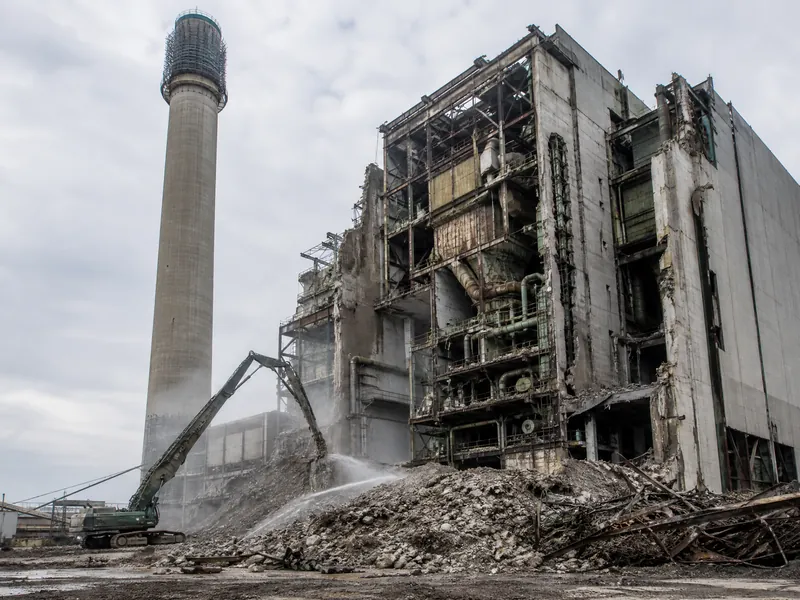
As the regional energy grid evolves, utility operators are retiring aging coal-fired power plants and outdated gas generating units. Tearing down these massive industrial complexes involves the systematic dismantling of towering exhaust stacks, massive boiler units, and heavy turbine halls. Our project managers engineer detailed rigging and lifting plans to safely lower massive steel components to the ground for processing. We utilize specialized torch cutting techniques and heavy hydraulic shears to process the heavy structural steel comprising these generating facilities.
The physical environment of the Great Plains heavily influences our execution strategy for these elevated teardowns. High wind loads and severe weather exposure require strict adherence to engineered safety protocols during crane operations and high-reach demolition. We continuously monitor meteorological conditions and adjust our dismantling schedules to ensure the safety of our crews. Furthermore, the proximity of these plants to major waterways like the Missouri River necessitates stringent runoff control measures during the demolition and site clearing phases.
Sequence of work
How a project runs, stage by stage
Site walk and survey
We walk the structure with you, review drawings, and record structural condition, live utilities, hazardous materials and salvageable assets before any number is quoted.
Engineering and permits
An engineered demolition plan sets the sequence, exclusion zones and means of collapse. We file local permits and the federal pre-demolition notification, and collect utility isolation sign-offs.
Abatement and pre-clean
Regulated materials come out first under containment with clearance documentation, so the structural phase is never held up by a surprise inside a wall or a pipe chase.
Dismantling and teardown
High-reach machines, shears, torch crews and hand demolition work the sequence top-down or inside-out, with salvage separated as it comes out rather than picked from a mixed pile afterwards.
Processing and haul-off
Steel is sheared and shipped, concrete is crushed for reuse or hauled, and every regulated stream leaves under manifest to a permitted facility.
Grading and closeout
Foundations and slabs come out to the agreed depth, the site is graded and stabilised, and you receive manifests, clearance reports and closeout documentation.
Permits and notification
Navigating KDHE Regulations And Environmental Compliance
Executing heavy industrial demolition requires strict adherence to state and federal environmental regulations. Before any structural teardown begins, we coordinate with the Kansas Department of Health and Environment (KDHE) to ensure all environmental remediation protocols are fully satisfied. This includes managing the mandatory federal NESHAP 10-working-day notification for asbestos abatement, which must be filed and approved prior to the commencement of any wrecking activities. Our compliance teams handle all necessary documentation, ensuring that the project proceeds without regulatory delays.
In addition to state-level oversight, we manage the complex web of local permitting required by municipalities like Wichita and Kansas City. This involves securing city or county demolition permits and coordinating with local utility providers to obtain official disconnect sign-offs for high-voltage electrical lines and high-pressure gas mains. By meticulously managing the regulatory framework, we keep the demolition schedule on track and shield the facility owner from potential compliance liabilities.
Salvage and recovery
Managing Scrap Metal Recovery And Logistics
The vast distances and logistical realities of the region dictate our approach to material handling and asset recovery. We process massive volumes of structural steel, copper wiring, and heavy industrial machinery directly on the demolition site. Our operators use mobile shears and balers to prepare the scrap metal to the exact specifications required by regional steel mills. By maximizing the density of the processed scrap, we optimize freight efficiency and reduce transportation costs across the extensive highway and rail networks.
Access to major rail corridors, such as those operated by BNSF and Union Pacific, provides a significant logistical advantage for moving heavy scrap and demolition debris. When a facility features an active rail spur, we can load processed steel directly into gondola cars, bypassing the limitations of over-the-road trucking. This rail integration is particularly valuable when decommissioning massive power plants or cement operations, where the sheer tonnage of recovered metal would otherwise require hundreds of truckloads.
Logistics
Concrete Crushing And Site Preparation Strategies
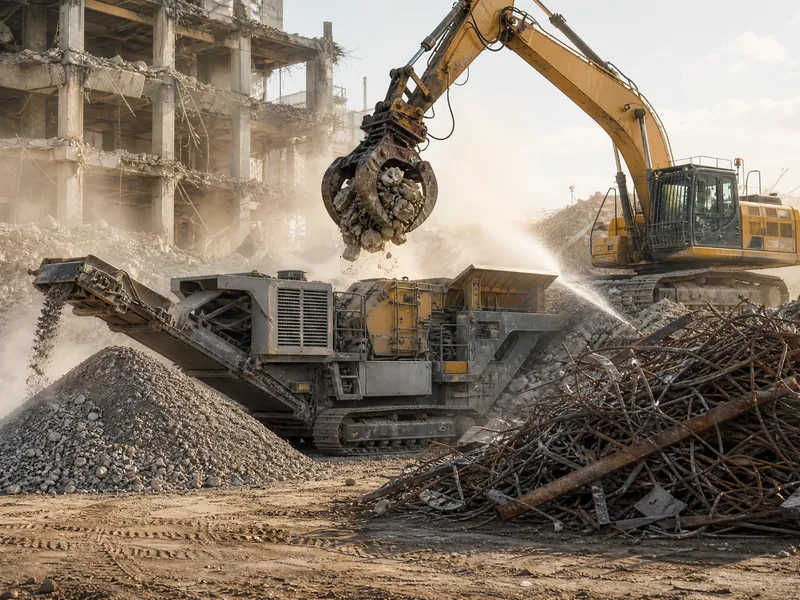
Heavy industrial facilities are built upon massive concrete foundations, deep piers, and thick reinforced slabs. Extracting and processing this material is a critical phase of the site clearing process. We deploy heavy tracked crushers and screening plants directly to the project site, transforming monolithic concrete structures into reusable aggregate. This on-site processing eliminates the need to haul thousands of tons of concrete debris to distant landfills, significantly reducing the environmental impact and logistical complexity of the demolition project.
The crushed concrete serves a vital role in preparing the site for its next phase of life. In areas prone to expansive clay soils, the engineered aggregate provides a stable, predictable base for new construction. We use the crushed material to backfill deep basement voids and the massive craters left behind by foundation removal. By grading the site with this recycled aggregate, we deliver a clean, level footprint that is immediately ready for industrial redevelopment, saving the client the substantial cost of importing virgin fill material.
Common questions
Questions owners and engineers ask
What methods are used to dismantle towering grain elevators?
We primarily utilize high-reach excavators equipped with specialized concrete processing jaws to systematically chew down towering grain elevators and concrete silos. This top-down approach eliminates the unpredictable risks associated with explosive implosion or uncontrolled felling. By carefully nibbling away the reinforced concrete, we maintain strict control over the debris field, which is crucial when these structures are located near active rail lines or neighboring agricultural processing facilities.
How do high wind conditions affect elevated teardown schedules?
The severe wind loads common across the Great Plains require constant meteorological monitoring during any elevated dismantling operation. We establish strict wind speed thresholds for crane lifts, high-reach excavator deployment, and torch cutting at height. When wind speeds exceed our engineered safety margins, we temporarily halt elevated work and shift our crews to ground-level processing, interior abatement, or concrete crushing to maintain project momentum without compromising site safety.
Are utility disconnects handled before the wrecking begins?
Absolutely, securing official utility disconnect sign-offs is a mandatory prerequisite before any structural demolition commences. Our project managers coordinate directly with local utility providers to ensure that all high-voltage electrical feeds, high-pressure natural gas lines, and industrial water mains are physically severed and capped. This critical step protects our crews from catastrophic hazards and satisfies the strict permitting requirements enforced by local municipalities and county building departments.
Where does the processed structural steel go after removal?
The heavy structural steel, plate metal, and non-ferrous materials recovered from the site are processed and shipped to regional steel mills and specialized recycling foundries. We utilize mobile shears to cut the steel into specific dimensions that maximize freight density. Depending on the site's infrastructure, we transport the processed scrap via heavy-haul trucking or load it directly onto rail cars using active spurs, ensuring efficient delivery to the final processing destination.
Does the state require notification for asbestos removal?
Yes, the Kansas Department of Health and Environment (KDHE) strictly enforces the federal NESHAP regulations regarding asbestos abatement. We are required to file a formal 10-working-day notification prior to the start of any asbestos removal or structural demolition. Our environmental compliance team handles all the necessary paperwork and regulatory coordination, ensuring that the abatement process is fully documented and legally compliant before the heavy equipment begins the teardown.
Ready to price the teardown?
Industrial Demolition USA provides the heavy equipment, specialized labor, and engineering expertise required to execute complex industrial teardowns across the state. Facility owners and plant managers trust our crews to deliver safe, efficient site clearing and asset recovery. Contact our estimating team at 954-740-1983 or email electricalequipmentbuyers@gmail.com to discuss your upcoming decommissioning project.