
Overview
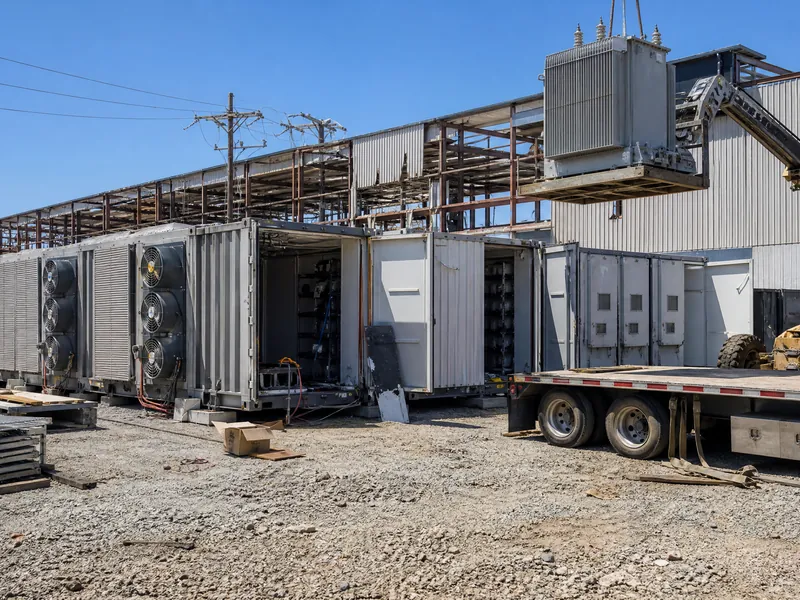
From towering recovery boilers and digesters to sprawling paper machine halls and chemical storage areas, we manage the entire wrecking process safely and efficiently. Our crews handle the complex environmental remediation, structural dismantling, and asset recovery required to clear the site for its next phase of development. We work closely with facility owners to execute a controlled deconstruction plan that maximizes salvage credit and minimizes disruption to any adjacent active operations.
The work
Phased Dismantling Of Pulp And Paper Manufacturing Facilities
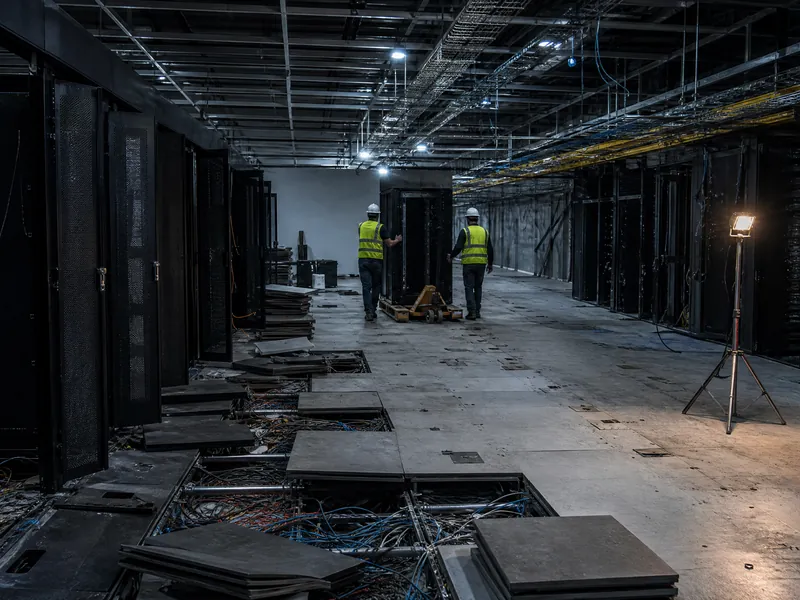
The dismantling of a paper mill is a highly sequenced operation that demands rigorous planning and execution. We begin with a comprehensive engineering survey to assess the structural integrity of the facility and identify all hazardous materials, including asbestos insulation, lead-based paints, and residual processing chemicals. Our project managers develop a phased deconstruction plan that prioritizes safety and environmental compliance at every step. This often involves isolating and de-energizing massive electrical systems, draining and purging miles of process piping, and establishing secure exclusion zones around active demolition areas.
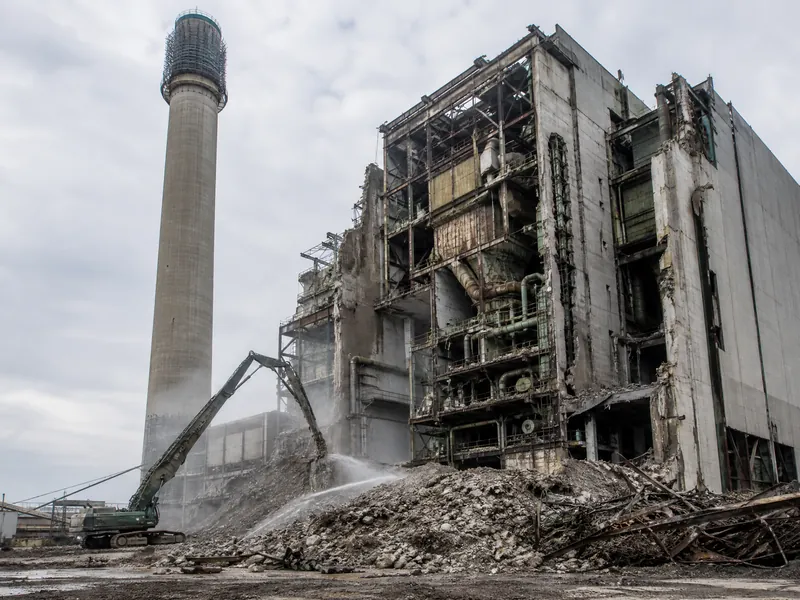
Once the site is prepped, our heavy equipment operators move in to systematically dismantle the structures. We utilize high-reach excavators equipped with hydraulic shears and grapples to safely bring down tall structures like recovery boilers, smokestacks, and silos. For the sprawling paper machine halls, we employ a combination of mechanical demolition and precision torch cutting to dismantle the heavy steel frameworks and massive cast-iron machine components. Throughout the process, we maintain strict dust and vibration control measures to protect the surrounding environment and community.
Method and sequence
Managing Environmental Hazards In Paper Mill Decommissioning
Paper mills are complex chemical processing plants, and their decommissioning requires specialized expertise in environmental remediation and hazard control. Before any structural demolition begins, our abatement teams carefully remove and dispose of all regulated materials in strict accordance with federal and state regulations. This includes the safe removal of asbestos-containing materials commonly found in boiler insulation, pipe lagging, and roofing systems, as well as the abatement of lead-based paints on structural steel.
Beyond asbestos and lead, paper mills often contain residual quantities of hazardous processing chemicals, such as black liquor, chlorine dioxide, and caustic soda. We work with certified environmental specialists to safely drain, flush, and neutralize all process tanks, vats, and piping systems. We also manage the proper disposal of universal wastes, including mercury switches, fluorescent lighting, and PCB-containing transformers. Our comprehensive approach to environmental remediation ensures that the site is fully cleared of all legacy hazards and ready for safe redevelopment.
More scope we cover
Related demolition service lines
Cement Plant Demolition
Industrial Demolition USA provides specialized cement plant demolition and dismantling services for retired…
Foundry Demolition
Industrial Demolition USA performs complete foundry demolition, dismantling, and decommissioning for metal…
Warehouse Demolition
Industrial Demolition USA executes comprehensive warehouse demolition, dismantling, and site clearing for…
Hazards and controls
Specialized Demolition Techniques For Heavy Industrial Structures
The sheer scale and robust construction of paper mill structures require specialized demolition techniques and heavy-duty equipment. Recovery boilers, which are often the tallest and most complex structures on the site, demand a carefully engineered approach. We typically employ a combination of high-reach mechanical demolition and controlled rigging to dismantle these massive units piece by piece. Our crews are highly trained in the safe use of specialized attachments, such as concrete pulverizers and steel shears, to efficiently process the heavy materials.
For the massive concrete foundations and subterranean structures common in paper mills, we utilize heavy excavators equipped with hydraulic breakers to fracture and remove the concrete. We also offer on-site concrete crushing services, which allow us to process the demolished concrete into reusable aggregate. This not only reduces the volume of waste sent to landfills but also provides a valuable material that can be used for site grading and backfill. Our ability to handle every aspect of the structural demolition, from the highest smokestack to the deepest foundation, ensures a seamless and efficient project delivery.
Sequence of work
How a project runs, stage by stage
Site walk and survey
We walk the structure with you, review drawings, and record structural condition, live utilities, hazardous materials and salvageable assets before any number is quoted.
Engineering and permits
An engineered demolition plan sets the sequence, exclusion zones and means of collapse. We file local permits and the federal pre-demolition notification, and collect utility isolation sign-offs.
Abatement and pre-clean
Regulated materials come out first under containment with clearance documentation, so the structural phase is never held up by a surprise inside a wall or a pipe chase.
Dismantling and teardown
High-reach machines, shears, torch crews and hand demolition work the sequence top-down or inside-out, with salvage separated as it comes out rather than picked from a mixed pile afterwards.
Processing and haul-off
Steel is sheared and shipped, concrete is crushed for reuse or hauled, and every regulated stream leaves under manifest to a permitted facility.
Grading and closeout
Foundations and slabs come out to the agreed depth, the site is graded and stabilised, and you receive manifests, clearance reports and closeout documentation.
Permits and notification
Maximizing Asset Recovery And Scrap Metal Salvage Credit
A retired paper mill contains a vast amount of valuable scrap metal and reusable industrial equipment. Our asset recovery specialists work diligently to identify and extract these materials, maximizing the salvage credit applied to the client's overall demolition cost. We carefully dismantle and recover high-value components, such as stainless steel tanks, copper wiring, large electric motors, and specialized paper-making machinery.
The recovered scrap metal is sorted, processed, and transported to specialized recycling facilities. We maintain strong relationships with a nationwide network of scrap buyers, ensuring that our clients receive the best possible value for their recovered materials. By offsetting the cost of the demolition with the value of the salvaged assets, we provide a highly cost-effective solution for paper mill decommissioning. Our transparent accounting and detailed salvage reporting give our clients complete visibility into the financial aspects of the project.
Salvage and recovery
Comprehensive Site Clearing And Final Grading Services
The final phase of a paper mill demolition project is the comprehensive clearing and grading of the site. Once all structures have been removed and the environmental remediation is complete, our crews work to prepare the land for its next use. This involves the removal of all remaining debris, the backfilling of basements and subterranean voids, and the final grading of the site to ensure proper drainage and stability.
We work closely with the client and their engineering team to ensure that the final site conditions meet all specifications for future development. Whether the site is being prepared for a new industrial facility, a commercial development, or a return to green space, we deliver a clean, safe, and fully prepped property. Our commitment to quality and attention to detail throughout the entire demolition process ensures that our clients receive a turnkey solution that exceeds their expectations.
In-house trades
Capabilities that run alongside this work
Coverage
Where we take on this work
Common questions
Questions owners and engineers ask
How long does it take to demolish a complete paper mill facility?
The timeline for a paper mill demolition varies significantly based on the size of the facility, the extent of environmental remediation required, and the complexity of the structures. A complete teardown of a large, integrated pulp and paper mill can take anywhere from six months to over two years. We provide a detailed project schedule during the planning phase, outlining the sequence of operations and critical milestones to ensure the project stays on track.
What permits and notifications are required for paper mill demolition?
Demolishing a paper mill requires a complex array of local, state, and federal permits. This typically includes demolition permits from the local municipality, environmental permits for asbestos abatement and hazardous waste disposal, and notifications to state environmental regulators and the EPA under the NESHAP regulations. Our team handles the entire permitting and notification process, ensuring that all regulatory requirements are met before any work begins.
How is the salvage credit calculated for a paper mill project?
Salvage credit is calculated based on the estimated volume and current market value of the recoverable scrap metal and reusable equipment within the facility. During our initial site assessment, we conduct a detailed inventory of the assets, including structural steel, copper wiring, stainless steel tanks, and heavy machinery. The projected value of these materials is then applied as a credit against the total cost of the demolition, significantly reducing the client's net expense.
Can you demolish specific sections of a mill while other parts remain active?
Yes, we frequently perform selective demolition and dismantling within active industrial facilities. This requires meticulous planning to ensure that the demolition activities do not disrupt the ongoing operations. We establish strict exclusion zones, implement robust dust and vibration control measures, and carefully isolate and reroute utilities to protect the active portions of the plant. Our crews are highly experienced in executing these complex, surgical teardowns safely and efficiently.
Who is responsible for disconnecting the utilities before demolition starts?
The facility owner is typically responsible for the initial disconnection and air-gapping of the primary utility services, including high-voltage electrical feeds, natural gas lines, and municipal water connections. However, our team handles the secondary isolation and de-energization of all internal systems within the demolition footprint. We work closely with the owner's engineering staff and local utility providers to ensure that all systems are safely locked out and tagged out before our crews begin work.
Ready to price the teardown?
Industrial Demolition USA is ready to manage your complex paper mill decommissioning project from initial survey to final site grading. Our experienced crews deliver safe, efficient, and cost-effective teardown solutions nationwide. Call us today at 954-740-1983 or email electricalequipmentbuyers@gmail.com to discuss your facility and request a comprehensive demolition estimate.