
Overview
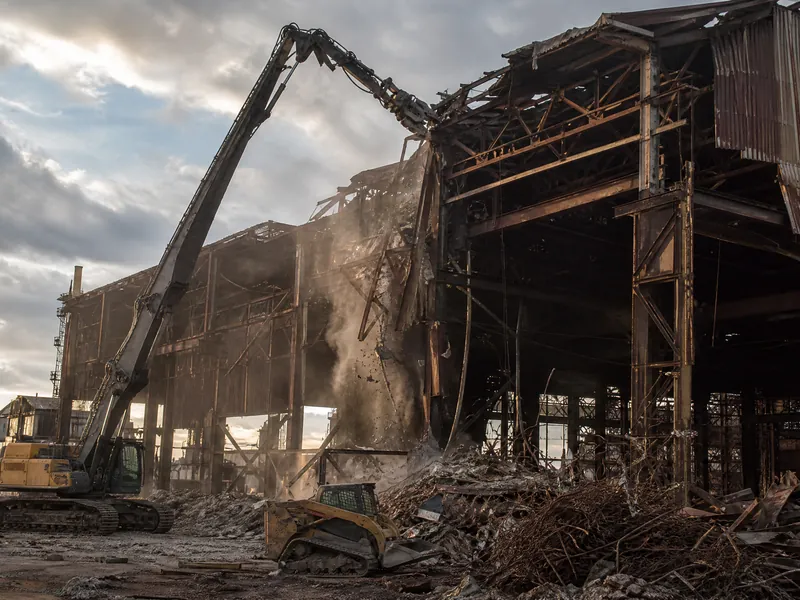
Every scope is built around weather exposure, utility separation, environmental controls, and the haul routes needed to move recovered steel, concrete, and regulated waste. Owners hire us to run the sequence from shutdown planning through abatement, demolition, material recovery, and documented site turnover.
The work
Wet Conditions Change the Demolition Plan
Oregon projects often demand more moisture control and more careful staging than inland dry-state work. Rain, soft subgrades, and runoff concerns can slow traffic inside a demolition footprint if haul roads, stockpiles, and concrete processing areas are not planned correctly. In the Portland market and other developed corridors, dense surroundings can also narrow crane setup, truck queuing, and dust-control options.
The state adds another layer of complexity because owners often have to think about seismic resilience of nearby structures and utilities even when the facility being retired is already at end of life. That means our deconstruction methods are selected not only for production speed, but also for vibration control, debris containment, and safe separation from neighboring walls, lines, docks, and active buildings.
Method and sequence
Facility Types Common Across Oregon
The Oregon industrial base produces a broad spread of demolition assignments. We see manufacturing buildings with heavy mezzanines and process utilities, food and beverage plants with stainless lines and insulated panels, retired utility structures with robust concrete and structural steel, and large warehousing or distribution buildings designed around truck courts and expansive slabs. Aggregate and cement sites add bins, conveyors, transfer towers, and thick equipment foundations.
Those structures do not come apart the same way. A retired generating unit may require extensive mechanical dismantling and heavy rigging before structural demolition starts. A processing plant may need selective interior deconstruction and abatement to clear refrigeration, piping, and floor trench systems first. Our job is to match the means and methods to the building type rather than forcing every Oregon site into the same generic teardown template.
Local coverage
Cities we work in across Oregon
Hazards and controls
How We Sequence Decommissioning Work
The sequence usually starts with site review, utility mapping, and a demolition work plan that fits the owner's shutdown window. After lockout and de-energization, we remove targeted equipment, loose process components, and materials that interfere with safe structural access. Abatement and remediation proceed before broad mechanical wrecking where regulated material is present. Then we work from upper elements and unstable attachments down into primary framing, slabs, pits, and below-grade obstructions.
That staged approach protects schedule because it keeps the field from jumping backward. We are not trying to torch cut pipe racks while an asbestos crew still needs access underneath them, and we are not pushing high-reach equipment into mud before haul roads are stabilized. Oregon sites reward disciplined sequencing, especially when weather windows, nearby operations, or limited laydown space leave little room for avoidable rework.
Sequence of work
How a project runs, stage by stage
Site walk and survey
We walk the structure with you, review drawings, and record structural condition, live utilities, hazardous materials and salvageable assets before any number is quoted.
Engineering and permits
An engineered demolition plan sets the sequence, exclusion zones and means of collapse. We file local permits and the federal pre-demolition notification, and collect utility isolation sign-offs.
Abatement and pre-clean
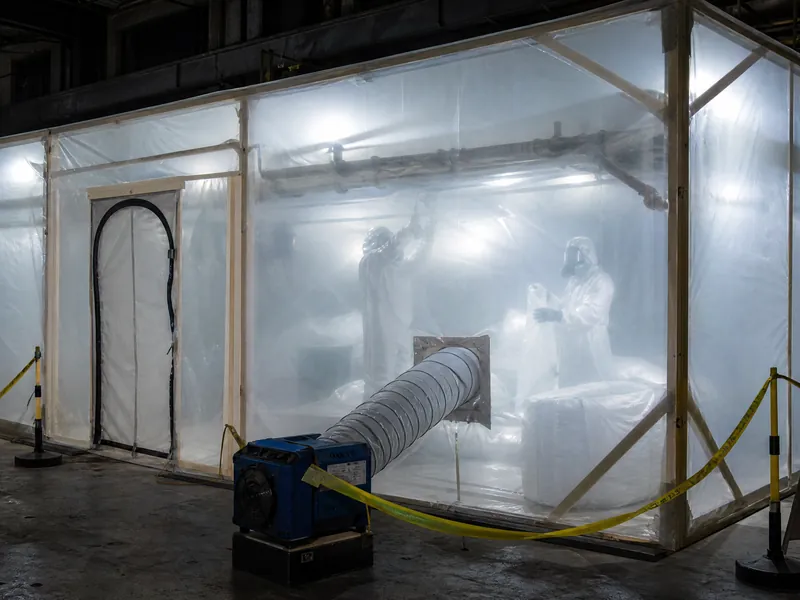
Regulated materials come out first under containment with clearance documentation, so the structural phase is never held up by a surprise inside a wall or a pipe chase.
Dismantling and teardown
High-reach machines, shears, torch crews and hand demolition work the sequence top-down or inside-out, with salvage separated as it comes out rather than picked from a mixed pile afterwards.
Processing and haul-off
Steel is sheared and shipped, concrete is crushed for reuse or hauled, and every regulated stream leaves under manifest to a permitted facility.
Grading and closeout
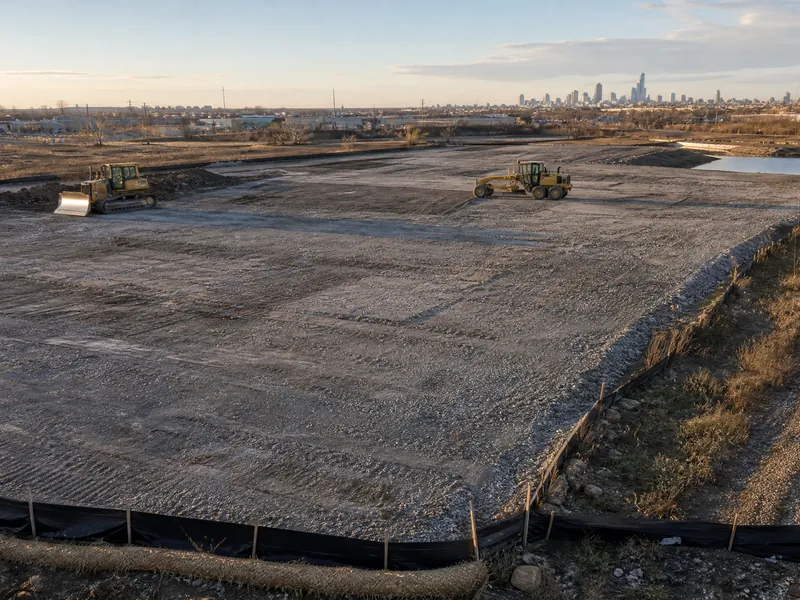
Foundations and slabs come out to the agreed depth, the site is graded and stabilised, and you receive manifests, clearance reports and closeout documentation.
Permits and notification
Oregon DEQ, NESHAP, and Local Reviews
Environmental and municipal coordination is a fixed part of Oregon industrial demolition. We plan around Oregon DEQ requirements, and we account for the federal NESHAP asbestos notification process before demolition of regulated structures. Current inspections, defined abatement boundaries, waste handling plans, and the right notice periods matter because they set the earliest safe start for structural wrecking.
Permit requirements then shift by location. Portland and Eugene projects may also involve local demolition permits, fire and utility sign-offs, lane or sidewalk occupancy planning, and noise or traffic coordination depending on the site. We build those steps into the schedule at the front end. Owners are better served when the permitting path, abatement plan, and field sequence are tied together instead of handled as separate conversations.
Salvage and recovery
Material Flows and Salvage Recovery
Oregon logistics can help or hurt a demolition budget depending on the site. I-5 and I-84 carry much of the heavy haul traffic, rail access can matter on larger industrial properties, and the Port of Portland influences movement of oversized or bulk material in some corridors. When those routes are considered early, load-out moves more cleanly and on-site congestion stays under control.
We separate structural steel, nonferrous metals, process scrap, and recyclable concrete where the scope supports recovery. Food and beverage plants often produce good stainless streams, while older utility and manufacturing sites can yield substantial carbon steel, cable, and motors. That recovered value is applied as a salvage credit against the project cost. At closeout, the owner receives debris removal, required manifests, and a graded footprint ready for the next phase of work.
Common questions
Questions owners and engineers ask
What Oregon site conditions most often affect schedule?
Weather, subgrade stability, constrained access, and environmental sequencing are the main issues. Wet conditions can slow trucking and concrete processing if the site is not prepared for them. In urban or port-linked areas, staging room may be limited as well. We address that by planning haul roads, drainage, stockpile zones, and work areas before heavy demolition starts instead of reacting after production drops.
Do you handle demolition at active facilities in Portland or Eugene?
Yes. Many projects involve only one retired structure inside a larger operating property. In those situations we phase utility isolation, protect loading or emergency routes, and control debris so nearby operations can continue. That may include selective dismantling, smaller equipment in tighter areas, and more daily coordination with the owner, but it is a normal part of industrial demolition work in Oregon.
How do NESHAP asbestos rules affect demolition timing?
They affect the front end of the schedule. The structure must be inspected, regulated asbestos issues must be addressed, and the federal notification process has to be respected before demolition proceeds where those rules apply. We align that sequence with Oregon DEQ requirements and local permits so the owner has one coherent schedule rather than separate environmental and demolition calendars that conflict with each other.
Can recovered material lower the project cost?
Often it can. Structural steel, stainless process piping, copper cable, motors, and certain mechanical components may create recoverable value depending on condition and market timing. We evaluate likely recovery streams during estimating and refine them in the field. Any recognized salvage value is applied as a credit to the demolition scope, which helps reduce the net cost without changing the safety or environmental obligations.
What closeout records should an owner expect?
Owners typically receive disposal and hauling documentation, manifests for regulated waste streams, and records tied to recycling or salvage categories included in the scope. The physical closeout usually includes debris removal and rough grading or slab/foundation status as defined by contract. That documentation matters because many Oregon sites move directly into redevelopment, tenant improvement, or broader environmental remediation after demolition ends.
Ready to price the teardown?
Oregon demolition work succeeds when the contractor understands weather, regulation, logistics, and industrial sequencing at the same time. Call 954-740-1983 or email electricalequipmentbuyers@gmail.com to plan your Oregon demolition, dismantling, or decommissioning project.