
Overview
Our crews manage the entire teardown process, from initial utility isolation and environmental abatement to final concrete crushing and site grading. We navigate the dense urban environments of Boston and the industrial corridors of Springfield, delivering safe, controlled deconstruction. By maximizing asset recovery and managing all regulatory compliance, we provide facility owners with a streamlined path to site clearance.
The work
Dismantling Regional Manufacturing and Processing Plants
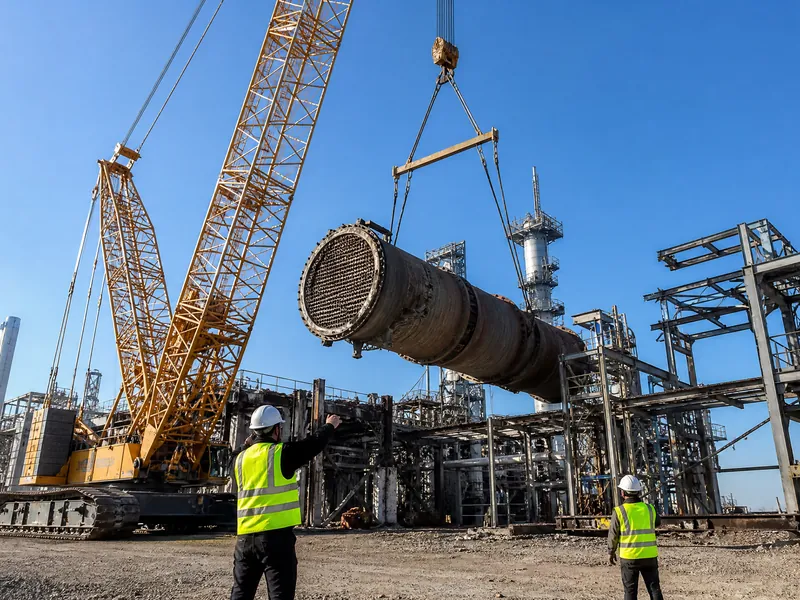
Massachusetts has a diverse industrial history, requiring a demolition contractor capable of adapting to various facility types. The decommissioning of regional manufacturing plants and food and beverage processing facilities involves the systematic removal of specialized production lines, extensive piping networks, and heavy machinery. Our crews utilize selective demolition techniques to dismantle these complex systems, often working within tight spatial constraints. We employ specialized rigging and torch cutting to safely lower large components, ensuring that adjacent active operations or neighboring properties are not impacted during the wrecking process.
Before structural teardown begins, we execute a rigorous utility isolation protocol. We identify, sever, and cap all electrical, gas, water, and process lines, establishing a zero-energy state across the facility. In food and beverage plants, this often includes the safe removal of ammonia refrigeration systems and the decontamination of process tanks. Our project managers coordinate closely with facility engineers to ensure all hazardous materials and residual products are properly managed and manifested for disposal, mitigating environmental liabilities before the heavy equipment is mobilized.
Method and sequence
Decommissioning Retired Generating Units
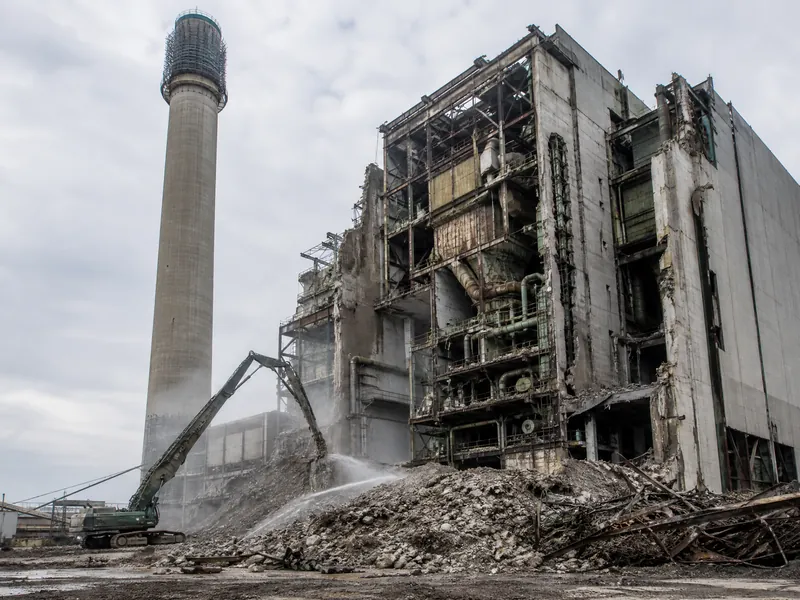
The retirement of power generating units in Massachusetts demands heavy iron and specialized deconstruction expertise. Industrial Demolition USA deploys high-reach excavators equipped with heavy-duty shears and grapples to dismantle massive boiler houses, turbine halls, and exhaust stacks. We utilize engineered collapse techniques for the largest structures, carefully controlling the direction and impact of the fall to ensure site safety. The teardown of these facilities requires meticulous planning and sequencing to manage the sheer volume of structural steel and heavy components involved.
Asset recovery plays a major role in the economics of power plant decommissioning. We aggressively target high-value materials such as copper wiring, turbine alloys, and heavy melting steel. These materials are segregated, processed, and routed to regional recycling markets. The value generated from this salvage operation is applied as a direct credit to the client, significantly offsetting the overall cost of the demolition. We provide transparent documentation for all recovered materials, ensuring that the financial benefits of the salvage operation are fully realized by the facility owner.
Local coverage
Cities we work in across Massachusetts
Hazards and controls
Navigating MassDEP Regulations and Permitting
Executing industrial demolition in Massachusetts requires strict adherence to the regulations enforced by the Massachusetts Department of Environmental Protection (MassDEP). We manage all necessary environmental notifications, including the federal NESHAP requirements for asbestos abatement. Our certified remediation teams handle the safe removal and disposal of asbestos, lead-based paint, and other hazardous materials, establishing rigorous containment zones to protect the surrounding environment. We handle the entire permitting process, coordinating with local authorities in Boston, Springfield, and other municipalities to ensure all regulatory requirements are met before mobilization.
The logistical challenges of operating in Massachusetts, particularly in dense urban areas or older industrial parks, require careful planning. We manage the transportation of heavy equipment and processed materials, optimizing routes to minimize disruption to local traffic. Whether utilizing highway networks or rail access, we ensure that the flow of materials off-site is efficient and compliant with all local transport regulations. Our project managers maintain constant communication with local officials and stakeholders to ensure a smooth and compliant deconstruction process.
Sequence of work
How a project runs, stage by stage
Site walk and survey
We walk the structure with you, review drawings, and record structural condition, live utilities, hazardous materials and salvageable assets before any number is quoted.
Engineering and permits
An engineered demolition plan sets the sequence, exclusion zones and means of collapse. We file local permits and the federal pre-demolition notification, and collect utility isolation sign-offs.
Abatement and pre-clean
Regulated materials come out first under containment with clearance documentation, so the structural phase is never held up by a surprise inside a wall or a pipe chase.
Dismantling and teardown
High-reach machines, shears, torch crews and hand demolition work the sequence top-down or inside-out, with salvage separated as it comes out rather than picked from a mixed pile afterwards.
Processing and haul-off
Steel is sheared and shipped, concrete is crushed for reuse or hauled, and every regulated stream leaves under manifest to a permitted facility.
Grading and closeout
Foundations and slabs come out to the agreed depth, the site is graded and stabilised, and you receive manifests, clearance reports and closeout documentation.
Permits and notification
Concrete Crushing and Site Stabilization
A complete industrial teardown involves the removal of massive concrete foundations, slabs, and underground structures. We utilize heavy excavators with hydraulic breakers to fracture deep footings and retaining walls. Once the concrete is excavated, we deploy mobile crushing plants to process the material directly on the project site. This on-site crushing operation produces a reusable aggregate that can be utilized as clean backfill or structural base for future development. This approach significantly reduces the need to import fill material and eliminates the costs associated with hauling heavy concrete debris to landfills.
Following the removal of all structures and foundations, our crews perform final site grading and stabilization. We contour the land to ensure proper drainage and prepare the site for its next phase of use. We provide the client with a comprehensive closeout package, which includes all disposal manifests, environmental clearances, and permits. This documentation provides the facility owner with the assurance that the site has been cleared safely, legally, and in full compliance with all Massachusetts regulations.
Salvage and recovery
Managing Warehousing and Aggregate Operations
The dismantling of large-scale warehousing and distribution centers, as well as aggregate and cement operations, requires a contractor equipped to handle expansive structures and heavy industrial equipment. For warehousing facilities, we rapidly process large volumes of structural steel and metal roofing, utilizing hydraulic shears to size the material for transport. The deconstruction of aggregate operations often involves the removal of massive silos, conveyors, and crushing equipment. We employ specialized rigging and heavy lift techniques to safely dismantle these towering structures.
Throughout the wrecking process, we prioritize safety and environmental control. We implement comprehensive dust suppression systems to mitigate airborne particulates, particularly during concrete crushing and the dismantling of cement facilities. Our crews are trained to identify and manage the specific hazards associated with these industrial environments, ensuring that the teardown is executed without incident. By combining heavy equipment capabilities with rigorous safety protocols, we deliver efficient site clearing services for Massachusetts' diverse industrial sectors.
Common questions
Questions owners and engineers ask
Do you handle the removal of ammonia refrigeration systems?
Yes, when decommissioning food and beverage processing plants, we manage the safe pump-down and removal of ammonia refrigeration systems. We coordinate with specialized technicians to ensure all hazardous gases are safely extracted and manifested before the structural dismantling of the facility begins.
How does the salvage credit work for a power plant teardown?
Power plants contain significant quantities of valuable metals, including copper, specialized alloys, and heavy structural steel. We recover, process, and sell these materials to regional markets. The total value of this recovered scrap is applied as a direct credit to your account, offsetting the gross cost of the demolition project.
Who manages the MassDEP notifications for asbestos?
Industrial Demolition USA handles all regulatory notifications, including the required NESHAP 10-day notice to the MassDEP for asbestos abatement. We manage the entire permitting and notification timeline to ensure your project remains compliant and on schedule from the initial abatement phase through final site clearance.
Can you crush the concrete foundations on our site?
Yes, we excavate all concrete slabs, deep footings, and underground vaults, and process the material using our mobile crushing plants. This crushed concrete can be left on-site to serve as clean backfill, which eliminates the cost of hauling debris away and purchasing new fill material.
How do you manage dust and debris in dense urban areas like Boston?
We implement aggressive dust suppression techniques, utilizing high-volume water cannons and localized misting systems directly at the point of demolition. We also establish secure perimeters and utilize specialized equipment attachments to control the fall of debris, ensuring the safety of adjacent properties and active operations.
Ready to price the teardown?
For professional, heavy industrial dismantling in Massachusetts, rely on the expertise of Industrial Demolition USA. Call us at 954-740-1983 or email electricalequipmentbuyers@gmail.com to schedule a site evaluation.