
Overview
A proper demolition estimate requires a thorough understanding of the facility's condition, environmental factors, and the logistical constraints of the site. We work closely with owners and engineers to evaluate every aspect of the wrecking process, ensuring our proposals are comprehensive and transparent. Contact us to begin the evaluation of your site clearing and asset recovery requirements.
The work
The Fundamentals of a Demolition Estimate
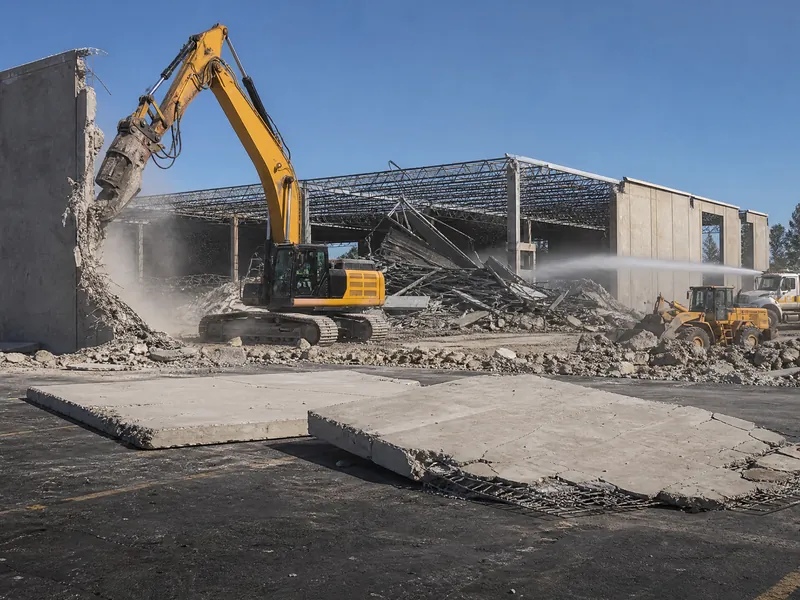
Developing an accurate quote for heavy industrial demolition involves far more than simply calculating the square footage of a facility. Our estimators must analyze the specific construction methods used in the original structures, the thickness of concrete foundations, and the grades of structural steel present. We evaluate the complexity of the teardown, determining whether the project requires controlled implosion, high-reach excavators, or meticulous hand dismantling around active operations. Every deconstruction method carries different costs in terms of labor, equipment, and time.
Furthermore, the estimate must account for the complete lifecycle of the project, from initial mobilization to final site grading. We factor in the costs of utility isolation, environmental remediation, and the transportation and disposal of non-recyclable debris. By taking a comprehensive view of the wrecking process, we ensure that our quotes reflect the true cost of safely and legally retiring an industrial asset, minimizing the risk of unexpected change orders once the work begins.
Method and sequence
Required Documentation for Accurate Pricing
To provide the most precise demolition quote possible, we rely on detailed documentation from the facility owner or managing engineering firm. The most critical documents include structural "as-built" drawings, which reveal the hidden complexities of the building's framework and foundation systems. Site plans detailing underground utilities, active pipelines, and adjacent structures are also essential for planning safe exclusion zones and equipment access routes during the dismantling phase.
Equally important are comprehensive environmental surveys. Reports detailing the presence of asbestos-containing materials, lead-based paint, or contaminated soils directly impact the abatement and remediation costs. If these surveys are not available, we can coordinate with environmental consultants to have them completed before finalizing the quote. Providing this information upfront allows our estimators to accurately price the hazardous material handling and ensures that the site clearing process complies with all state and federal regulations.
Hazards and controls
Evaluating Site Access and Logistical Constraints
The physical location and layout of the industrial facility play a significant role in the overall cost of a decommissioning project. During the quoting process, we carefully evaluate site access for our heavy machinery, including high-reach excavators, bulldozers, and specialized transport vehicles. Facilities located in dense urban environments or those with restricted entry points require more complex logistical planning and often dictate the use of smaller equipment or alternative wrecking techniques, which can affect the project timeline and budget.
We also assess the regional infrastructure, such as the proximity to major highways, rail spurs, or navigable waterways. Efficient transportation is crucial for moving heavy equipment to the site and hauling away processed scrap metal and demolition debris. In states where we maintain a heavy crew presence - such as Ohio, Pennsylvania, West Virginia, Georgia, North Carolina, South Carolina, Indiana, and New York - we can often optimize mobilization costs. Understanding these logistical constraints allows us to build a realistic and cost-effective deconstruction schedule.
Permits and notification
Factoring in Asset Recovery and Salvage Credit
A unique and highly beneficial aspect of our demolition quoting process is the integration of asset recovery. As we evaluate a facility for teardown, our estimators identify valuable materials that can be harvested, such as heavy structural steel, copper wiring, industrial transformers, and specialized alloys. We calculate the current market value of these recyclable materials and factor them directly into the project proposal.
This value is presented as a salvage credit, which offsets the gross cost of the dismantling and site clearing services. In many heavy industrial decommissioning projects, the salvage credit can significantly reduce the net financial burden on the facility owner. We provide transparent estimates of the anticipated scrap yield and clearly outline how the credit will be applied to the final billing. This approach ensures that you receive maximum value from your retired assets while supporting sustainable recycling practices.
Salvage and recovery
Our Transparent Proposal and Planning Process
Once we have reviewed all documentation and completed a thorough site evaluation, Industrial Demolition USA presents a comprehensive and transparent proposal. Our quotes clearly delineate the scope of work, detailing the specific structures to be removed, the methods of deconstruction to be employed, and the sequence of operations. We break down the costs associated with environmental abatement, structural wrecking, debris disposal, and site restoration, ensuring you understand exactly what is included in the price.
We believe that a successful demolition project is built on clear expectations and mutual understanding. Our project managers will review the proposal with you in detail, answering any questions regarding the schedule, safety protocols, or the application of the salvage credit. We are committed to providing honest, accurate estimates that reflect our extensive experience as a nationwide heavy industrial contractor, giving you the confidence to move forward with your facility retirement plans.
How we work
The stages of a demolition project
Site walk and survey
We walk the structure with you, review drawings, and record structural condition, live utilities, hazardous materials and salvageable assets before any number is quoted.
Engineering and permits
An engineered demolition plan sets the sequence, exclusion zones and means of collapse. We file local permits and the federal pre-demolition notification, and collect utility isolation sign-offs.
Abatement and pre-clean
Regulated materials come out first under containment with clearance documentation, so the structural phase is never held up by a surprise inside a wall or a pipe chase.
Dismantling and teardown
High-reach machines, shears, torch crews and hand demolition work the sequence top-down or inside-out, with salvage separated as it comes out rather than picked from a mixed pile afterwards.
Processing and haul-off
Steel is sheared and shipped, concrete is crushed for reuse or hauled, and every regulated stream leaves under manifest to a permitted facility.
Grading and closeout
Foundations and slabs come out to the agreed depth, the site is graded and stabilised, and you receive manifests, clearance reports and closeout documentation.
Capabilities
Capabilities we run in house
Common questions
Questions owners and engineers ask
What information do I need to provide to get a demolition quote?
To provide an accurate estimate, we need structural drawings, site plans, and recent environmental surveys detailing any hazardous materials like asbestos or lead. Information about the facility's square footage, construction type, and current utility status is also critical. The more comprehensive the documentation you provide, the more precise our deconstruction and site clearing proposal will be.
How does the salvage credit affect the final quote?
During the estimation process, we assess the value of recoverable materials such as structural steel and copper. The estimated market value of these materials is applied as a salvage credit against the total cost of the demolition services. This credit directly reduces your net cost, making the overall plant decommissioning project more economically efficient for the facility owner.
Do you need to visit the site before providing a final estimate?
Yes, a physical site visit is almost always required before we can issue a final, binding contract for heavy industrial dismantling. While we can provide preliminary budget ranges based on documentation, an on-site evaluation allows our estimators to assess access constraints, structural conditions, and logistical challenges that may not be apparent in the drawings, ensuring a safe and accurate wrecking plan.
How long does it take to receive a proposal after contacting you?
The timeline for receiving a quote depends on the complexity of the facility and the completeness of the provided documentation. For standard industrial teardowns, we can often provide a detailed proposal within a few weeks of completing the site visit and reviewing the environmental reports. Highly complex decommissioning projects may require additional engineering analysis and take longer to estimate.
Are environmental abatement costs included in the demolition quote?
Yes, if the environmental surveys are provided upfront, we include the costs for necessary abatement and remediation in our comprehensive proposal. We manage the entire process, coordinating the safe removal of hazardous materials before the structural wrecking begins. This ensures that your quote reflects the total cost of preparing the site for safe and compliant deconstruction.
Ready to price the teardown?
Securing an accurate estimate is the critical first step in any successful plant decommissioning project. Industrial Demolition USA provides the transparent pricing and detailed planning required for complex heavy industrial teardowns. Contact our estimating team today at 954-740-1983 or email electricalequipmentbuyers@gmail.com to request a comprehensive demolition quote.