
Overview
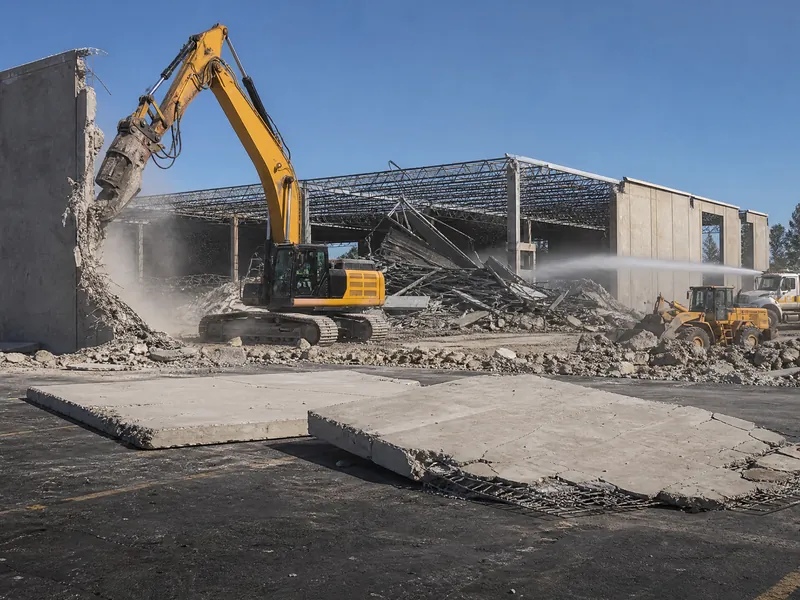
Our crews handle every phase of the wrecking process, from initial environmental abatement and utility isolation to mechanical shearing, controlled implosion, and final site clearing. We operate throughout the major industrial corridors, deploying specialized heavy equipment to safely bring down massive steel structures, concrete silos, and industrial boiler systems. Plant owners and corporate engineering directors rely on our operational capacity to clear brownfield sites for redevelopment, as we manage the complete structural removal while maximizing the recovery of scrap metals to offset the net cost of the project.
The work
Tearing Down Lake Michigan Steel And Refining Infrastructure
The industrial concentration along the southern shore of Lake Michigan presents demanding demolition environments. In cities like Gary, Hammond, East Chicago, and Burns Harbor, we dismantle massive integrated steel mills, basic oxygen furnaces, and heavy rolling mill structures. These facilities feature exceptionally thick concrete foundations and towering steel frameworks that require high-reach excavators equipped with hydraulic shears to safely bring down to the ground.
Adjacent to the steel corridors, the oil refining infrastructure in Whiting requires rigorous hazard mitigation and systematic deconstruction. We decommission distillation columns, catalytic crackers, and miles of interconnected process piping. The proximity to Lake Michigan means our demolition plans must account for high water tables and strict runoff controls to prevent watershed contamination.
Executing teardowns in these dense, legacy industrial zones involves working in tight quarters surrounded by active rail lines. We coordinate with local rail operators to manage the logistics of hauling processed scrap out of the facility.
Method and sequence
Retiring Coal-Fired Units Along The Ohio And Wabash Rivers
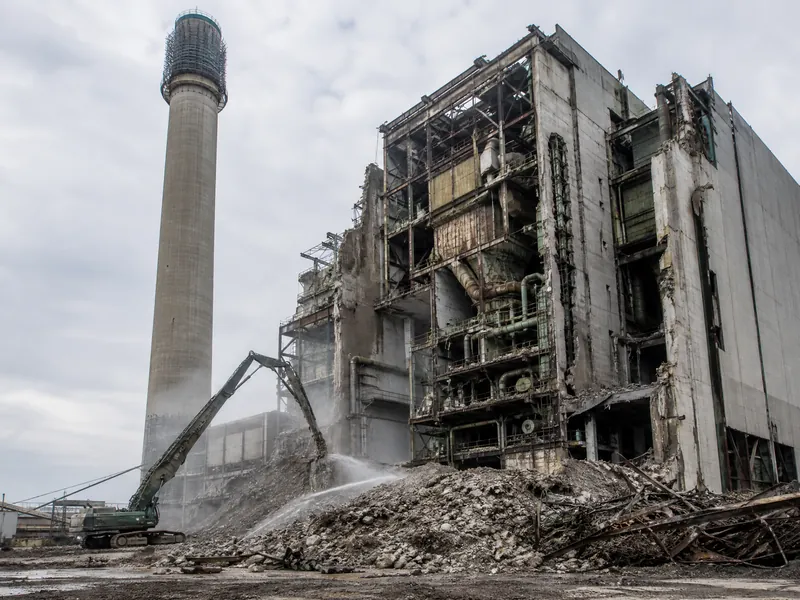
Indiana's historical reliance on coal for power generation has left a legacy of aging power plants situated along the Ohio and Wabash rivers. We execute the complete decommissioning and demolition of these massive utility structures, including towering exhaust stacks, hyperbolic cooling towers, and turbine halls. The scale of these facilities demands heavy mechanical wrecking and controlled explosive demolition to safely fell the tallest structures within a precise drop zone.
Working along the riverbanks introduces specific geotechnical and logistical variables. We must navigate fluctuating river levels, alluvial soils, and the structural complexities of deep water intake systems. Our crews systematically dismantle the coal handling infrastructure, ensuring that all residual coal dust and ash are properly managed prior to structural removal.
By utilizing the existing river barge infrastructure or adjacent rail spurs, we efficiently transport the processed scrap to major recycling hubs, maximizing the salvage credit applied to the utility owner's net cost.
Local coverage
Cities we work in across Indiana
Hazards and controls
Dismantling Pharmaceutical And Manufacturing Plants In Central Indiana
Beyond the heavy primary industries, central Indiana hosts a dense concentration of advanced manufacturing and pharmaceutical production facilities, particularly around Indianapolis and the RV manufacturing hub of Elkhart. Demolishing these structures requires a different operational approach, focusing heavily on the systematic removal of specialized process equipment, clean room environments, and complex mechanical systems.
Pharmaceutical plant decommissioning involves the careful dismantling of stainless steel reactors, extensive sanitary piping networks, and high-capacity HVAC systems. These sites often require meticulous environmental remediation to address residual chemicals before the physical wrecking begins. Our crews utilize specialized rigging and dismantling techniques to safely remove large vessels from within enclosed structures before bringing down the building shell.
In the manufacturing sectors of Fort Wayne, South Bend, and Terre Haute, we tear down automotive parts plants and large-scale distribution centers. We deploy fleets of excavators with concrete pulverizers to crush the slabs and footings on-site, producing a reusable aggregate base for future construction.
Sequence of work
How a project runs, stage by stage
Site walk and survey
We walk the structure with you, review drawings, and record structural condition, live utilities, hazardous materials and salvageable assets before any number is quoted.
Engineering and permits
An engineered demolition plan sets the sequence, exclusion zones and means of collapse. We file local permits and the federal pre-demolition notification, and collect utility isolation sign-offs.
Abatement and pre-clean
Regulated materials come out first under containment with clearance documentation, so the structural phase is never held up by a surprise inside a wall or a pipe chase.
Dismantling and teardown
High-reach machines, shears, torch crews and hand demolition work the sequence top-down or inside-out, with salvage separated as it comes out rather than picked from a mixed pile afterwards.
Processing and haul-off
Steel is sheared and shipped, concrete is crushed for reuse or hauled, and every regulated stream leaves under manifest to a permitted facility.
Grading and closeout
Foundations and slabs come out to the agreed depth, the site is graded and stabilised, and you receive manifests, clearance reports and closeout documentation.
Permits and notification
Managing IDEM Permitting And NESHAP Asbestos Notifications
Executing industrial demolition in Indiana requires strict adherence to state and federal environmental regulations. The Indiana Department of Environmental Management (IDEM) oversees the regulatory framework for hazardous material abatement, solid waste disposal, and air quality protection during teardown operations. We manage the comprehensive compliance process, ensuring that all required permits are secured before any heavy equipment mobilizes to the project site.
A critical regulatory requirement is the federal NESHAP 10-working-day notification for asbestos removal and structural demolition. We coordinate the necessary hazardous material surveys, submit the required notifications to IDEM, and execute the abatement of asbestos-containing materials and universal wastes. This systematic environmental remediation is fully integrated into our critical path schedule, preventing regulatory delays.
In addition to state-level oversight, we navigate the specific permitting requirements of local jurisdictions, from the dense urban environments of Marion County to the heavy industrial zoning of Lake County and beyond.
Salvage and recovery
Executing Complex Structural Implosions And Mechanical Wrecking
The physical execution of a heavy industrial teardown relies on deploying the right combination of specialized equipment and engineered methodologies. For the majority of manufacturing plants, steel mills, and refinery structures, we utilize heavy mechanical wrecking techniques. Our fleet includes massive tracked excavators fitted with hydraulic shears capable of slicing through thick steel I-beams, as well as concrete processors that crush heavily reinforced foundations and retaining walls.
When dealing with exceptionally tall or structurally complex assets, such as power plant exhaust stacks or massive boiler structures, controlled explosive demolition may be the safest approach. We engineer precise implosion plans that utilize shaped charges to compromise key structural supports, allowing gravity to bring the structure down within a tightly defined footprint.
Throughout the mechanical wrecking and implosion processes, we implement rigorous dust suppression and vibration monitoring protocols. We utilize high-capacity water cannons and localized misting systems to knock down airborne particulates during the entire process.
Logistics
Processing Structural Steel And Concrete For Regional Outlets
A heavy industrial demolition project generates massive volumes of structural debris that must be efficiently processed and removed from the site. We operate robust on-site material processing operations to handle the thousands of tons of steel, copper, and concrete yielded by a typical plant teardown. Our crews utilize mobile hydraulic shears and specialized torch-cutting teams to size the recovered metals to meet the specific dimensions required by regional scrap buyers.
The salvage value of this recovered metal is a significant factor in the overall project economics for the facility owner. We do not buy equipment; rather, the value of the processed scrap is applied as a salvage credit that directly offsets the client's net cost for the demolition services.
Concrete and masonry debris are typically processed on-site using mobile crushing plants to reduce hauling requirements. We pulverize the concrete foundations and containment walls, separating out the embedded rebar for scrap recovery and recycling.
Common questions
Questions owners and engineers ask
How do you handle the deep concrete foundations typical of Indiana steel mills?
We utilize heavy tracked excavators equipped with hydraulic hammers and concrete pulverizers to systematically break apart massive foundations, machine pits, and deep basements. The heavily reinforced concrete is crushed on-site to separate the embedded rebar, which is recovered for its scrap value. The remaining crushed concrete is repurposed as clean fill to grade the site.
What are the NESHAP notification requirements for an industrial teardown in Indiana?
Before structural wrecking begins, we complete a comprehensive hazardous materials survey and submit a NESHAP 10-working-day notification to the Indiana Department of Environmental Management. All asbestos-containing materials and residual hazardous chemicals must be properly abated and manifested for disposal. We also secure local demolition permits and verify that all utility services have been physically disconnected.
Can you dismantle an industrial structure while adjacent plant operations continue?
Operating within an active industrial campus requires meticulous planning to prevent disruption to ongoing operations. We utilize selective dismantling techniques, such as surgical torch cutting and controlled rigging, rather than traditional bulk wrecking. We implement strict dust containment, vibration monitoring, and noise control measures to ensure our demolition activities do not interfere with adjacent manufacturing processes.
Where does the structural steel and scrap metal go after it is sheared?
The recovery of valuable ferrous and non-ferrous metals, such as structural steel and heavy machinery components, generates significant value during a teardown. We process and transport these materials to regional recycling facilities across the Midwest. The revenue generated from this scrap is applied directly as a salvage credit against the total cost of the demolition labor, substantially reducing the net cost.
What methods are used to bring down tall exhaust stacks at power plants?
Depending on site constraints and the proximity of adjacent structures, we employ either high-reach mechanical wrecking or controlled explosive demolition. For stacks with sufficient clearance, engineered implosion is often the safest method, utilizing precise explosive charges to fell the structure into a designated drop zone. In tighter environments, we use specialized high-reach excavators to dismantle the stack.
Ready to price the teardown?
Industrial Demolition USA provides the heavy equipment, specialized personnel, and project management expertise required to safely execute complex plant teardowns across Indiana. We deliver turnkey demolition solutions that clear the way for new industrial development while maximizing the value of recovered materials. To discuss your facility decommissioning requirements, call 954-740-1983 or email electricalequipmentbuyers@gmail.com.