
Overview
We engineer controlled wrecking sequences that mitigate environmental risks while maximizing asset recovery. From selective interior abatement to complete site clearing, our crews manage the entire process to prepare your property for its next phase of development.
The work
Coastal Industrial Deconstruction Methods
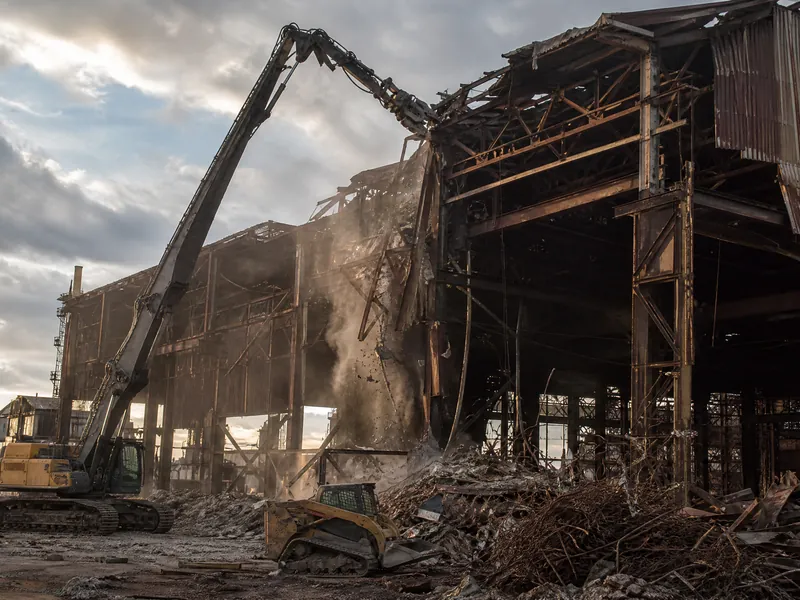
Executing a teardown in Wilmington requires specialized approaches to handle the realities of coastal industrial sites. Facilities located near the Cape Fear River or the Port of Wilmington often contend with high water tables and saturated soils, which complicate heavy equipment staging and foundation removal. Our dismantling crews utilize high-reach excavators equipped with hydraulic shears to systematically bring down elevated structures without compromising the surrounding ground stability. We engineer the collapse of large silos, bulk storage facilities, and processing units to ensure debris falls within a strictly controlled footprint.
Salt corrosion is a significant factor in aging coastal infrastructure, often weakening structural steel in unpredictable ways. Before any wrecking begins, our structural engineers assess the integrity of the facility to identify potential failure points. We adapt our deconstruction sequencing to account for these compromised elements, utilizing controlled torch cutting and mechanical shearing to safely dismantle the framework. This methodical approach prevents unplanned structural shifts during the demolition process, protecting both our personnel and adjacent active operations.
Method and sequence
Environmental Remediation and Abatement
Industrial facilities slated for retirement frequently contain hazardous materials that must be addressed prior to structural demolition. In Wilmington, older manufacturing plants and maritime support facilities often require extensive asbestos abatement and lead-based paint remediation. Our environmental teams isolate the work areas, establishing negative pressure enclosures to safely remove these materials in compliance with North Carolina DEQ regulations. We handle the complete abatement process, ensuring that all hazardous substances are properly manifested and transported to approved disposal facilities.
Beyond building materials, coastal industrial sites may have legacy soil or groundwater contamination from decades of operation. We coordinate our site clearing activities with ongoing remediation efforts, carefully excavating contaminated soils and removing underground storage tanks without exacerbating existing environmental issues. Our decommissioning protocols include the thorough cleaning and purging of process piping, chemical storage tanks, and fluid handling systems. By integrating environmental remediation with the physical teardown, we streamline the project schedule and reduce the overall liability for the property owner.
Regional coverage
Other North Carolina cities we cover
Hazards and controls
Asset Recovery and Material Salvage
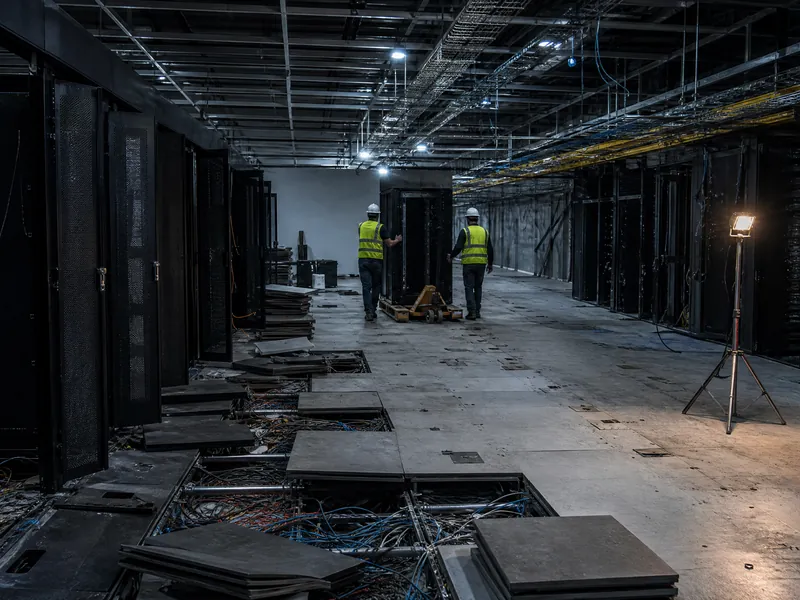
A critical component of our industrial demolition strategy is the systematic recovery of valuable materials and equipment. In the Wilmington market, retired processing facilities, port infrastructure, and manufacturing plants often contain significant quantities of recoverable metals and reusable industrial machinery. Our asset recovery teams identify these items early in the project planning phase. We carefully dismantle high-value components, such as heavy-duty pumps, electrical switchgear, and specialized processing equipment, preserving their condition for secondary markets.
The salvage value generated from these recovered assets is applied as a credit against the overall cost of the demolition project. This net cost approach provides significant financial benefits to the facility owner. In addition to equipment, we process massive volumes of structural steel, copper wiring, and aluminum fixtures for scrap metal recovery. Our crews segregate these materials on-site, utilizing mobile shears and material handlers to prepare the scrap for efficient transport to regional recycling facilities. This rigorous salvage program not only offsets project expenses but also diverts thousands of tons of material from local landfills.
Permits and notification
Navigating North Carolina DEQ Regulations
Compliance with state and federal regulations is the foundation of every project we undertake. In Wilmington, industrial demolition activities are closely monitored by the North Carolina DEQ, requiring strict adherence to notification and permitting protocols. We manage the entire regulatory compliance process, beginning with the mandatory NESHAP notifications for asbestos and demolition operations. Our project managers coordinate with local authorities to secure the necessary permits for road closures, utility disconnects, and heavy equipment transport through the city.
Stormwater management is particularly critical for coastal demolition sites. We implement comprehensive erosion and sediment control plans to prevent runoff from entering the Cape Fear River or local drainage systems. Our site clearing operations include the installation of silt fencing, sediment basins, and stabilized construction entrances. Throughout the teardown phase, we maintain detailed documentation of all waste streams, providing the client with complete manifests and disposal records at project closeout. This meticulous approach to regulatory compliance ensures that the site is fully cleared and legally prepared for future industrial or commercial use.
Salvage and recovery
Regional Logistics and Site Clearing
The logistics of moving heavy equipment and exporting thousands of tons of debris require careful planning in the Wilmington area. We leverage the region's transportation infrastructure, including highway networks and rail access, to efficiently manage material flow. For sites with direct port or rail spur access, we can load scrap metal and crushed concrete directly onto barges or railcars, significantly reducing truck traffic on local roads. This logistical efficiency is essential for maintaining the project schedule and minimizing disruption to neighboring businesses in cities like Charlotte, Raleigh, and Fayetteville.
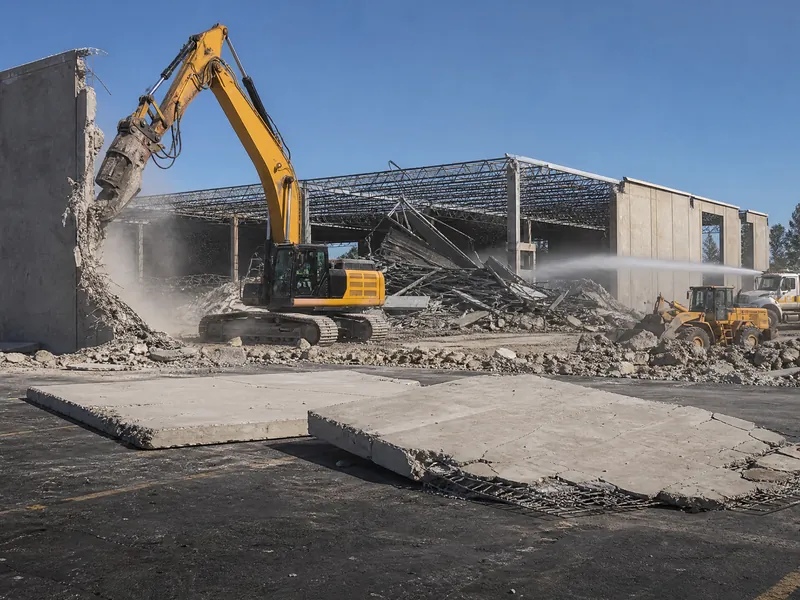
Once the above-grade structures have been removed, our focus shifts to comprehensive site clearing and foundation removal. We utilize heavy hydraulic breakers to fracture thick concrete slabs, machine bases, and retaining walls. The resulting concrete rubble is often processed on-site using mobile crushing plants. This crushed material can be repurposed as engineered fill to grade the site, eliminating the need to import new aggregate and further reducing project costs. The final deliverable is a clean, graded, and stabilized parcel of land, ready for its next industrial application.
Capabilities
Abatement, remediation and recovery
Common questions
Questions owners and engineers ask
How does the high water table in Wilmington affect foundation removal?
High water tables complicate the excavation of deep foundations and underground structures. We utilize specialized dewatering techniques and trench shoring to safely access and remove subterranean concrete and piping. Our crews carefully manage the excavation process to prevent site flooding and ensure that the surrounding soil remains stable during the removal of heavy machine bases.
Who handles the utility disconnects before the teardown begins?
We coordinate all utility isolation and de-energisation processes. Our team works directly with local utility providers in Wilmington to ensure that electrical, gas, water, and sewer lines are safely disconnected and capped at the property line. This critical step must be completed and verified before any structural dismantling or heavy equipment operation commences.
How is the salvage credit calculated for my facility?
During the initial site assessment, our asset recovery specialists evaluate the recoverable metals, structural steel, and reusable machinery present in the facility. We estimate the current market value of these materials and apply that value as a direct credit against your total demolition costs. This approach significantly reduces the net expense of the project.
What permits are required for industrial demolition in North Carolina?
Industrial teardowns require multiple permits, including local demolition permits from the city or county, and environmental notifications submitted to the North Carolina DEQ. We handle the preparation and submission of all required documentation, including the federal NESHAP notification for asbestos, ensuring the project is fully compliant before work begins.
Can you process concrete rubble on-site?
Yes, we frequently deploy mobile concrete crushing equipment to industrial sites. We fracture the existing slabs and foundations, remove the rebar, and crush the concrete into a reusable aggregate. This material is typically used to backfill excavations and grade the site, which lowers disposal fees and reduces the need to purchase imported fill dirt.
Ready to price the teardown?
Industrial Demolition USA delivers engineered deconstruction and site clearing solutions for complex coastal facilities. Contact our team to discuss your upcoming project requirements. Call 954-740-1983 or email electricalequipmentbuyers@gmail.com to schedule a comprehensive site evaluation.