
Overview
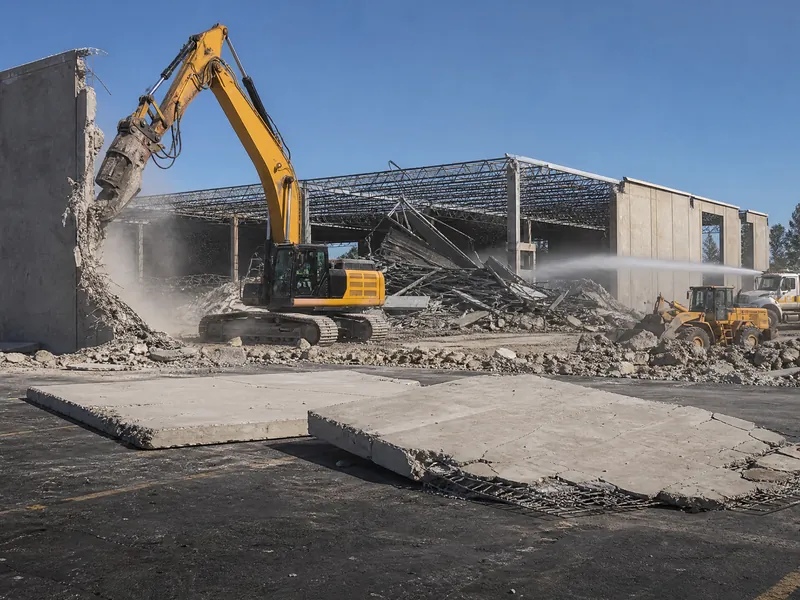
Our crews handle the complete deconstruction lifecycle, from initial environmental abatement and utility isolation to structural wrecking and final site clearing. Operating in Mecklenburg County requires navigating dense urban logistics, managing heavy truck traffic on the I-85 corridor, and executing precise teardowns near active rail lines. We bring the specialized heavy equipment and experienced personnel necessary to safely bring down massive steel structures, concrete silos, and complex piping networks.
The work
Managing Piedmont Clay And Deep Foundation Removal
Charlotte sits on the characteristic red clay of the Piedmont region, underlain by hard crystalline bedrock. This geological reality dictates how we approach the removal of heavy industrial foundations, press pits, and machine pads. Subsurface structures often extend deep into the dense clay, requiring specialized excavation techniques and heavy impact breakers to fracture the reinforced concrete without causing excessive ground vibration that could impact nearby structures.
Our operators systematically expose and demolish these subterranean elements, carefully managing the excavation walls in the cohesive soils. We process the extracted concrete on-site using mobile crushers, converting massive foundation blocks into reusable aggregate to backfill voids and stabilize the site for future construction.
Handling deep foundations in the Piedmont also requires strict attention to stormwater runoff. We implement robust erosion control measures to prevent the red clay from washing into local drainage systems, maintaining site stability throughout the entire demolition project.
Method and sequence
Dismantling Catawba River Basin Textile Mills
The industrial history of the Charlotte area is deeply tied to the textile industry, with numerous massive brick and timber mills located along the Catawba River. Deconstructing these historic facilities requires a completely different approach than modern steel-framed buildings. We execute selective demolition and careful dismantling to safely bring down multi-story masonry walls and heavy timber framing, often working near waterways that demand stringent environmental protection.
Many older textile plants contain legacy environmental hazards, including asbestos-containing materials in boiler rooms and residual chemicals in former dye houses. Our crews coordinate the comprehensive abatement of these materials before any structural wrecking begins, ensuring proper disposal at licensed facilities.
The salvage potential in these legacy mills is substantial. We systematically recover massive heart pine timbers and architectural brick, routing them to specialized salvage markets. This meticulous deconstruction process provides a valuable salvage credit that offsets the net cost of the demolition project.
Regional coverage
Other North Carolina cities we cover
Hazards and controls
Retiring Regional Power Generation Infrastructure
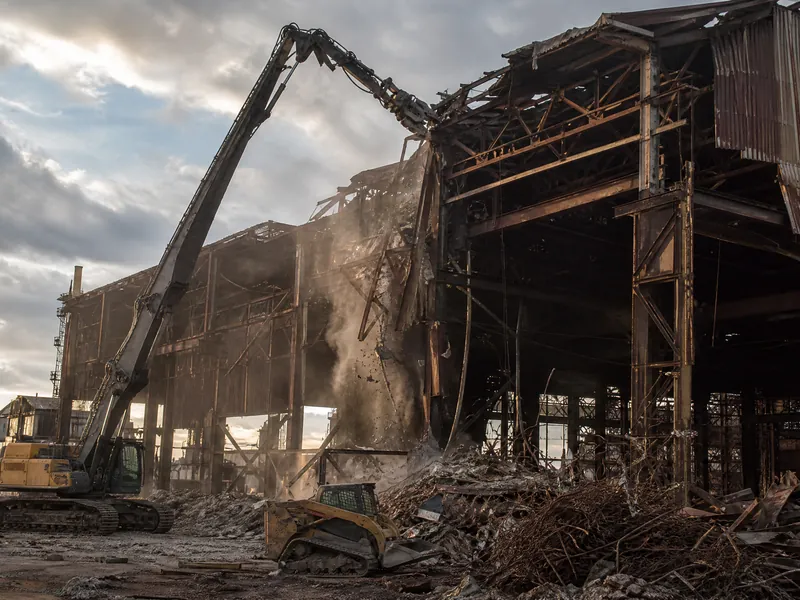
As the energy grid transitions, the Charlotte region has seen the retirement of several older coal-fired power plants and industrial boiler systems. Demolishing these massive structures is one of the most complex tasks in the heavy demolition sector. We engineer precise felling plans for towering exhaust stacks and massive boiler units, utilizing high-reach excavators equipped with specialized shear attachments to bring the structures down safely within tight spatial constraints.
Working on retired power generation sites requires meticulous planning regarding adjacent active infrastructure, high-voltage transmission lines, and nearby ash basins. We coordinate closely with utility providers to verify absolute isolation of all energy sources before our crews mobilize to the site.
Once the structures are safely on the ground, our operators use heavy hydraulic shears to cut the thick steel beams and boiler tubes into manageable lengths for transport, managing the complex logistics of moving thousands of tons of heavy melting steel.
Permits and notification
Navigating North Carolina DEQ And Local Permitting
Executing heavy demolition in Charlotte requires strict adherence to the regulatory frameworks established by the North Carolina Department of Environmental Quality (DEQ) and local municipal authorities. Before any structural dismantling can commence, we must file the mandatory federal NESHAP 10-working-day notification for asbestos abatement and demolition. This critical waiting period is built into our project schedules, ensuring full compliance with state and federal environmental regulations.
In Mecklenburg County, local air quality regulations are particularly stringent. We secure all necessary demolition permits from the county code enforcement offices and implement comprehensive dust control plans, deploying high-capacity water cannons to suppress airborne particulates during concrete crushing and structural wrecking.
Utility disconnection is another critical regulatory hurdle. We coordinate with Duke Energy, Piedmont Natural Gas, and Charlotte Water to secure official sign-offs confirming that all electrical, gas, water, and sewer lines have been physically severed and capped at the property line.
Salvage and recovery
Maximizing Scrap Metal And Asset Recovery
The financial viability of a major industrial demolition project often hinges on the efficient recovery and monetization of scrap metals. Charlotte's position as a major transportation hub provides excellent access to regional scrap processors and steel mills. We systematically harvest structural I-beams, heavy plate steel, copper wiring, aluminum conduits, and stainless steel tanks from the decommissioned facilities, segregating the metals on-site to maximize their market value.
Our crews are trained to identify and isolate high-value non-ferrous metals early in the dismantling process. We strip copper from massive industrial transformers, extract miles of electrical cabling, and recover specialized alloys from chemical processing equipment. This material is processed, weighed, and shipped directly to regional recycling facilities. The value generated from this scrap recovery is applied directly to the project ledger, appearing as a salvage credit that significantly reduces the client's net cost for the heavy demolition work.
Logistics
Heavy Equipment Mobilization Across The Carolinas
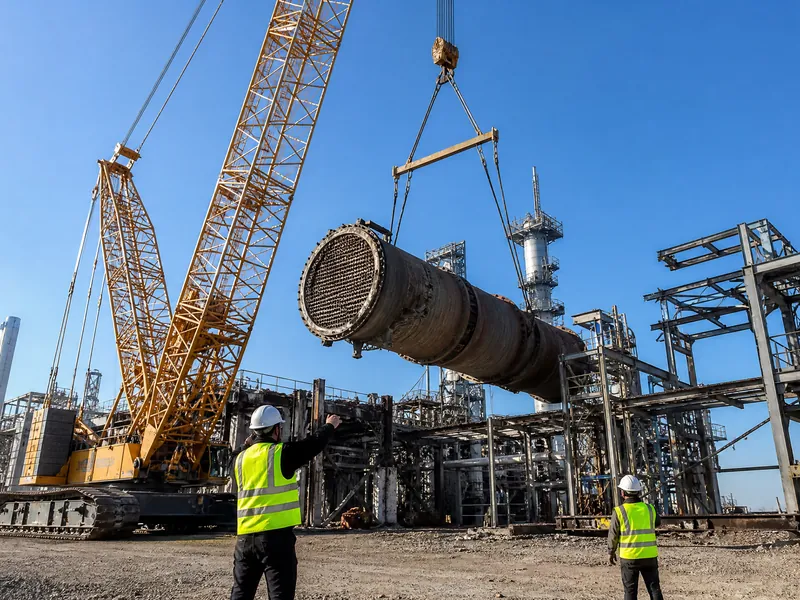
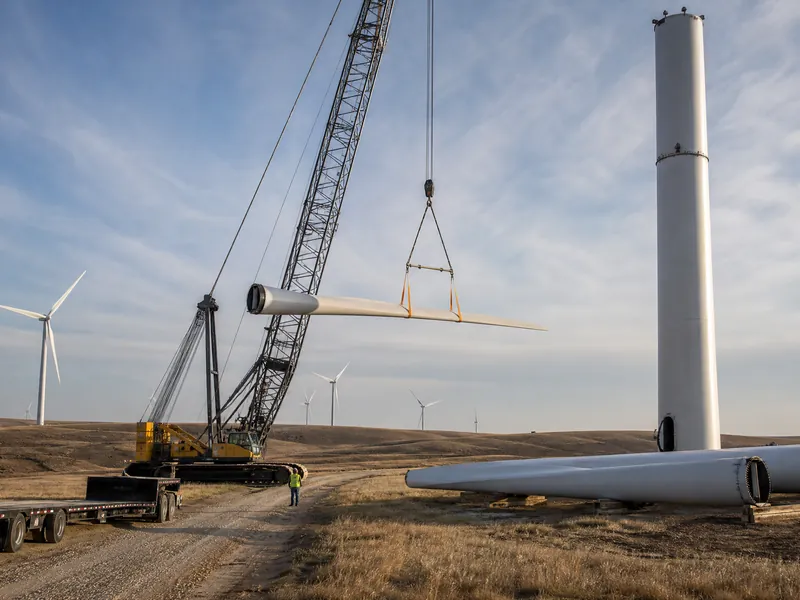
While our operations are heavily concentrated in the Charlotte metropolitan area, our logistical capabilities extend throughout the Carolinas. We routinely mobilize our fleets of high-reach excavators, mobile concrete crushers, and heavy haul trucks to industrial sites in Raleigh, Greensboro, Winston-Salem, Durham, Hickory, and Fayetteville. This regional footprint allows us to efficiently service large manufacturing portfolios and respond quickly to complex demolition requirements across the state.
Transporting heavy demolition equipment over the North Carolina highway system requires careful logistical planning and specialized heavy-haul permits. We navigate the weight restrictions and bridge clearances along the I-85 and I-40 corridors, ensuring that our massive machines arrive at the project site safely and on schedule.
Whether we are dismantling a tobacco processing facility in Durham, a furniture plant in Hickory, or a chemical plant in Wilmington, we bring the same level of engineering rigor and operational discipline to every single project.
Capabilities
Abatement, remediation and recovery
Common questions
Questions owners and engineers ask
What is the process for securing demolition permits in Mecklenburg County?
Securing approvals in Mecklenburg County involves coordinating with multiple agencies. We handle the entire permitting process, starting with the mandatory federal NESHAP 10-working-day notification submitted to the North Carolina DEQ. We then obtain local demolition permits from county code enforcement and secure required utility disconnect sign-offs from Duke Energy and Charlotte Water, ensuring all regulatory requirements are satisfied before equipment arrives.
How do you manage the heavy red clay soils during foundation removal in the Piedmont?
The cohesive red clay of the Piedmont region presents specific challenges during deep foundation extraction. We utilize specialized excavation techniques to carefully expose subterranean structures without destabilizing the surrounding soil. Our operators deploy heavy impact breakers to fracture the concrete, and we implement robust erosion control measures to prevent clay runoff. Recycled aggregate is then used to backfill the excavations, stabilizing the site.
Can you dismantle facilities located near the Catawba River without impacting the waterway?
Protecting adjacent waterways is a primary focus when deconstructing industrial facilities along the Catawba River basin. We engineer our dismantling sequences to pull structures inward, utilizing high-reach excavators to carefully lower components. Comprehensive stormwater management plans capture all site runoff, and strict dust suppression protocols prevent airborne debris from reaching the river, maintaining absolute compliance with state environmental protection standards.
Do you provide services to industrial plants outside of the immediate Charlotte area?
Our heavy demolition capabilities cover the entire state of North Carolina. While we maintain a strong presence in Charlotte, we frequently mobilize our specialized equipment fleets to execute major industrial teardowns in Raleigh, Greensboro, Winston-Salem, Durham, Hickory, and Fayetteville. We handle the complex logistics of transporting high-reach excavators across the I-85 corridor, efficiently servicing retired manufacturing facilities throughout the Carolinas.
How is the value of recovered scrap metal factored into the project financials?
The scrap metal generated during an industrial teardown is systematically sorted, processed, and shipped to regional recycling facilities. We track the exact tonnage of structural steel and non-ferrous metals recovered from the site. The market value of these materials is applied directly to the project ledger as a salvage credit, which offsets the operational expenses and results in a lower net cost.
Ready to price the teardown?
Facility owners across the Piedmont region trust our crews to execute complex teardowns safely and efficiently. To discuss your upcoming industrial dismantling project, call or email our estimating team today. Contact us at 954-740-1983 or electricalequipmentbuyers@gmail.com.