
Overview
Our crews handle the complete lifecycle of industrial wrecking, including utility isolation, environmental remediation, and heavy scrap processing, while navigating the logistical challenges of historic mill districts and the physical demands of solid granite bedrock. By integrating asset recovery into our wrecking operations, we offset project costs through salvage credits for structural steel and industrial alloys. Whether clearing a distribution center in Nashua or taking down a legacy paper mill, we deliver engineered demolition solutions.
The work
Dismantling Legacy Mills and Manufacturing Facilities
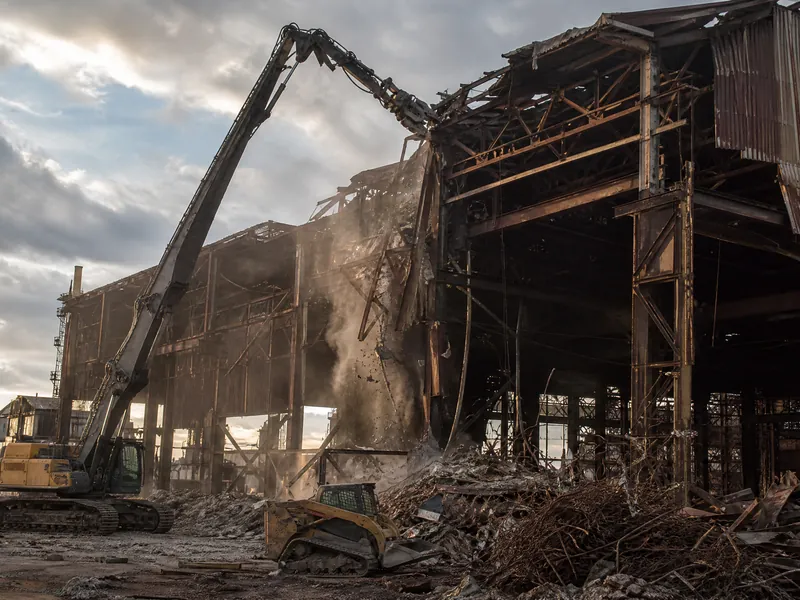
New Hampshire's industrial history is defined by massive brick-and-timber mill complexes and mid-century manufacturing plants, particularly along the Merrimack River in Manchester and Nashua. Tearing down these aging structures requires precise engineering to manage structural instability and protect adjacent active facilities. We deploy high-reach excavators equipped with hydraulic shears to systematically dismantle multi-story industrial buildings, separating reusable timber, brick, and scrap metal.
Operating in dense, historic industrial corridors means navigating tight access routes and strict vibration limits. Our operators execute selective interior demolition and full structural wrecking within confined footprints. We carefully sequence the removal of heavy roof loads and load-bearing masonry walls to prevent uncontrolled collapses.
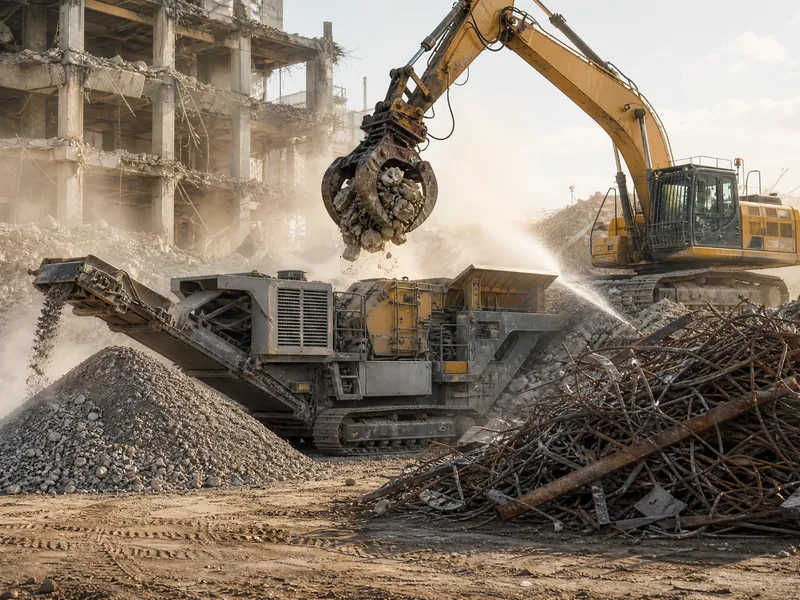
When clearing these legacy sites, we also address the heavy concrete foundations left behind. We utilize heavy hydraulic hammers to break through thick concrete slabs, processing the material on-site. Crushing concrete into reusable aggregate reduces hauling requirements and keeps heavy truck traffic off local roads.
Method and sequence
Managing Granite Bedrock and Winter Weather Constraints
Executing heavy demolition in the Granite State requires accounting for the region's unforgiving subsurface conditions and severe seasonal weather. The presence of shallow, unyielding granite bedrock dictates how we approach foundation removal and site grading. Standard excavation techniques often fall short, requiring specialized hydraulic breaking attachments to fracture the rock and remove deep industrial footings efficiently.
Winter weather introduces another layer of complexity to New Hampshire teardowns. Deep freeze-thaw cycles can compromise the structural integrity of abandoned facilities, making them unpredictable during the dismantling process. Heavy snow loads on compromised roofs require immediate attention before structural wrecking can safely begin. We engineer our demolition sequences to account for these seasonal vulnerabilities.
Cold weather also impacts hydraulic equipment performance and dust suppression efforts. We utilize winterized machinery and specialized water additives to maintain effective dust control without creating hazardous ice conditions on the active job site, ensuring that our crews can work safely.
Local coverage
Cities we work in across New Hampshire
Hazards and controls
Retiring Power Generation and Processing Infrastructure
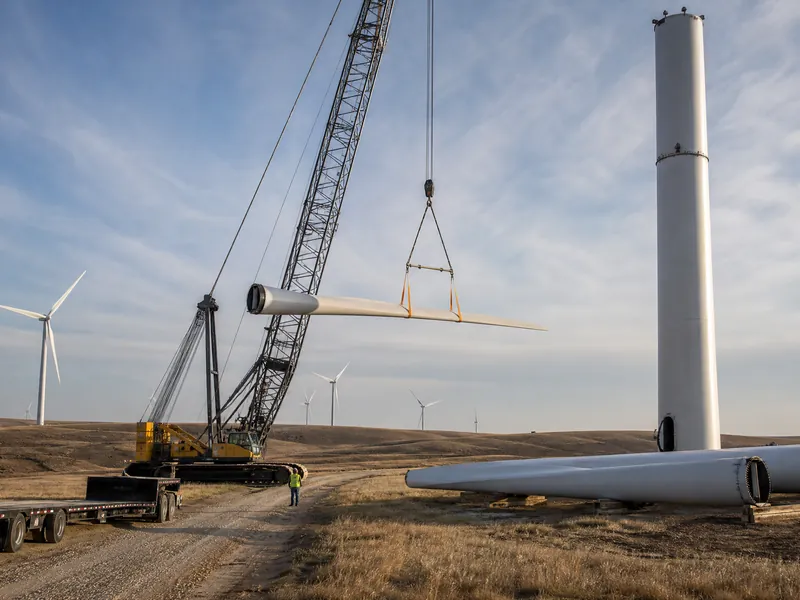
The transition of New Hampshire's energy sector has led to the retirement of older coal, biomass, and oil-fired generating units. Decommissioning these power plants involves dismantling massive boilers, towering exhaust stacks, and heavy turbine halls. We utilize controlled rigging and heavy lift cranes to bring down these structures safely. Our crews systematically dismantle the heavy steel framework, processing the scrap on-site to maximize the salvage credit applied to the client's net cost.
Beyond power generation, we handle the teardown of specialized industrial infrastructure, including aggregate processing plants and food manufacturing facilities. These sites often feature complex piping networks and large-capacity storage tanks. We purge and isolate all process lines before beginning the mechanical teardown.
For facilities located near critical waterways like the Connecticut River, we implement stringent runoff controls. Preventing industrial materials from entering the watershed is a primary focus during the demolition of riverside plants, ensuring full environmental protection.
Sequence of work
How a project runs, stage by stage
Site walk and survey
We walk the structure with you, review drawings, and record structural condition, live utilities, hazardous materials and salvageable assets before any number is quoted.
Engineering and permits
An engineered demolition plan sets the sequence, exclusion zones and means of collapse. We file local permits and the federal pre-demolition notification, and collect utility isolation sign-offs.
Abatement and pre-clean
Regulated materials come out first under containment with clearance documentation, so the structural phase is never held up by a surprise inside a wall or a pipe chase.
Dismantling and teardown
High-reach machines, shears, torch crews and hand demolition work the sequence top-down or inside-out, with salvage separated as it comes out rather than picked from a mixed pile afterwards.
Processing and haul-off
Steel is sheared and shipped, concrete is crushed for reuse or hauled, and every regulated stream leaves under manifest to a permitted facility.
Grading and closeout
Foundations and slabs come out to the agreed depth, the site is graded and stabilised, and you receive manifests, clearance reports and closeout documentation.
Permits and notification
NHDES Compliance and Asbestos Notification Protocols
Regulatory compliance drives the timeline of every industrial demolition project in New Hampshire. Before any structural wrecking begins, we coordinate with the New Hampshire Department of Environmental Services (NHDES) to ensure all environmental mandates are met. This includes filing the mandatory federal NESHAP 10-working-day notification for asbestos abatement, which must be cleared before our heavy equipment can touch the structure.
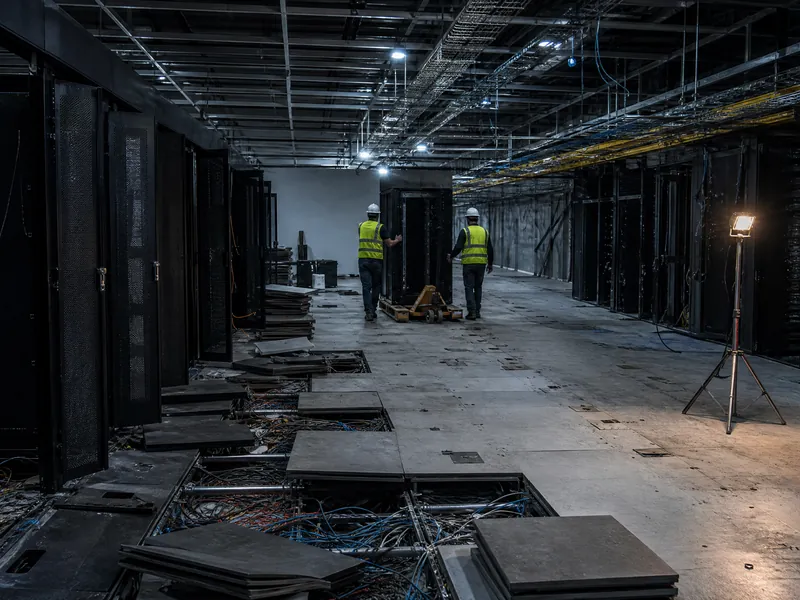
Local permitting is equally critical, requiring close coordination with municipal building departments in cities like Manchester and Nashua. We secure the necessary demolition permits and manage the utility disconnect sign-offs, verifying that all electrical, gas, and water lines are physically severed and capped at the street level.
Environmental remediation often runs parallel to the early stages of dismantling. We handle the removal of universal wastes and residual industrial chemicals left in abandoned plants. By strictly adhering to NHDES guidelines, we ensure that the site is environmentally cleared for future use.
Salvage and recovery
Scrap Metal Recovery and Regional Logistics
Industrial demolition generates massive volumes of structural steel, copper wiring, and heavy machinery components. We integrate asset recovery directly into our wrecking operations, processing these materials on-site to maximize their market value. By shearing I-beams and preparing heavy scrap for transport, we generate a salvage credit that directly offsets the client's upfront demolition costs.
Moving this heavy material requires navigating New Hampshire's specific logistical constraints. We route our heavy haulers along major corridors like I-93 and Route 3, coordinating with regional scrap processing yards in southern New Hampshire and across the Massachusetts border. Efficient freight management is absolutely essential to keeping the job site clear and productive.
For non-recyclable construction and demolition debris, we utilize regional transfer stations and approved landfills across the state. We separate clean wood, masonry, and mixed waste at the source, minimizing the tonnage sent to the landfill and controlling overall disposal costs for the facility owner.
Logistics
Engineered Teardowns for Warehousing and Distribution
The expansion of modern logistics has rendered many older, low-clearance warehouses and distribution centers obsolete. Tearing down these sprawling, single-story structures requires a different approach than vertical mill demolition. We deploy multiple excavators to work in tandem, systematically collapsing the steel roof trusses and folding the tilt-up concrete or masonry walls inward.
Because these facilities often cover massive footprints, managing the sheer volume of material is the primary challenge. We establish dedicated processing zones on the existing concrete slab, where our shears cut the structural steel to shipping lengths and our pulverizers break down the masonry. This organized workflow prevents the site from becoming congested.
Once the superstructure is removed, we tackle the expansive concrete floor slabs and loading dock foundations. Using heavy rippers and hydraulic hammers, we break the concrete and process it through mobile crushers. The resulting aggregate is left on-site to grade the property for future development.
Common questions
Questions owners and engineers ask
What is the process for removing a retired power plant in New Hampshire?
Dismantling a retired generating unit involves extensive planning and heavy mechanical wrecking. We begin by isolating all utilities and removing hazardous materials in compliance with NHDES regulations. Once the site is cleared, our crews use high-reach excavators and heavy rigging to systematically take down exhaust stacks, boilers, and turbine halls. The structural steel is sheared and processed on-site, generating a salvage credit that reduces the project expense.
Do you handle the concrete foundations of demolished industrial buildings?
Yes, removing heavy concrete footings and expansive floor slabs is a core part of our site clearing operations. In New Hampshire, where granite bedrock complicates subsurface work, we utilize heavy hydraulic hammers to break apart thick industrial foundations. We process this material through mobile crushers directly on the job site. The crushed concrete can then be repurposed as structural fill, which minimizes hauling requirements.
How does winter weather impact a commercial teardown schedule?
Severe cold and heavy snow loads influence our operational planning in the Granite State. We engineer our dismantling sequences to account for compromised roof structures weakened by heavy snow. Our heavy equipment is winterized, and we utilize specialized additives for dust suppression to prevent hazardous ice formation. By anticipating these seasonal challenges, we maintain steady progress and keep the decommissioning project moving forward safely.
Are salvage credits applied to the cost of dismantling a facility?
Absolutely. When we tear down a manufacturing plant or distribution center, we recover significant quantities of structural steel, copper, and industrial alloys. We process and sort these materials directly on the job site before transporting them to regional scrap yards. The value of this recovered metal is calculated and applied as a salvage credit, which directly offsets the net cost you pay for demolition services.
Who manages the environmental notifications before wrecking begins?
Our project management team handles all required regulatory filings to ensure full compliance before any heavy equipment is mobilized. We submit the mandatory 10-working-day NESHAP notification for asbestos to the EPA and coordinate directly with the New Hampshire Department of Environmental Services. We also secure local municipal demolition permits and verify that all utility disconnects are signed off.
Ready to price the teardown?
Industrial Demolition USA provides the heavy equipment and engineering expertise required to safely dismantle complex facilities across New Hampshire. When you need a reliable contractor to clear an obsolete plant, reach out to our team. Call us at 954-740-1983 or email electricalequipmentbuyers@gmail.com to schedule a site evaluation.