
Overview
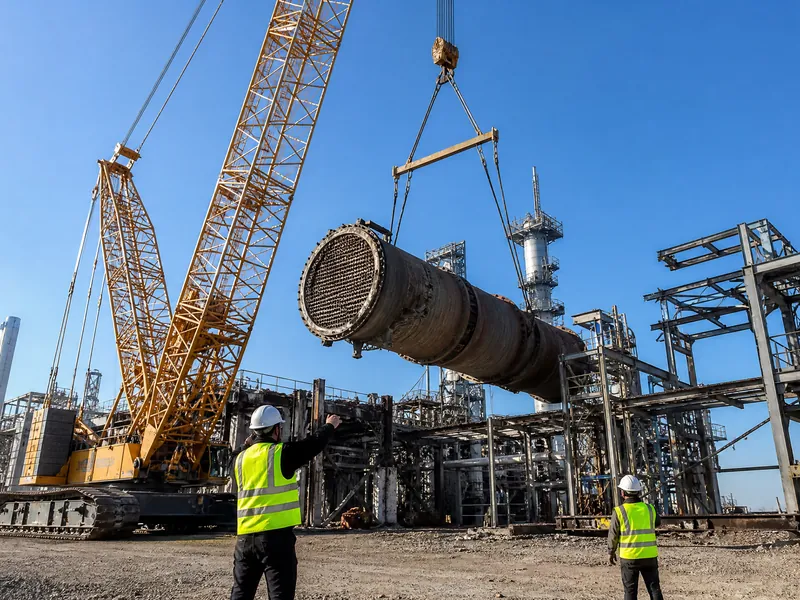
We handle the complete deconstruction of processing units, tank farms, piping networks, and flare stacks, ensuring that every phase of the teardown meets stringent safety and regulatory standards. Our crews are experienced in navigating the unique hazards of live or recently idled petrochemical sites, including residual hydrocarbons, asbestos-containing materials, and complex utility grids. By integrating environmental remediation with structural wrecking, we deliver a seamless transition from a hazardous industrial site to a cleared, graded parcel ready for its next phase of development.
The work
Pre-Demolition Engineering and Hazard Assessment
The decommissioning of a refinery begins long before the first piece of heavy equipment arrives on site. Our engineering team conducts exhaustive structural assessments and hazard surveys to map out the entire deconstruction sequence. We evaluate the integrity of aging catalytic crackers, distillation columns, and storage tanks to determine the safest method of dismantling. This phase includes identifying residual product, volatile organic compounds, and hazardous materials such as asbestos and lead-based paint that require abatement prior to structural wrecking.
We develop a site-specific demolition plan that dictates the sequence of operations, exclusion zones, and utility isolation procedures. Every pipe, valve, and vessel is verified as drained, purged, and air-gapped to eliminate the risk of fire or explosion during cutting operations. By establishing clear engineering controls and rigorous safety protocols, we ensure that the teardown proceeds methodically, protecting both our personnel and the surrounding environment from the inherent risks of petrochemical facility removal.
Method and sequence
Strategic Dismantling of Processing Units and Infrastructure
Processing units are the most complex structures within a refinery, requiring a combination of high-reach excavation and precise manual dismantling. We utilize specialized excavators equipped with hydraulic shears, grapples, and pulverizers to systematically bring down distillation towers, reactors, and heat exchangers. For structures that exceed the reach of standard equipment, our crews employ controlled torch cutting and rigging techniques to lower massive steel components safely to the ground for further processing.
The deconstruction of piping networks, pipe racks, and flare stacks is executed with extreme precision to prevent uncontrolled collapses. We carefully sequence the removal of structural supports and interconnected systems, ensuring that the structural integrity of adjacent active units is never compromised. Our approach to heavy industrial wrecking prioritizes controlled, incremental dismantling over rapid demolition, allowing us to manage the massive weight and complex geometry of refinery infrastructure safely and efficiently.
More scope we cover
Related demolition service lines
Chemical Plant Demolition
Industrial Demolition USA executes complex chemical plant demolition and decommissioning projects for the heavy…
Paper Mill Demolition
Industrial Demolition USA provides comprehensive paper mill demolition and decommissioning services for retired…
Cement Plant Demolition
Industrial Demolition USA provides specialized cement plant demolition and dismantling services for retired…
Hazards and controls
Tank Farm Decommissioning and Containment Removal
Storage tank farms present unique challenges during refinery demolition due to their massive footprint and the potential for soil contamination. Our process for tank decommissioning begins with the verification of complete degassing and cleaning. Once cleared, we employ specialized shears to cut the steel shells into manageable sections, starting from the roof and working down to the floor plates. This method eliminates the need for personnel to enter confined spaces or work at dangerous heights.
Following the removal of the steel tanks, we address the secondary containment systems, including concrete berms, liners, and foundational slabs. Heavy concrete crushers and hydraulic breakers are used to pulverize the concrete, separating the rebar for scrap metal recovery. The crushed concrete can often be repurposed on-site as backfill or grading material, reducing the volume of waste exported from the facility. Our comprehensive approach ensures that the entire tank farm footprint is thoroughly cleared and remediated.
Sequence of work
How a project runs, stage by stage
Site walk and survey
We walk the structure with you, review drawings, and record structural condition, live utilities, hazardous materials and salvageable assets before any number is quoted.
Engineering and permits
An engineered demolition plan sets the sequence, exclusion zones and means of collapse. We file local permits and the federal pre-demolition notification, and collect utility isolation sign-offs.
Abatement and pre-clean
Regulated materials come out first under containment with clearance documentation, so the structural phase is never held up by a surprise inside a wall or a pipe chase.
Dismantling and teardown
High-reach machines, shears, torch crews and hand demolition work the sequence top-down or inside-out, with salvage separated as it comes out rather than picked from a mixed pile afterwards.
Processing and haul-off
Steel is sheared and shipped, concrete is crushed for reuse or hauled, and every regulated stream leaves under manifest to a permitted facility.
Grading and closeout
Foundations and slabs come out to the agreed depth, the site is graded and stabilised, and you receive manifests, clearance reports and closeout documentation.
Permits and notification
Environmental Remediation and Hazardous Material Abatement
Environmental compliance is a critical component of any refinery teardown project. Before structural demolition can commence, our specialized abatement teams remove and properly dispose of hazardous materials commonly found in older petrochemical plants. This includes the abatement of asbestos insulation on piping and vessels, the removal of lead-based coatings, and the management of heavy metal contamination. We operate under strict containment protocols, utilizing negative air pressure enclosures and specialized filtration systems to prevent the release of airborne particulates.
In addition to structural abatement, we manage the remediation of contaminated soils and groundwater that may be discovered during the removal of foundations and underground utilities. We coordinate with environmental consultants and regulatory agencies to ensure that all remediation activities comply with federal and state standards. All hazardous waste streams are carefully tracked, manifested, and transported to licensed disposal facilities, providing the facility owner with complete documentation and shielding them from future environmental liability.
Salvage and recovery
Asset Recovery and Scrap Metal Processing
A significant advantage of our refinery demolition service is the maximization of asset recovery and scrap metal salvage. Refineries contain massive quantities of high-value metals, including carbon steel, stainless steel, copper alloys, and exotic metals used in specialized processing equipment. As we dismantle the facility, our crews segregate these materials at the source, using mobile shears and balers to process the scrap into transportable dimensions.
The value generated from the recovered scrap metal is applied as a salvage credit, which directly offsets the net cost of the demolition project for the client. We leverage our extensive network of scrap buyers and foundries to secure competitive pricing for the recovered materials. By efficiently processing and monetizing the scrap metal, we transform a massive liability into a financial asset, significantly reducing the overall capital expenditure required to clear the industrial site.
Logistics
Final Site Grading and Project Closeout
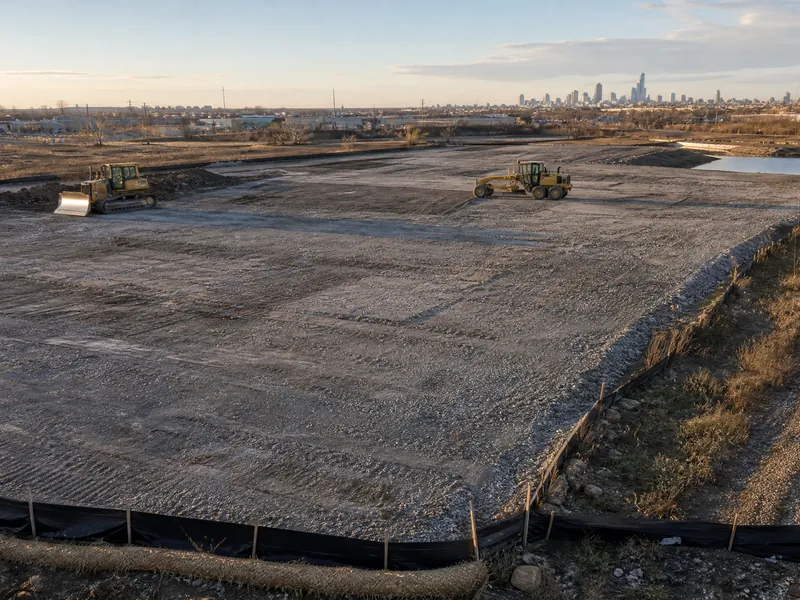
The final phase of a refinery decommissioning project involves preparing the site for its next intended use. After all above-ground structures and below-ground foundations have been removed, we perform comprehensive site grading and stabilization. We utilize heavy earthmoving equipment to level the terrain, fill excavations, and establish proper drainage patterns. If requested, we can import clean fill dirt or utilize crushed concrete generated during the demolition to achieve the final desired elevation.
Upon completion of the physical work, we provide the client with a comprehensive closeout package. This documentation includes all environmental manifests, disposal receipts, safety records, and final survey reports. We ensure that every aspect of the project has been executed in accordance with the contract specifications and regulatory requirements. Our meticulous approach to project closeout ensures that the site is left in a safe, compliant, and ready-to-develop condition, providing the owner with complete peace of mind.
In-house trades
Capabilities that run alongside this work
Coverage
Where we take on this work
Common questions
Questions owners and engineers ask
How do you handle residual chemicals and hydrocarbons during a refinery teardown?
Before any structural dismantling begins, we require that all systems be fully drained, purged, and certified as gas-free. Our crews then perform secondary verifications and implement strict hot-work protocols. We utilize cold-cutting techniques where possible and maintain continuous air monitoring to detect any volatile organic compounds, ensuring a safe environment throughout the deconstruction process.
What permits and notifications are required for heavy industrial demolition?
Refinery demolition requires a complex array of permits, including local demolition permits, environmental approvals for soil disturbance, and federal NESHAP notifications for asbestos abatement. We handle the entire permitting process, coordinating with state environmental regulators and local building departments to ensure all notifications are filed correctly and all regulatory requirements are met before work commences.
How is the salvage credit calculated for the recovered scrap metal?
The salvage credit is based on the estimated tonnage and current market value of the ferrous and non-ferrous metals recovered during the teardown. We conduct a detailed inventory during the pre-demolition phase to estimate the yield. This value is then applied as a direct offset to the gross demolition cost, resulting in a lower net cost for the facility owner.
Can you remove underground utilities and deep concrete foundations?
Yes, our comprehensive decommissioning services include the removal of underground piping networks, concrete vaults, and deep structural foundations. We utilize heavy excavators equipped with hydraulic breakers to fracture massive concrete footings and extract subterranean infrastructure. The resulting voids are then backfilled and compacted to ensure the stability of the final graded site.
How long does a complete refinery decommissioning project typically take?
The timeline for a refinery teardown varies significantly based on the size of the facility, the extent of hazardous material abatement required, and the complexity of the structures. A smaller processing unit might be dismantled in a few months, while a comprehensive site-wide decommissioning can take over a year. We provide a detailed, phased schedule during the planning stage.
Ready to price the teardown?
When it is time to retire your petrochemical facility, trust the experts in heavy industrial deconstruction to manage the project safely and efficiently. We provide the specialized equipment and experienced personnel required to handle the most complex teardowns. Call 954-740-1983 or email electricalequipmentbuyers@gmail.com to discuss your refinery demolition requirements and schedule a site evaluation.