
Overview
We also manage the complex decommissioning of bourbon distillery and bottling plants in cities like Louisville and Lexington. Every project is executed with a focus on safety, environmental responsibility, and maximizing asset recovery. We handle the entire process, from the initial abatement of hazardous materials to the final grading of the site, ensuring full compliance with Kentucky DEP regulations. Whether retiring a coal preparation plant in Ashland or clearing a manufacturing site in Paducah, our crews deliver engineered solutions that prepare the land for future use.
The work
Specialized Dismantling of Distilleries and Assembly Plants
The unique industrial heritage of Kentucky includes world-renowned bourbon distilleries and a robust automotive manufacturing sector. When these facilities reach the end of their useful life, they require a highly methodical approach to deconstruction. Distilleries often contain intricate networks of stainless steel piping, massive storage tanks, and specialized processing equipment. Similarly, automotive assembly plants feature extensive conveyor systems and robotics. Our project managers engineer precise dismantling sequences to safely take apart these complex structures.
Before any structural demolition begins, our crews focus on the complete isolation of all plant utilities. We meticulously purge process lines and ensure that all electrical and mechanical systems are fully de-energized. This critical step is essential for creating a safe environment for our heavy wrecking operations.
Recovering valuable assets is a primary objective during the teardown of these manufacturing facilities. We carefully extract high-value components, such as stainless steel tanks and industrial machinery, preserving their integrity for resale or recycling. The value generated from these recovered assets is applied as a salvage credit, which directly reduces the client's net cost.
Method and sequence
Retiring Heavy Industry and Coal Infrastructure
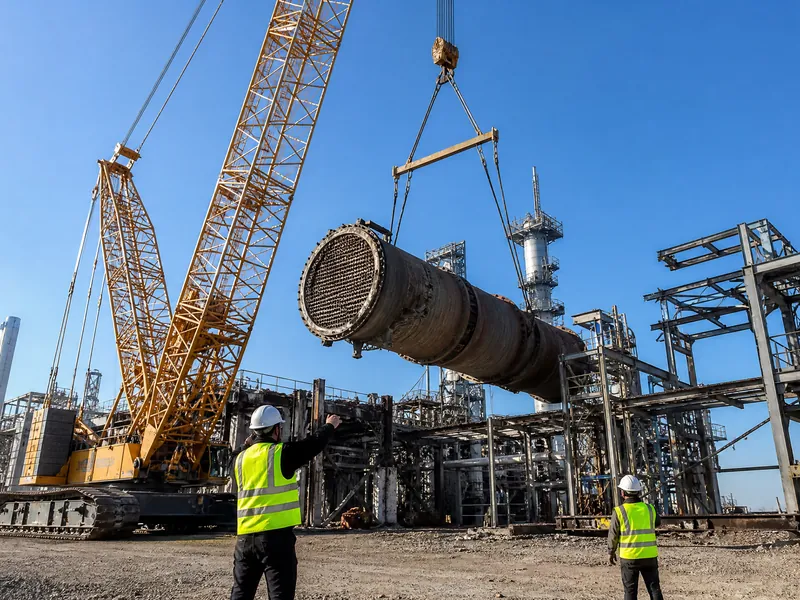
Kentucky's industrial base also features massive coal-fired power plants and expansive aluminium smelting facilities, particularly along the Ohio River corridor. The retirement of these heavy industrial assets presents significant engineering challenges. Towering exhaust stacks, massive boiler houses, and complex smelting potlines require specialized heavy equipment and advanced rigging techniques to safely bring down. Our operators utilize high-reach excavators and hydraulic shears to process thick structural steel.
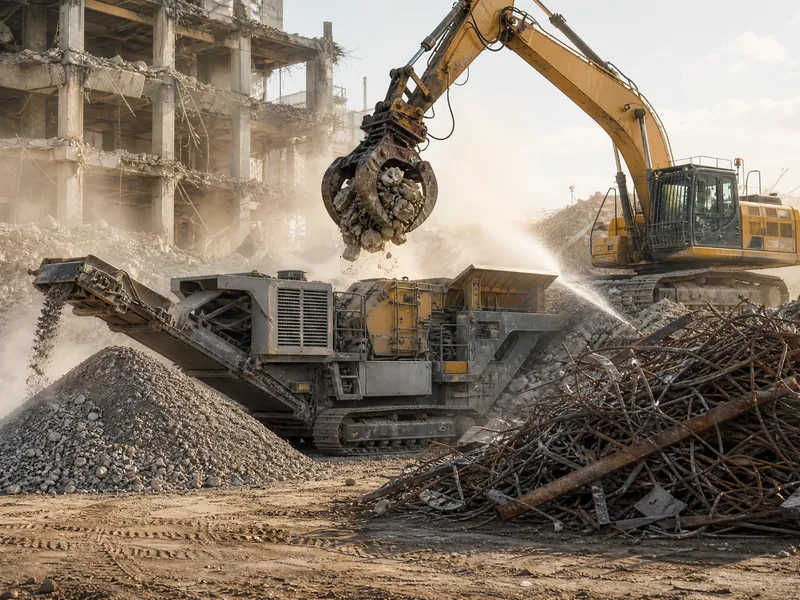
The demolition of coal infrastructure, including silos and ash handling facilities, demands rigorous dust control measures. We deploy high-capacity water cannons and localized misting systems to suppress airborne particulates at the source. These proactive strategies ensure that our operations comply with local air quality standards.
Throughout the deconstruction of these massive facilities, we prioritize the segregation and processing of recyclable materials. High-grade ferrous and non-ferrous metals are processed on-site and shipped directly to mills. Concrete foundations and containment structures are crushed and stockpiled for reuse as engineered fill, significantly reducing the volume of debris sent to landfills.
Local coverage
Cities we work in across Kentucky
Hazards and controls
Navigating Kentucky DEP Regulations and Abatement
Compliance with environmental regulations is a foundational element of our demolition services in Kentucky. The Kentucky DEP enforces strict guidelines for the handling, transportation, and disposal of hazardous materials. Our environmental compliance team manages the entire permitting process, ensuring that all required pre-demolition notifications, including federal NESHAP asbestos filings, are submitted accurately and on time. We conduct comprehensive site assessments to identify potential environmental liabilities.
During the abatement phase, our specially trained crews utilize advanced containment systems, such as negative pressure enclosures, to safely manage hazardous substances. We meticulously remove asbestos insulation, lead-based coatings, and other regulated materials, maintaining detailed records of all waste streams. We work closely with independent industrial hygienists to perform air monitoring and final clearance testing.
Our commitment to environmental stewardship extends to our comprehensive recycling programs. By diverting large volumes of concrete, masonry, and steel from local landfills, we minimize the environmental footprint of our demolition activities and support sustainable redevelopment practices across the state.
Sequence of work
How a project runs, stage by stage
Site walk and survey
We walk the structure with you, review drawings, and record structural condition, live utilities, hazardous materials and salvageable assets before any number is quoted.
Engineering and permits
An engineered demolition plan sets the sequence, exclusion zones and means of collapse. We file local permits and the federal pre-demolition notification, and collect utility isolation sign-offs.
Abatement and pre-clean
Regulated materials come out first under containment with clearance documentation, so the structural phase is never held up by a surprise inside a wall or a pipe chase.
Dismantling and teardown
High-reach machines, shears, torch crews and hand demolition work the sequence top-down or inside-out, with salvage separated as it comes out rather than picked from a mixed pile afterwards.
Processing and haul-off
Steel is sheared and shipped, concrete is crushed for reuse or hauled, and every regulated stream leaves under manifest to a permitted facility.
Grading and closeout
Foundations and slabs come out to the agreed depth, the site is graded and stabilised, and you receive manifests, clearance reports and closeout documentation.
Permits and notification
Coordinating Logistics Across Kentucky's Industrial Corridors
Efficiently moving heavy machinery and transporting processed scrap requires meticulous logistical planning, especially given Kentucky's varied landscape. Whether operating in the dense commercial districts of Louisville or the sprawling industrial zones near Paducah, our logistics coordinators design site-specific transport strategies. We take full advantage of the region's extensive highway systems, rail links, and the Ohio River waterway to facilitate the smooth flow of materials.
When working in constrained urban areas, our approach shifts to accommodate limited access and strict noise ordinances. We deploy compact, highly maneuverable equipment and establish comprehensive traffic management plans to ensure public safety. Our teams are highly proficient in selective interior teardowns, systematically stripping out outdated mechanical infrastructure and interior finishes while leaving the primary building envelope intact.
For large-scale industrial sites with access to river ports or rail sidings, we prioritize bulk transport methods. Loading processed steel and other recovered metals directly onto barges or freight trains drastically cuts down on trucking expenses.
Salvage and recovery
Subsurface Clearing and Final Handover Procedures
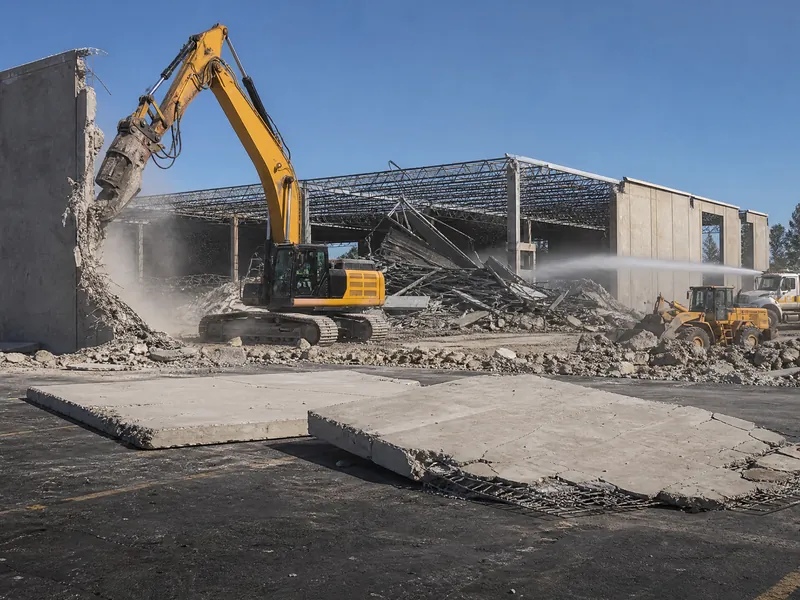
Bringing a demolition project to a successful conclusion requires more than just knocking down buildings; it demands rigorous subsurface clearing. Once the skyline is clear, our heavy equipment operators target the hidden infrastructure. Using massive excavators fitted with hydraulic hammers, we break apart deep concrete footings, heavy machine foundations, and buried utility corridors. The resulting concrete rubble is typically crushed on-site, leaving the ground free of obstacles.
Properly stabilizing the land is the final physical step before handover. Our crews grade the entire footprint to establish correct stormwater drainage patterns and deploy necessary erosion control barriers. A joint walkthrough with the facility owner is then scheduled to ensure every detail of the contracted scope has been achieved.
The project officially concludes with the delivery of a comprehensive documentation binder. This critical package contains all finalized environmental permits, independent hygiene clearance certificates, and detailed manifests for every load of waste or recycled material that left the site. This paperwork is essential for proving regulatory adherence.
Common questions
Questions owners and engineers ask
How do you calculate the salvage credit for a teardown in Kentucky?
The salvage credit serves as a direct reduction to your overall project expenses. As our crews dismantle your facility, we actively recover valuable commodities like structural steel, heavy industrial machinery, and non-ferrous metals. We assess the current market value of these extracted assets and subtract that figure from the gross cost of the demolition. This financial model ensures that our team is highly motivated to identify and process as much recyclable material as possible during the teardown.
What is the typical timeframe for securing demolition permits?
Obtaining the necessary approvals requires close coordination with the Kentucky DEP and local municipal offices. A mandatory 10-day waiting period is required for the federal NESHAP asbestos notification before any structural wrecking can start. For larger, more complex industrial sites, the permitting phase may involve extensive environmental audits and detailed abatement strategies. We manage all regulatory submissions and communicate with authorities early in the process to prevent any delays to your project timeline.
Who is in charge of disconnecting the facility's utilities?
The property owner is generally responsible for contacting local utility companies to shut off services at the street level. However, within the actual footprint of the plant, our specialized crews handle all utility isolation and de-energization tasks. We physically sever electrical feeds, cap all water and gas mains, and thoroughly purge process piping. We require documented proof that all utilities are dead before we allow any heavy demolition equipment onto the site.
What methods do you use to control dust during the demolition?
Managing airborne particulates is a core component of our environmental safety protocols. We utilize high-volume water cannons, targeted sprayers, and localized misting equipment directly on our concrete crushers and structural wrecking machines. These customized dust suppression strategies are designed to strictly adhere to Kentucky DEP regulations, ensuring that our dismantling and crushing activities do not cause a nuisance to neighboring properties or violate local air quality standards.
What kind of paperwork will I receive at the end of the project?
When the teardown is complete, we provide a detailed closeout portfolio that documents the entire deconstruction and environmental remediation process. This package includes all approved permits, NESHAP notifications, and final clearance reports from third-party environmental hygienists. We also include comprehensive waste manifests and certified weight tickets for all materials removed from the property, covering hazardous waste, general debris, and recycled metals. This documentation is crucial for verifying regulatory compliance and transferring the site.
Ready to price the teardown?
Industrial Demolition USA provides engineered teardown and asset recovery solutions for complex facilities throughout Kentucky. Our experienced crews manage every phase of the project, from environmental remediation to final site grading. Contact us at 954-740-1983 or email electricalequipmentbuyers@gmail.com to discuss your upcoming decommissioning requirements.