
Overview
Our crews manage the entire deconstruction lifecycle, executing rigorous environmental remediation, structural dismantling, and comprehensive site clearing. We work alongside plant engineers and property developers to safely retire obsolete industrial assets, navigating the unique logistical and environmental challenges of the Calumet region. By prioritizing asset recovery and scrap metal salvage, we generate credits that significantly offset the net cost of your facility decommissioning project.
The work
Dismantling Steel Mills and Heavy Manufacturing Plants
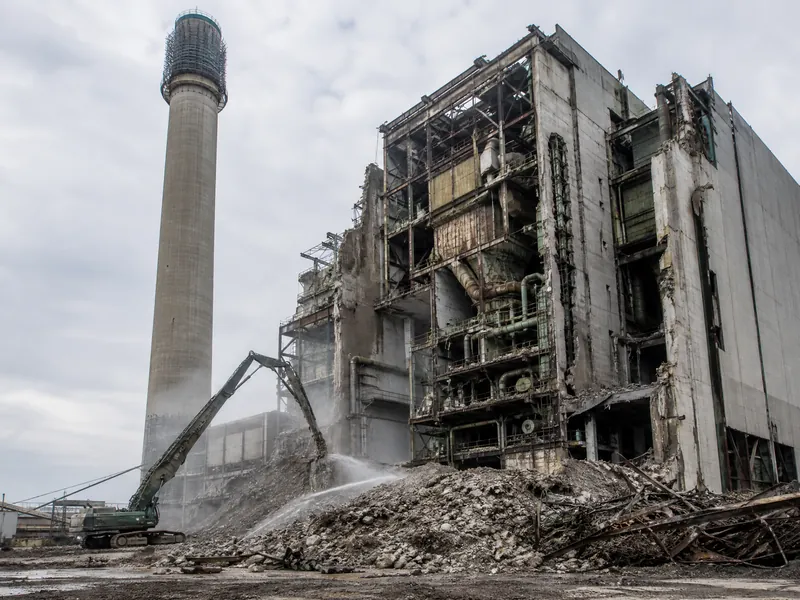
The industrial heritage of East Chicago is dominated by massive steel production facilities and heavy manufacturing plants. Deconstructing these robust structures requires specialized heavy wrecking capabilities. Our crews are experienced in the systematic teardown of blast furnaces, rolling mills, and expansive fabrication shops. We deploy high-reach excavators fitted with severe-duty hydraulic shears to cut through heavy structural steel and dismantle complex industrial architecture. This controlled approach allows us to bring down massive structures safely, without relying on explosive demolition, thereby protecting adjacent active industrial operations and nearby infrastructure.
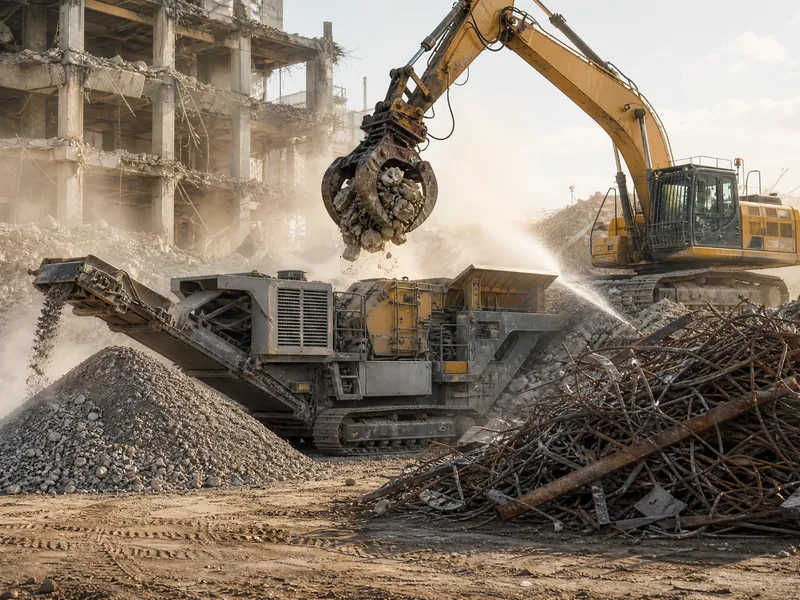
The foundations of these steel facilities are typically massive, designed to support extreme loads and intense vibrations. We utilize heavy hydraulic breakers and mobile concrete crushers to process these deep foundations and thick floor slabs. The resulting crushed concrete is often repurposed on-site as fill material, reducing the need for imported aggregate and minimizing the volume of debris transported over local roadways. This efficient site clearing process prepares the heavy industrial footprint for modern redevelopment or expansion.
Method and sequence
Environmental Abatement in the Calumet Region
Industrial sites in East Chicago often carry a legacy of complex environmental challenges that must be addressed prior to structural demolition. Our abatement teams are highly trained in the remediation of hazardous materials commonly found in older refineries and steel mills. We execute the safe removal of asbestos-containing materials from high-temperature piping and boiler systems, ensuring strict compliance with IDEM regulations. Additionally, we manage the abatement of lead-based paints and the cleanup of residual industrial lubricants and heavy metals.
Establishing secure containment is paramount during the remediation phase, particularly in densely industrialized areas near Lake Michigan. We utilize advanced negative air pressure enclosures and specialized decontamination protocols to prevent the migration of hazardous particulates. All abated materials are carefully packaged, manifested, and transported to licensed disposal facilities. This rigorous approach to environmental remediation protects the local ecosystem and shields the property owner from long-term environmental liabilities.
Regional coverage
Other Indiana cities we cover
Hazards and controls
Decommissioning Refinery and Chemical Infrastructure
The presence of major oil refining operations in the neighboring Whiting area means our East Chicago projects frequently involve the decommissioning of complex petrochemical infrastructure. Dismantling these facilities requires meticulous planning and execution to manage the risks associated with highly flammable or toxic residuals. Our decommissioning specialists oversee the systematic purging, flushing, and inerting of pipelines, storage tanks, and processing vessels. We verify that all systems are completely free of hazardous vapors before any torch cutting or mechanical dismantling begins.
The deconstruction of refinery components involves carefully engineered rigging and lifting plans. We dismantle distillation columns, heat exchangers, and catalytic crackers piece by piece, safely lowering the heavy components to the ground for further processing. This methodical teardown prevents accidental releases and ensures the safety of our crews. The dismantled infrastructure is then systematically processed for scrap, maximizing the recovery of valuable alloys and heavy steel.
Permits and notification
Maximizing Value Through Scrap Metal Recovery
Heavy industrial demolition in East Chicago yields massive quantities of recyclable metals, presenting a significant opportunity for asset recovery. Our wrecking methodology is designed to maximize the salvage of structural steel, copper wiring, stainless steel piping, and specialized industrial alloys. As structures are dismantled, our material handlers sort and segregate the metals on-site, preparing them for efficient transport to regional scrap processors.
The financial value of this recovered scrap is applied directly as a salvage credit to the client's account, substantially reducing the overall cost of the demolition project. This net cost approach makes large-scale site clearing more economically viable for facility owners. We maintain transparent tracking of all salvaged materials, providing detailed reports that document the tonnage and valuation of the recovered metals, ensuring our clients receive the full financial benefit of the asset recovery process.
Salvage and recovery
Regulatory Compliance and Regional Logistics
Executing demolition projects in East Chicago requires seamless coordination with state regulators and local authorities. We manage the comprehensive permitting process, ensuring all activities comply with IDEM standards and federal environmental mandates. Our project managers handle the required NESHAP notifications for asbestos and secure the necessary local permits for structural wrecking and debris hauling. This proactive administrative management keeps the project compliant and on schedule.
The logistics of moving heavy equipment and debris in the Calumet region require careful planning. We establish approved haul routes that minimize the impact on local traffic and coordinate with regional rail and port facilities when necessary for the transport of massive scrap components. Whether we are operating in East Chicago or managing projects in nearby Gary, Hammond, or Indianapolis, our logistical expertise ensures that the site clearing process is executed smoothly and efficiently, from initial mobilization to final demobilization.
Capabilities
Abatement, remediation and recovery
Common questions
Questions owners and engineers ask
What is the process for determining the salvage credit for a steel mill teardown?
We conduct a detailed engineering survey of the facility to estimate the tonnage of recoverable ferrous and non-ferrous metals. We factor in current market rates for scrap steel, copper, and alloys to project the total salvage value. This estimated value is then applied as a credit against the cost of the demolition and abatement services, providing you with a clear net cost for the project.
How do you handle the demolition of structures that are attached to active facilities?
We specialize in selective demolition and structural separation. Our engineers design a separation plan that involves carefully severing shared utilities and structural connections. We then utilize precise mechanical dismantling techniques, such as concrete sawing and controlled shearing, to remove the obsolete structure without compromising the integrity or operations of the adjacent active facility.
Are you equipped to handle the removal of deep industrial foundations?
Yes, the extraction of massive concrete foundations, machine pits, and subterranean vaults is a core capability. We deploy heavy excavators with hydraulic breakers to fracture the concrete, followed by mobile crushers to process the material on-site. We then backfill the excavations and grade the site to ensure it is stable and ready for future use.
Who manages the environmental reporting required by IDEM?
Industrial Demolition USA handles all required environmental reporting and documentation. We submit the necessary pre-demolition notifications, maintain detailed logs of all abatement activities, and provide you with the final waste manifests and disposal receipts. This comprehensive documentation ensures you have proof of full compliance with all IDEM regulations.
What safety protocols are in place for torch cutting in former chemical plants?
Safety is our primary focus during hot work. Before any torch cutting occurs, all lines and vessels must be thoroughly purged, cleaned, and tested for explosive vapors. We establish strict hot work permitting procedures, maintain dedicated fire watches with appropriate extinguishing equipment, and ensure all personnel are utilizing specialized personal protective equipment.
Ready to price the teardown?
Industrial Demolition USA is your trusted partner for heavy industrial dismantling and site clearing in East Chicago, Indiana. We possess the specialized equipment and expertise to safely execute the most demanding teardown projects. Contact us at 954-740-1983 or email electricalequipmentbuyers@gmail.com to schedule a comprehensive evaluation of your industrial facility.