
Overview
Plant owners rely on our crews to safely deconstruct obsolete infrastructure, from towering exhaust stacks to deep concrete press pits. Our heavy equipment fleet handles the most demanding structural steel and reinforced concrete challenges found in former automotive and industrial sites, clearing the way for brownfield redevelopment by removing the physical remnants of legacy operations. Every project involves meticulous planning to address local environmental conditions and complex structural loads.
The work
Tearing Down Rust Belt Manufacturing Infrastructure
The legacy of heavy industry in this region left behind massive structures built to withstand extreme operational stresses. Dismantling former LTV and Republic steel works in Cleveland or historic Timken bearing plants in Canton requires specialized high-reach excavators and heavy-duty shear attachments. These facilities feature thick structural steel columns, heavy crane runways, and reinforced concrete floors designed to support immense loads. Our crews systematically cut and lower these massive steel members, ensuring controlled deconstruction without compromising site safety.
Taking apart Youngstown mill sites and sprawling GM or Chrysler stamping plants involves dealing with complex interconnected structures. We engineer the sequence of demolition to maintain structural stability as we remove roof trusses and exterior cladding. We separate ferrous and non-ferrous metals at the source, preparing the structural steel for transport to regional electric arc furnaces. This systematic approach maximizes the salvage credit applied to the net cost, delivering efficient plant retirement.
Method and sequence
Retiring Coal-Fired Units Along the Ohio River
Decommissioning power generation facilities situated on the banks of major waterways presents unique logistical and environmental challenges. Retired coal-fired units along the Ohio River require precise dismantling of boilers, turbines, coal handling systems, and towering exhaust stacks. We utilize selective interior demolition, heavy rigging, and controlled implosion to bring down these massive structures safely. Proximity to the river means our project managers must account for seasonal flooding risks and high water tables during the planning phase.
Executing a teardown near navigable waters often allows for barge access, which can streamline the removal of heavy scrap and debris. However, it also necessitates strict environmental controls to prevent any runoff from entering the river system. We deploy robust containment measures, including silt fencing and floating booms, to protect the aquatic environment. The removal of massive turbine generators is handled with extreme care, ensuring all residual oils are drained completely before wrecking begins.
Hazards and controls
Managing Subsurface Risks and Heavy Press Pits
Industrial sites in this region frequently conceal massive underground structures that complicate the final stages of site clearing. Former tire plants in Akron and automotive facilities in Dayton often feature deep concrete press pits, utility tunnels, and heavy equipment foundations. Removing these subsurface elements requires heavy hydraulic breakers and extensive excavation. We must contend with the local freeze-thaw cycles and expansive clay soils, which can affect the stability of deep excavations and require careful shoring techniques.
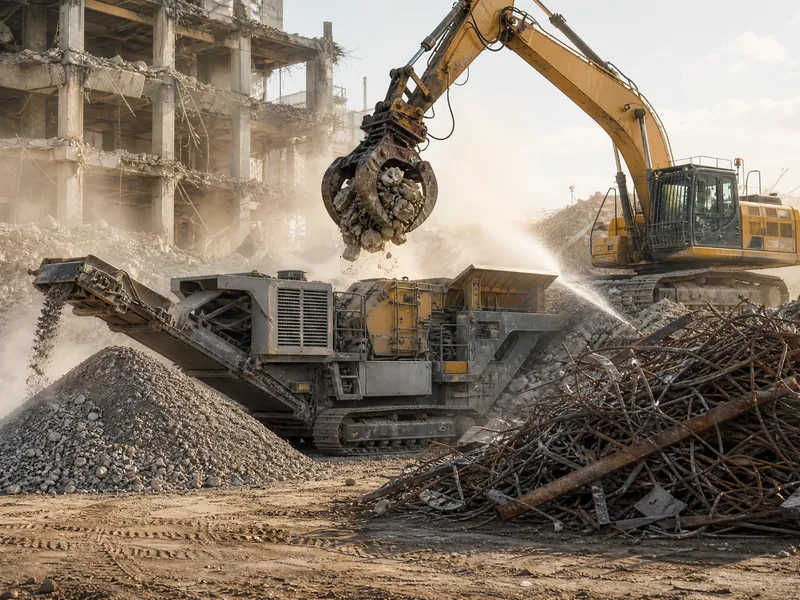
Extracting deep foundations involves breaking through heavily reinforced concrete that was poured decades ago. Our operators use specialized attachments to pulverize the concrete and cut through thick rebar grids. Once the concrete is broken down, we process it on-site using mobile crushing plants. This crushed material is repurposed as clean fill to backfill the massive voids left by the removed press pits, stabilizing the site for future commercial or industrial development.
Sequence of work
How a project runs, stage by stage
Site walk and survey
We walk the structure with you, review drawings, and record structural condition, live utilities, hazardous materials and salvageable assets before any number is quoted.
Engineering and permits
An engineered demolition plan sets the sequence, exclusion zones and means of collapse. We file local permits and the federal pre-demolition notification, and collect utility isolation sign-offs.
Abatement and pre-clean
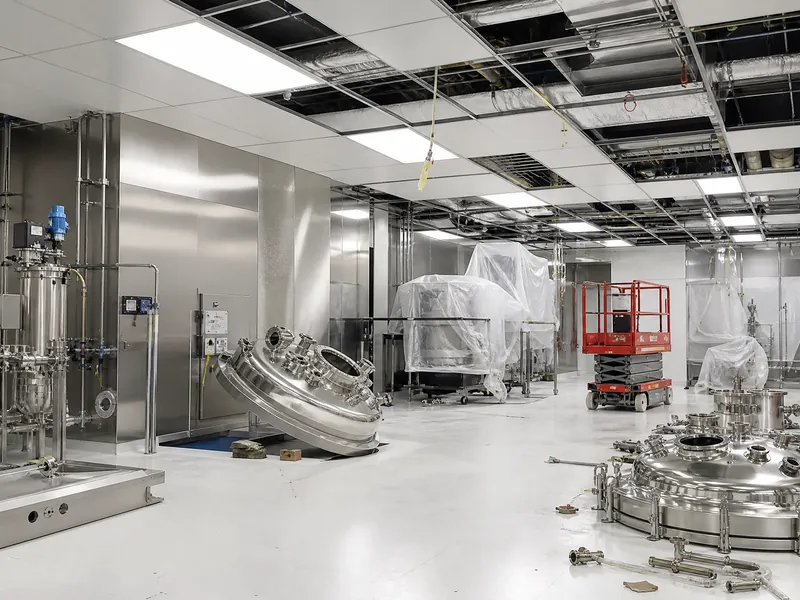
Regulated materials come out first under containment with clearance documentation, so the structural phase is never held up by a surprise inside a wall or a pipe chase.
Dismantling and teardown
High-reach machines, shears, torch crews and hand demolition work the sequence top-down or inside-out, with salvage separated as it comes out rather than picked from a mixed pile afterwards.
Processing and haul-off
Steel is sheared and shipped, concrete is crushed for reuse or hauled, and every regulated stream leaves under manifest to a permitted facility.
Grading and closeout
Foundations and slabs come out to the agreed depth, the site is graded and stabilised, and you receive manifests, clearance reports and closeout documentation.
Permits and notification
Navigating State Environmental Regulations and Notifications
Compliance with environmental regulations dictates the timeline and execution strategy for every industrial teardown. The Ohio EPA enforces strict guidelines regarding the handling and disposal of hazardous materials found in legacy manufacturing plants. Before any structural demolition commences, we must submit the mandatory federal NESHAP 10-working-day asbestos notification. This waiting period allows regulators to review our abatement plans and ensures that all asbestos-containing materials are properly removed by certified abatement teams.
Beyond asbestos, older industrial facilities often contain lead-based paint and PCB-laden transformers. We coordinate the safe extraction and transportation of these materials to licensed disposal facilities. Local county and city permitting requirements in municipalities like Cincinnati and Toledo add another layer of regulatory oversight. Our project managers handle all utility disconnect sign-offs, securing the necessary approvals to sever gas, water, and high-voltage electrical lines before the heavy equipment mobilizes to the site.
Salvage and recovery
Processing Structural Steel and Concrete for Regional Markets
The economics of heavy industrial demolition rely on the efficient recovery and processing of scrap materials. The region's robust network of scrap processors and electric arc furnaces provides a strong market for the thousands of tons of structural steel we recover. The salvage value of these recovered metals is calculated as a credit that directly offsets the client's overall demolition cost. Our crews use mobile shears to cut steel beams into mill-ready sizes right on the job site.
Concrete recovery is equally important for minimizing disposal costs and environmental impact. We deploy heavy-duty crushers to process concrete slabs and foundations into reusable aggregate. This crushed concrete is frequently used on-site to grade the property and create stable access roads for future construction. By diverting massive volumes of steel and concrete away from local landfills, we streamline the hauling logistics and reduce heavy truck traffic.
Logistics
Executing Complex Deconstruction in Dense Urban Corridors
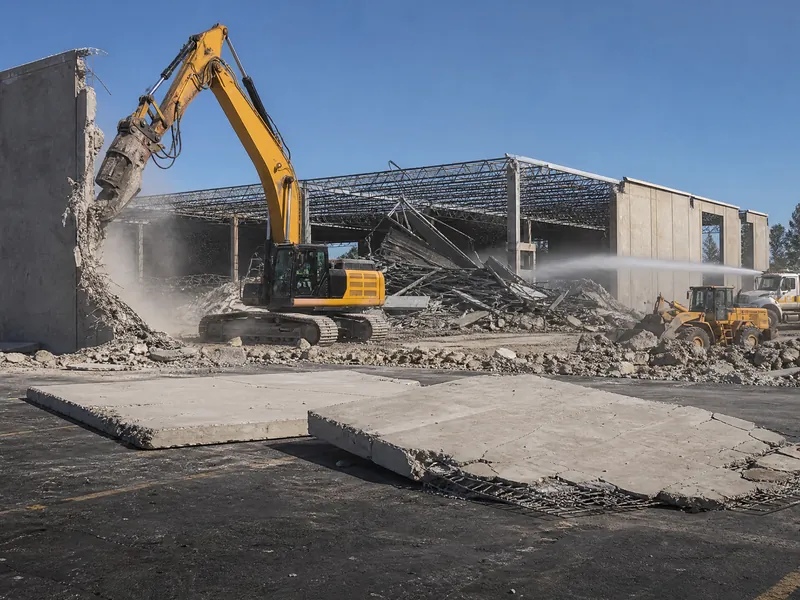
Many legacy industrial facilities are landlocked within densely populated urban areas, requiring surgical precision during the wrecking process. Teardowns in cities like Columbus and Cleveland often take place mere feet from active roadways and active rail lines. We engineer specific drop zones and utilize high-reach excavators to carefully dismantle structures from the top down, preventing debris from falling outside the established perimeter. Dust suppression is a constant priority, with water cannons deployed to mitigate airborne particulates.
Vibration control is another critical factor when operating heavy machinery near historic structures or sensitive infrastructure. We monitor seismic activity during the demolition of heavy foundations to ensure we remain within safe limits. Coordinating with local rail operators is mandatory when dismantling structures adjacent to active rail spurs. Our site superintendents maintain strict access controls to handle the continuous flow of end-dump trailers hauling debris away from the congested urban core.
Common questions
Questions owners and engineers ask
What permits are required before dismantling a manufacturing facility in this region?
Securing the proper authorizations is the first step in our project execution. We coordinate with the Ohio EPA to ensure all environmental regulations are met, including the mandatory federal NESHAP 10-working-day asbestos notification. We also obtain local demolition permits from city building departments and secure utility disconnect sign-offs for high-voltage electrical, gas, and water lines. This permitting process ensures the site is legally ready for heavy wrecking.
How does the salvage value of heavy industrial equipment affect the project cost?
Recovered assets and scrap metals play a significant role in the financial structure of a teardown. The market value of the salvaged structural steel and industrial components is applied as a salvage credit. This credit directly offsets the gross cost of the demolition labor, equipment, and disposal fees. The resulting net cost provides a clear financial picture.
Are you equipped to remove deep concrete foundations from former stamping plants?
Extracting massive subsurface structures requires specialized heavy machinery and deep excavation expertise. Our fleet includes large excavators fitted with hydraulic breakers capable of pulverizing the heavily reinforced concrete found in press pits. We navigate the challenges of expansive clay soils and high water tables to safely remove these underground obstacles. Once extracted, the concrete is crushed on-site and reused as clean fill to stabilize the excavated areas.
What steps are taken to protect adjacent active rail lines during a teardown?
Operating heavy equipment near active freight corridors demands rigorous safety protocols and precise execution. We engineer controlled drop zones to ensure that all dismantled steel and masonry fall strictly within the site footprint. Our project managers coordinate closely with rail operators to schedule the most critical wrecking phases during track closures. Continuous vibration monitoring is employed to prevent any disruption to the rail bed stability.
Do you handle the decommissioning of obsolete boiler systems and exhaust stacks?
Taking down towering power generation infrastructure is a core capability of our heavy demolition crews. We utilize high-reach excavators, heavy rigging, and controlled implosion to safely bring down massive exhaust stacks and industrial boilers. The process involves meticulous hazardous material abatement before the structural dismantling begins. We systematically cut and lower the heavy steel components, preparing them for transport to regional scrap processing facilities.
Ready to price the teardown?
Industrial Demolition USA provides the heavy equipment and engineering expertise required to dismantle complex industrial facilities. We commit to executing every plant retirement with strict adherence to safety and environmental regulations. To discuss your upcoming demolition requirements, call 954-740-1983 or email electricalequipmentbuyers@gmail.com.