
Overview
We manage the entire lifecycle of the decommissioning process, from initial environmental abatement and utility isolation to the final grading of the cleared site. Our approach to large-scale dismantling prioritizes risk mitigation, strict regulatory compliance, and the protection of adjacent properties. By systematically processing structural steel, heavy machinery, and concrete during the demolition sequence, we maximize asset recovery and apply a substantial salvage credit to reduce your overall project expenditure.
The work
Comprehensive Site Assessment And Deconstruction Engineering
The execution of a large-scale structural demolition project begins long before the first piece of heavy equipment arrives on site. Our engineering team conducts an exhaustive structural analysis of the facility to understand its load-bearing design, construction materials, and potential points of failure. We review historical blueprints, perform physical inspections, and identify critical structural nodes that will dictate the sequence of the teardown. This rigorous assessment allows us to develop a highly detailed deconstruction plan that ensures the structure is brought down in a controlled, predictable manner.
Based on this engineering analysis, we select the most appropriate demolition methodology for the specific structure. Whether the project requires high-reach excavation, controlled explosive implosion, or systematic mechanical dismantling, our approach is tailored to the unique constraints of the site. We calculate the necessary exclusion zones, design temporary support structures if required, and establish a step-by-step wrecking sequence that maximizes safety and efficiency. This meticulous planning phase is essential for mitigating the inherent risks associated with bringing down massive industrial complexes and multi-story commercial buildings.
Method and sequence
Heavy Mechanical Wrecking And High-Reach Excavation
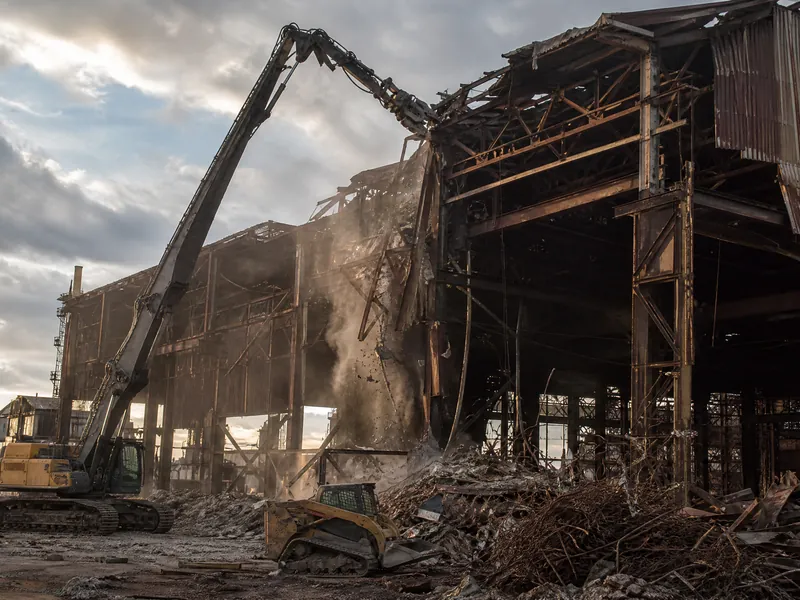
For the majority of structural demolition projects, mechanical wrecking using heavy-duty excavators is the safest and most efficient method of deconstruction. Industrial Demolition USA maintains a specialized fleet of high-reach excavators equipped with advanced hydraulic attachments, including concrete pulverizers, steel shears, and heavy-duty grapples. These powerful machines allow our operators to systematically dismantle structures from the top down, safely reaching elevations that would otherwise require hazardous manual labor or scaffolding.
Our operators are highly trained in the precise application of mechanical force to dismantle complex structural frameworks. Using hydraulic shears, we can slice through heavy steel I-beams and columns with surgical precision, while concrete crushers are employed to break apart reinforced slabs and shear walls. This mechanized approach to teardowns not only accelerates the project schedule but also allows for the immediate sizing and sorting of debris as it falls to the ground. By continuously processing the material during the wrecking phase, we maintain a clear, safe work zone and prepare the structural components for efficient asset recovery and transportation.
More scope we cover
Related demolition service lines
Implosion Demolition
Industrial Demolition USA provides engineered controlled implosion services for large-scale industrial…
Interior Demolition
Industrial Demolition USA provides selective interior demolition and dismantling services for active…
Substation Demolition
Industrial Demolition USA performs complete substation demolition and decommissioning for utility providers,…
Hazards and controls
Environmental Remediation And Hazardous Material Abatement
Prior to the commencement of any structural demolition, the facility must be thoroughly cleared of all hazardous materials to ensure regulatory compliance and protect public health. Our specialized abatement crews conduct comprehensive environmental remediation, systematically removing asbestos-containing materials, lead-based paints, PCB-containing transformers, and residual industrial chemicals. We establish strict containment zones and utilize negative air pressure systems to safely extract these hazardous substances without contaminating the surrounding environment.
The abatement process is seamlessly integrated into our overall decommissioning schedule, preventing unnecessary delays in the project timeline. We handle all required notifications to state and federal environmental regulators, including the mandatory NESHAP asbestos notifications. Once the hazardous materials are safely removed, packaged, and transported to approved disposal facilities, we provide the client with complete documentation and disposal manifests. This rigorous approach to environmental remediation ensures that the subsequent structural teardown can proceed safely and without the risk of releasing regulated contaminants into the air or soil.
Sequence of work
How a project runs, stage by stage
Site walk and survey
We walk the structure with you, review drawings, and record structural condition, live utilities, hazardous materials and salvageable assets before any number is quoted.
Engineering and permits
An engineered demolition plan sets the sequence, exclusion zones and means of collapse. We file local permits and the federal pre-demolition notification, and collect utility isolation sign-offs.
Abatement and pre-clean
Regulated materials come out first under containment with clearance documentation, so the structural phase is never held up by a surprise inside a wall or a pipe chase.
Dismantling and teardown
High-reach machines, shears, torch crews and hand demolition work the sequence top-down or inside-out, with salvage separated as it comes out rather than picked from a mixed pile afterwards.
Processing and haul-off
Steel is sheared and shipped, concrete is crushed for reuse or hauled, and every regulated stream leaves under manifest to a permitted facility.
Grading and closeout
Foundations and slabs come out to the agreed depth, the site is graded and stabilised, and you receive manifests, clearance reports and closeout documentation.
Permits and notification
Concrete Processing And On-Site Material Crushing
Heavy industrial facilities and commercial structures contain massive volumes of concrete in their foundations, floors, and structural walls. Rather than hauling this heavy, bulky material to a landfill, Industrial Demolition USA employs advanced on-site concrete crushing and processing techniques. As the structure is dismantled, our excavators use hydraulic hammers and pulverizers to break the concrete into manageable pieces, simultaneously separating the embedded steel rebar for scrap metal recovery.
The sized concrete is then fed through our mobile crushing plants, which reduce the material to a specified aggregate size. This recycled concrete aggregate can be repurposed directly on the site as backfill for basements and voids, or utilized as a stable base material for future construction phases. By processing the concrete on-site, we drastically reduce the number of heavy truck trips required for debris removal, lowering the environmental impact of the project and significantly reducing transportation and disposal costs. This sustainable approach to material management is a core component of our comprehensive site clearing services.
Salvage and recovery
Asset Recovery And Scrap Metal Valuation
The structural demolition of an industrial facility generates substantial quantities of valuable scrap metal, including heavy structural steel, copper wiring, aluminum siding, and industrial machinery. Our deconstruction process is explicitly designed to maximize the recovery and valuation of these commodities. As the building is dismantled, our crews systematically sort the metals, using hydraulic shears to cut the steel into optimal lengths for the scrap market.
The financial return from this asset recovery operation is a critical factor in the overall economics of the project. We calculate the market value of the recovered metals and apply this amount as a direct salvage credit against the cost of the demolition services. This transparent valuation process ensures that the client receives the maximum financial benefit from the retired facility. By efficiently managing the scrap metal stream and leveraging our relationships with major recycling networks, we provide a highly competitive net cost for the complete teardown and site clearing of your industrial property.
In-house trades
Capabilities that run alongside this work
Coverage
Where we take on this work
Common questions
Questions owners and engineers ask
How do you determine the safest method for bringing down a large structure?
Our engineering team conducts a comprehensive structural analysis of the facility, reviewing blueprints and performing physical inspections to understand the load-bearing design. Based on this data, we develop a detailed deconstruction plan that dictates the sequence of the teardown. We select the methodology - whether high-reach excavation, mechanical dismantling, or controlled implosion - that provides the highest level of safety and efficiency for the specific site constraints.
What happens to the concrete foundations and slabs after the building is demolished?
We utilize heavy excavators equipped with hydraulic hammers to break apart the concrete foundations and slabs. The material is then processed through our mobile crushing plants on-site to create reusable aggregate. This recycled concrete can be used to backfill voids on your property or serve as a base for future construction, which significantly reduces the costs associated with hauling and landfill disposal.
How is the value of the scrap metal factored into the project cost?
During the structural demolition, we systematically sort and process all recoverable metals, including structural steel and copper. The current market value of these materials is calculated and applied as a salvage credit, which directly offsets your net demolition cost. This asset recovery process is fully transparent and is designed to minimize your overall capital expenditure for the site clearing project.
Do you handle the necessary permits and environmental notifications?
Yes, we manage the entire regulatory compliance process for the teardown. This includes securing the required local demolition permits and submitting all mandatory environmental notifications, such as the federal NESHAP asbestos notification. Our team ensures that all paperwork is filed correctly and that the project adheres to all state and municipal regulations from the initial abatement through to the final grading.
How do you protect neighboring properties during a complete facility teardown?
We establish strict exclusion zones and utilize engineered dismantling sequences to ensure the structure falls inward, away from adjacent properties. We also implement comprehensive environmental controls, including continuous water misting for dust suppression and vibration monitoring systems to protect nearby structures. Our high-reach excavators allow for precise, controlled mechanical wrecking that minimizes the impact on the surrounding area.
Ready to price the teardown?
Industrial Demolition USA provides the heavy equipment, engineering expertise, and rigorous safety protocols required for complex structural demolition projects. We manage every aspect of the facility teardown, from hazardous material abatement to final site grading and asset recovery. Contact us today by calling 954-740-1983 or emailing electricalequipmentbuyers@gmail.com to discuss your site clearing requirements and receive a comprehensive project estimate.