
Overview
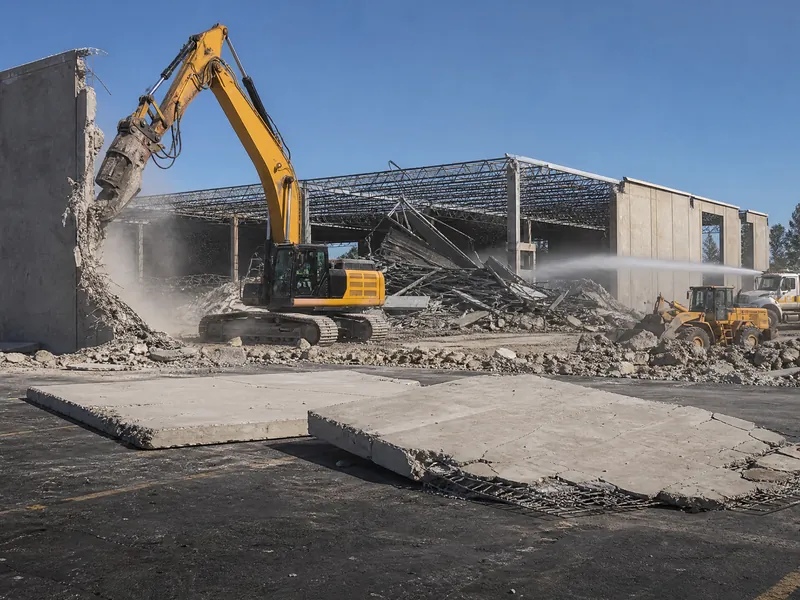
Our crews handle the complete deconstruction sequence, from initial hazard abatement and utility isolation to final grading and scrap metal recovery. Whether dismantling legacy steel infrastructure in Buffalo, decommissioning retired power units on the Hudson, or executing interior strip-outs in New York City, we deliver controlled wrecking solutions that protect adjacent operations. We prepare the site for its next phase of development while maximizing the value of recovered assets.
The work
Dismantling New York's Legacy Industrial Infrastructure
New York's industrial history has left a legacy of massive manufacturing facilities that require specialized demolition expertise. In western New York, the structural teardown of Buffalo and Lackawanna's steel legacy sites involves managing heavy structural steel, massive concrete foundations, and extensive environmental remediation. Our crews utilize high-reach excavators and heavy-duty hydraulic shears to safely dismantle these towering structures. We also handle the decommissioning of complex manufacturing sites, such as the Kodak and Xerox works in Rochester, which require meticulous interior dismantling, cleanroom deconstruction, and the careful management of specialized chemical processing infrastructure.
The deconstruction of brownfield mill sites along the Erie Canal corridor presents unique logistical and environmental challenges. These projects often require extensive abatement of legacy materials, including asbestos and lead-based paints, before structural wrecking can begin. We develop site-specific demolition plans that address the unique hazards of these historic facilities, ensuring that the surrounding waterways and communities are protected throughout the teardown process. Our systematic approach clears these sites for modern redevelopment while managing all regulatory compliance requirements.
Method and sequence
Power Plant Decommissioning and Urban Strip-Outs
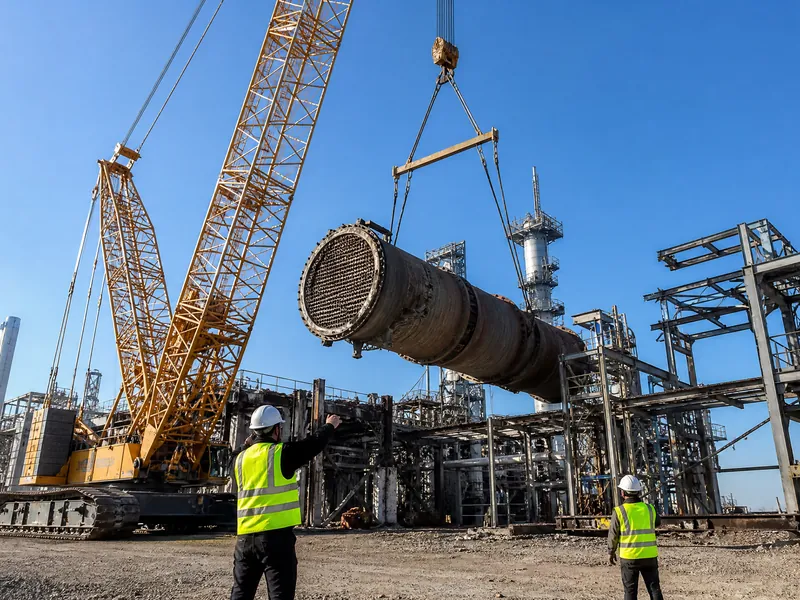
The retirement of coal and oil-fired power generation units along the Hudson and Niagara rivers requires a highly engineered approach to demolition. Industrial Demolition USA specializes in the teardown of these massive energy facilities. Our process begins with comprehensive environmental remediation, addressing hazardous ash residues and asbestos-containing materials. We utilize controlled collapse techniques and heavy mechanical dismantling to safely bring down boiler houses, turbine halls, and cooling towers. Utility isolation and de-energization are critical components of our sequence, ensuring that all high-voltage systems are fully locked out before wrecking commences.
In addition to heavy industrial sites, we execute complex interior strip-outs and data hall decommissioning in dense urban environments like New York City. These projects require precise logistical planning to manage material removal and equipment access in highly congested areas. We handle the dismantling of raised floor plenums, UPS battery rooms, and heavy mechanical systems while minimizing disruption to active building operations. Our crews are experienced in navigating the strict regulatory and logistical constraints of urban demolition, delivering efficient and safe deconstruction services.
Hazards and controls
Environmental Remediation and NYSDEC Compliance
Executing industrial demolition in New York requires strict adherence to state and federal environmental regulations. We coordinate closely with the New York State Department of Environmental Conservation (NYSDEC) to ensure all permits, notifications, and compliance requirements are met. This includes filing the necessary NESHAP notifications for asbestos abatement and managing the proper disposal of hazardous waste streams. Our environmental remediation teams are trained to handle complex contamination issues, including soil remediation and groundwater protection, ensuring that the site is fully cleared and safe for future use.
Our commitment to compliance extends to the management of stormwater runoff, dust control, and noise mitigation during the demolition process. We implement robust environmental controls to protect surrounding communities and waterways, particularly when working near sensitive ecological areas or active urban centers. By maintaining a rigorous compliance posture, we protect our clients from regulatory liability and ensure that the project proceeds without costly delays or interruptions from state or local agencies.
Sequence of work
How a project runs, stage by stage
Site walk and survey
We walk the structure with you, review drawings, and record structural condition, live utilities, hazardous materials and salvageable assets before any number is quoted.
Engineering and permits
An engineered demolition plan sets the sequence, exclusion zones and means of collapse. We file local permits and the federal pre-demolition notification, and collect utility isolation sign-offs.
Abatement and pre-clean
Regulated materials come out first under containment with clearance documentation, so the structural phase is never held up by a surprise inside a wall or a pipe chase.
Dismantling and teardown
High-reach machines, shears, torch crews and hand demolition work the sequence top-down or inside-out, with salvage separated as it comes out rather than picked from a mixed pile afterwards.
Processing and haul-off
Steel is sheared and shipped, concrete is crushed for reuse or hauled, and every regulated stream leaves under manifest to a permitted facility.
Grading and closeout
Foundations and slabs come out to the agreed depth, the site is graded and stabilised, and you receive manifests, clearance reports and closeout documentation.
Permits and notification
Scrap Metal Recovery and Salvage Credit
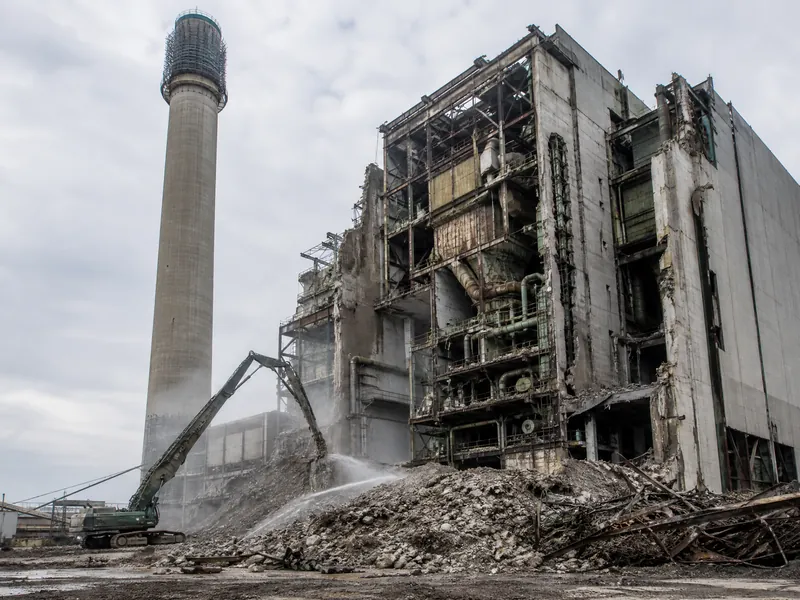
A critical component of our demolition process is the systematic recovery of valuable assets and scrap metal. Industrial Demolition USA implements comprehensive asset recovery strategies to offset the overall cost of the project. During the dismantling phase, we carefully segregate ferrous and non-ferrous metals, including heavy structural steel, copper wiring, aluminum, and specialized alloys found in industrial machinery. Our crews utilize mobile shears and torch cutting techniques to process these materials on-site, preparing them for efficient transport to regional recycling facilities.
The salvage credit generated from these recovered materials is applied directly to the client's project, significantly reducing the net cost of the demolition. We leverage our deep understanding of regional salvage markets and logistical networks, including New York's extensive rail infrastructure, waterways, and highway systems, to maximize the value of the recovered scrap. This integrated approach to wrecking and asset recovery ensures that our clients receive the most cost-effective solution for their facility retirement needs.
Salvage and recovery
Statewide Demolition Coverage and Logistics
Industrial Demolition USA provides comprehensive demolition coverage across the entire state of New York. Our crews are mobilized to execute projects in major industrial hubs, including Buffalo, New York City, Rochester, Syracuse, Albany, Niagara Falls, Binghamton, and Utica. We understand the regional logistics that impact material movement, utilizing New York's extensive highway system, rail networks, and port access to efficiently transport heavy equipment and process scrap metal. This statewide reach allows us to respond quickly to project demands and deploy the necessary resources to any location.
Local knowledge is a key factor in our operational success. We navigate the specific permitting requirements and logistical constraints of different municipalities, ensuring that our projects remain on schedule. Whether executing a complex structural teardown in a dense urban environment or clearing a sprawling industrial site in a rural county, our experienced project managers coordinate every aspect of the deconstruction sequence. We deliver turnkey demolition services that prepare New York's industrial properties for their next chapter.
Common questions
Questions owners and engineers ask
What is the typical timeline for decommissioning a manufacturing plant in New York?
The timeline for decommissioning a manufacturing plant depends on the size of the facility, the extent of environmental remediation required, and the complexity of the structural teardown. A large-scale industrial demolition project can take anywhere from several months to over a year. We develop a detailed project schedule during the initial planning phase, outlining the sequence of abatement, dismantling, and site clearing to ensure timely completion.
How do you handle environmental permits and notifications with NYSDEC?
Industrial Demolition USA manages all necessary environmental permits and notifications required by the New York State Department of Environmental Conservation (NYSDEC) and federal agencies. This includes filing NESHAP notifications for asbestos abatement and securing permits for hazardous waste disposal and stormwater management. Our compliance team ensures that all regulatory requirements are met before any wrecking or dismantling activities commence, protecting the client from liability.
How is the salvage credit calculated for recovered scrap metal?
The salvage credit is calculated based on the current market value of the ferrous and non-ferrous metals recovered during the demolition process. We conduct a thorough inventory of the facility's structural steel, copper wiring, and other valuable alloys. The estimated value of these materials is then applied as a credit against the total cost of the demolition, reducing the client's net expense for the project.
What safety measures are implemented during a heavy industrial teardown?
Safety is our primary focus during any heavy industrial teardown. We implement comprehensive safety programs, including site-specific Job Hazard Analyses (JHAs), daily safety briefings, and the establishment of strict exclusion zones. Our competent-person roles oversee all high-risk activities, such as high-reach excavation, torch cutting, and utility de-energization. We maintain rigorous training standards to ensure that every crew member operates safely in complex deconstruction environments.
Do you provide final site grading after the demolition is complete?
Yes, final site grading is a standard component of our turnkey demolition services. Once all structures have been removed and the foundations crushed or excavated, we grade the site to the client's specifications. This process ensures proper drainage and prepares the land for future construction or development. We also provide comprehensive closeout documentation, including waste manifests and compliance records, upon project completion.
Ready to price the teardown?
Industrial Demolition USA is ready to execute your next heavy industrial teardown or plant decommissioning project in New York. Our experienced crews deliver safe, compliant, and efficient wrecking solutions tailored to your facility's unique requirements. Contact us today at 954-740-1983 or email electricalequipmentbuyers@gmail.com to discuss your project and request a comprehensive estimate.