
Overview
Operating across the plains from Omaha to Lincoln, we manage the logistical challenges of expansive clay soils and severe freeze-thaw cycles that impact heavy equipment operations and site grading. Clients rely on our structured approach to safely bring down massive steel structures, concrete silos, and complex industrial piping networks, ensuring the site is fully cleared and prepared for its next phase of commercial development.
The work
Dismantling Food Processing and Agri-Business Facilities
Nebraska's industrial landscape is heavily anchored by food and beverage processing, meatpacking, and large-scale agricultural storage. Tearing down these specialized facilities requires a methodical approach to handle complex conveyor systems, massive refrigeration units, and towering grain silos. Our crews systematically dismantle these structures, prioritizing safety and containment to prevent debris from impacting adjacent active operations. We utilize high-reach excavators equipped with specialized shears to carefully deconstruct tall silos and processing towers piece by piece.
The decommissioning of these plants involves the removal of extensive stainless steel piping, industrial boilers, and heavy processing machinery. We coordinate the safe draining and purging of all systems before any structural cutting begins. Our heavy equipment operators are experienced in navigating the tight confines of older industrial corridors in cities like Omaha and Lincoln. By separating distinct material streams at the point of demolition, we maximize the efficiency of the deconstruction process, ensuring that the site is properly prepared for its next phase of commercial use.
Method and sequence
Retiring Power Generation and Heavy Manufacturing Assets
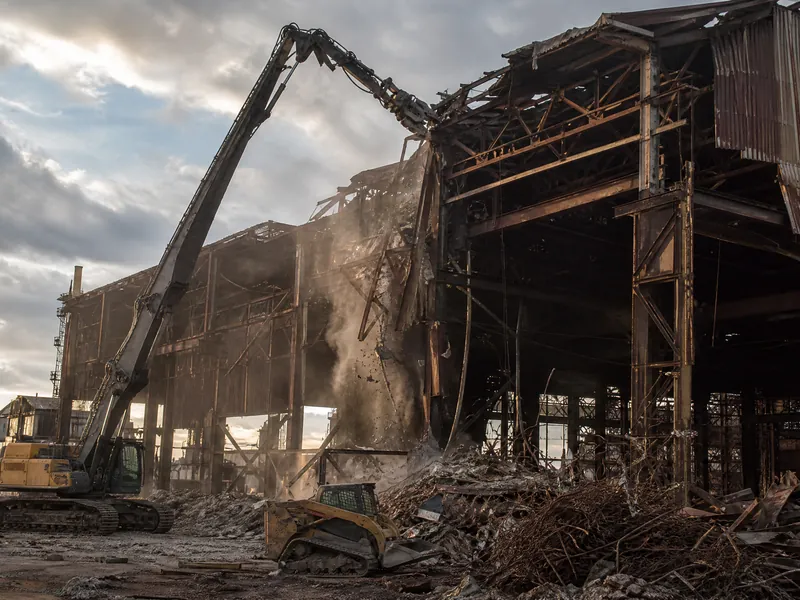
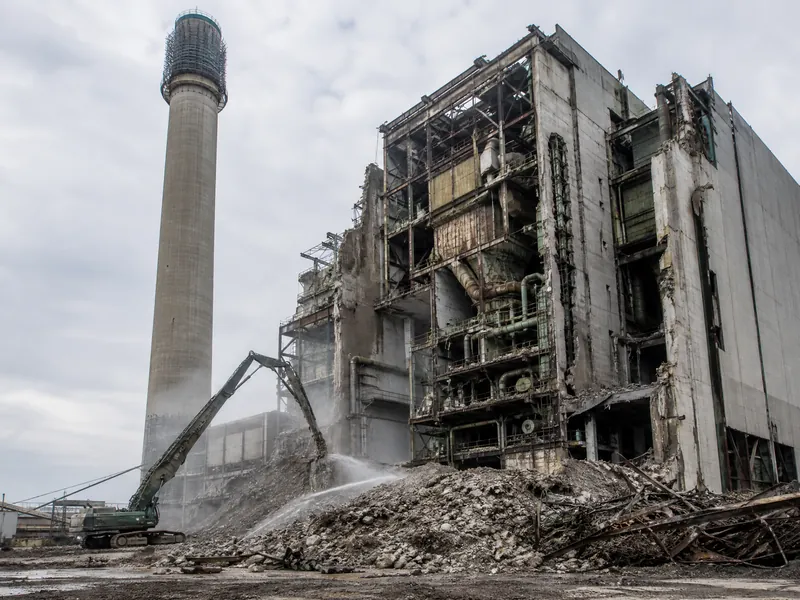
The retirement of aging power generating units and heavy manufacturing plants along the Missouri River corridor demands rigorous planning and heavy-duty execution. These facilities contain massive turbines, thick concrete containment structures, and extensive electrical switchgear that must be safely isolated and removed. We engineer the controlled felling of exhaust stacks and the systematic dismantling of boiler houses, utilizing heavy rigging to bring down these massive components safely.
Our project managers coordinate closely with local utilities to ensure all high-voltage lines and high-pressure gas mains are completely disconnected and capped before the wrecking phase begins. The physical conditions of riverfront industrial sites often present unique challenges, including high water tables and variable soil stability. We deploy crane mats and specialized ground stabilization techniques to support our heavy excavators during the deconstruction process. The teardown of these heavy industrial assets generates significant volumes of heavy structural steel, which we process on-site to streamline the subsequent load-out and transportation phases.
Local coverage
Cities we work in across Nebraska
Hazards and controls
Executing Concrete Crushing for Aggregate Operations
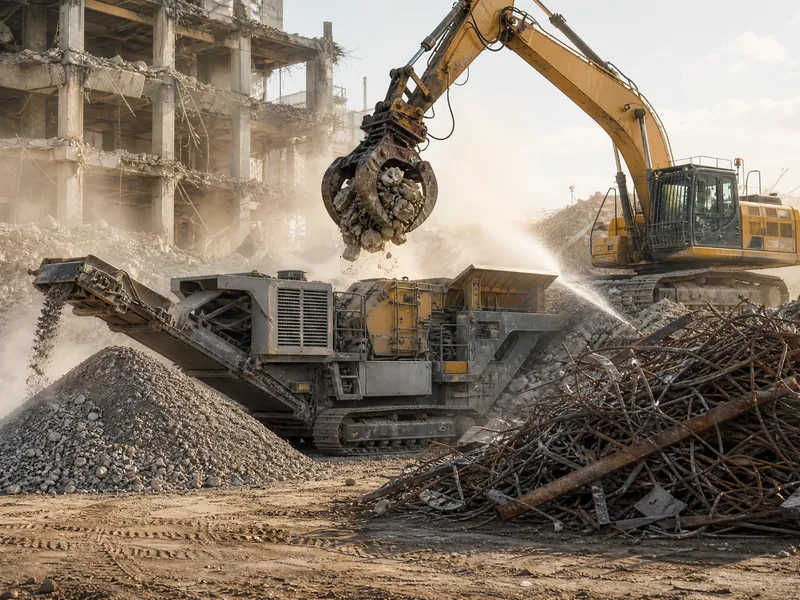
Industrial sites in Nebraska often feature massive concrete foundations, thick slab floors, and heavy retaining walls that must be completely removed. We deploy heavy excavators equipped with hydraulic hammers and concrete pulverizers to break apart these dense structures. For aggregate and cement operations, the volume of concrete generated during a teardown is substantial. Instead of hauling this heavy debris to a landfill, we utilize mobile crushing plants to process the concrete directly on the job site.
The local physical conditions, particularly the expansive clay soils and severe freeze-thaw cycles common in the region, dictate how we approach foundation removal. Deep footings and frost walls must be fully excavated to prevent future ground heaving issues for subsequent construction. Our crews carefully separate rebar and wire mesh from the crushed concrete, ensuring the final material is free of contaminants. This on-site crushing capability significantly reduces the logistical burden of transporting heavy debris across the state, providing a clean aggregate product.
Sequence of work
How a project runs, stage by stage
Site walk and survey
We walk the structure with you, review drawings, and record structural condition, live utilities, hazardous materials and salvageable assets before any number is quoted.
Engineering and permits
An engineered demolition plan sets the sequence, exclusion zones and means of collapse. We file local permits and the federal pre-demolition notification, and collect utility isolation sign-offs.
Abatement and pre-clean
Regulated materials come out first under containment with clearance documentation, so the structural phase is never held up by a surprise inside a wall or a pipe chase.
Dismantling and teardown
High-reach machines, shears, torch crews and hand demolition work the sequence top-down or inside-out, with salvage separated as it comes out rather than picked from a mixed pile afterwards.
Processing and haul-off
Steel is sheared and shipped, concrete is crushed for reuse or hauled, and every regulated stream leaves under manifest to a permitted facility.
Grading and closeout
Foundations and slabs come out to the agreed depth, the site is graded and stabilised, and you receive manifests, clearance reports and closeout documentation.
Permits and notification
Managing Environmental Remediation and Asbestos Removal
Before any structural demolition can commence, all hazardous materials must be identified, contained, and removed from the facility. Older manufacturing plants and power stations in Nebraska frequently contain asbestos in pipe insulation, boiler cladding, and floor tiles. We manage the complete abatement process, ensuring all hazardous materials are safely extracted and disposed of in accordance with federal and state regulations. Compliance with the Nebraska DEE is a critical component of our pre-demolition workflow for every industrial project.
We handle all necessary environmental permitting and submit the mandatory federal NESHAP 10-working-day notification prior to initiating any teardown activities. Our environmental teams establish negative pressure enclosures and utilize specialized filtration systems to prevent any airborne release of asbestos fibers. Once the abatement is complete and verified through independent air monitoring, the structure is cleared for heavy demolition. We also manage the removal of universal wastes, including mercury switches and PCB-containing transformers, ensuring the site is completely clean.
Salvage and recovery
Recovering Structural Steel and Industrial Scrap
The deconstruction of heavy industrial facilities generates massive quantities of ferrous and non-ferrous metals. We implement a rigorous asset recovery strategy to capture the value of these materials, which is applied as a salvage credit that directly offsets the client's overall net cost for the demolition project. Our crews utilize mobile shears and heavy-duty grapples to process structural I-beams, heavy plate steel, and large manufacturing equipment into transportable dimensions.
Nebraska's extensive rail network, including major Union Pacific lines, provides efficient logistical routes for moving large volumes of processed scrap to regional foundries and recycling centers. We sort copper wiring, aluminum components, and stainless steel piping on-site, maximizing the efficiency of the load-out process. We do not purchase equipment or act as used machinery brokers. Our focus is entirely on the efficient teardown of the facility, and the salvage credit is factored into the initial project proposal to provide a transparent financial offset.
Logistics
Clearing Sites for Warehousing and Distribution Centers
As Nebraska's industrial sector evolves, many obsolete manufacturing sites are being repurposed into modern warehousing and distribution centers. Our site clearing operations are specifically designed to prepare these expansive locations for immediate commercial redevelopment. After the above-ground structures are dismantled and the foundations are removed, we focus on grading and stabilizing the site. We address the specific challenges of the local terrain, ensuring proper drainage and soil compaction.
The removal of underground utilities, abandoned storage tanks, and old process piping is a critical phase of the site clearing process. We carefully excavate these subsurface obstacles, backfilling the voids with clean, compacted material to prevent future settlement. Our heavy equipment operators are skilled in achieving precise final grades to meet the exact specifications required for new commercial construction. By delivering a clean, level, and fully stabilized site, we enable developers to proceed immediately with their construction schedules without unexpected delays.
Common questions
Questions owners and engineers ask
What steps are required before tearing down a manufacturing plant in Nebraska?
Prior to any structural dismantling, we conduct a comprehensive hazardous materials survey and complete all necessary environmental abatement. This includes submitting the mandatory NESHAP 10-working-day notification and coordinating with the Nebraska DEE for proper permitting. We also work with local utility providers to ensure all electrical, gas, and water lines are safely isolated, disconnected, and capped, securing the site for heavy equipment operations.
How do expansive clay soils impact concrete foundation removal?
The presence of expansive clay soils and severe freeze-thaw cycles in this region requires a thorough approach to subsurface demolition. We must completely excavate deep footings, frost walls, and heavy concrete slabs to prevent future ground heaving. Removing these subterranean structures entirely ensures that the site is properly stabilized and compacted, providing a secure base for the next phase of commercial or industrial construction.
Can the scrap metal from a decommissioned facility reduce the project cost?
Yes, the value of recovered ferrous and non-ferrous metals is applied as a salvage credit that directly offsets the net cost of the demolition work. We process structural steel, copper wiring, and heavy machinery on-site, utilizing Nebraska's rail networks to transport the sorted materials to regional recycling centers. We do not buy equipment; the recovered value simply reduces the client's overall financial outlay for the teardown.
Do you process concrete debris directly on the demolition site?
Processing concrete on-site is a standard procedure for our heavy industrial teardowns. We deploy mobile crushing plants to pulverize foundations, retaining walls, and slab floors, separating out the rebar and wire mesh. This approach eliminates the need to haul thousands of tons of heavy debris to local landfills and produces a clean aggregate that can be reused as structural fill for the site's redevelopment.
What safety measures are implemented during the dismantling of tall silos?
Bringing down towering grain silos and processing structures requires specialized high-reach excavators equipped with hydraulic shears and grapples. We establish strict drop zones and utilize controlled demolition techniques to dismantle the structures piece by piece. This methodical approach prevents debris from impacting adjacent active facilities and ensures the safety of our crews while operating in tight industrial corridors across the state.
Ready to price the teardown?
Industrial Demolition USA is ready to execute your next heavy teardown or plant decommissioning project. Call 954-740-1983 or email electricalequipmentbuyers@gmail.com to discuss your site requirements and schedule a comprehensive evaluation of your industrial facility.