
Overview
We execute the controlled deconstruction of cupolas, electric arc furnaces, induction furnaces, sand handling systems, and heavy crane runways. Our crews manage the entire abatement and remediation process, ensuring that silica dust, heavy metals, and other contaminants are properly contained and disposed of. From initial utility isolation to final site grading, we deliver a turnkey wrecking solution that prepares your industrial property for its next phase of development while maximizing salvage credit for recovered metals.
The work
Specialized Dismantling Of Casting Equipment
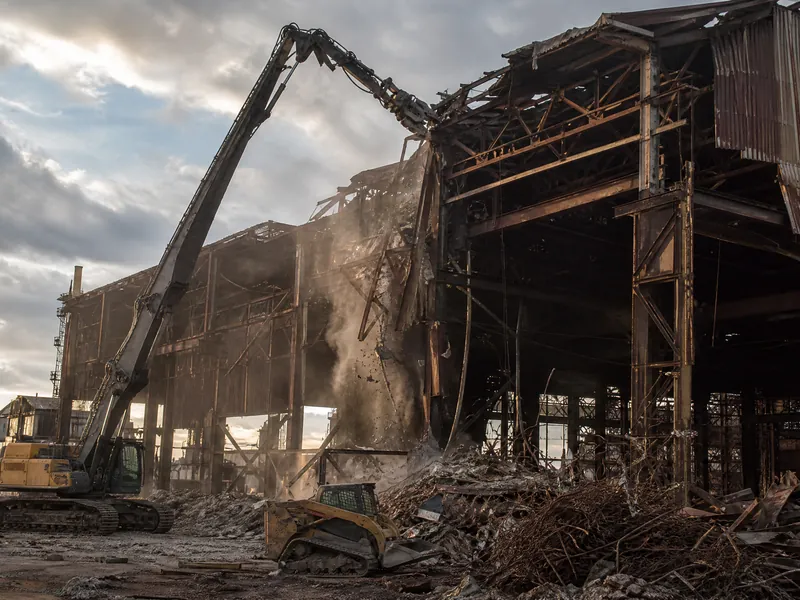
The core of any foundry teardown involves the systematic dismantling of heavy melting and casting equipment. We utilize high-reach excavators equipped with hydraulic shears and grapples to safely dismantle cupola furnaces, electric arc furnaces, and induction melting units. These structures are often heavily reinforced and lined with refractory brick, requiring precise mechanical demolition techniques to break down the components without compromising site safety. Our operators are highly trained in the controlled deconstruction of these massive assets, ensuring that each piece is safely lowered and processed.
Beyond the furnaces, we tackle the complex network of sand handling systems, shakeout decks, and molding lines. These systems are typically integrated deep into the facility's infrastructure, often extending into subterranean pits and trenches. We employ specialized concrete crushing equipment to break through thick foundations and extract embedded machinery. The teardown process is carefully sequenced to maintain structural stability while systematically removing the heavy industrial components that define foundry operations.
Method and sequence
Environmental Remediation And Hazard Abatement
Foundry environments present unique environmental challenges that must be addressed before and during the wrecking process. Decades of metal casting operations often leave behind accumulations of foundry sand, slag, heavy metals, and potentially hazardous refractory materials. Our abatement teams conduct thorough site assessments to identify and isolate these contaminants. We implement rigorous dust control measures, utilizing high-capacity water misting systems to suppress airborne particulates, particularly crystalline silica, during all demolition activities.
Proper remediation is critical to mitigating liability and ensuring regulatory compliance. We manage the safe removal and disposal of asbestos-containing materials, lead-based paints, and residual industrial chemicals. Our decommissioning protocols include the careful cleaning and purging of hydraulic lines, fuel storage tanks, and chemical feed systems. By integrating environmental remediation directly into our demolition workflow, we provide a seamless transition from a contaminated industrial site to a clean, build-ready parcel.
More scope we cover
Related demolition service lines
Warehouse Demolition
Industrial Demolition USA executes comprehensive warehouse demolition, dismantling, and site clearing for…
Selective Demolition
Industrial Demolition USA executes precision selective demolition and interior dismantling for active…
Structural Demolition
Industrial Demolition USA specializes in the complete structural demolition and total teardown of heavy…
Hazards and controls
Structural Deconstruction And Crane Runway Removal
The physical structure of a foundry is built to withstand extreme loads and harsh conditions, making its deconstruction a formidable engineering challenge. We specialize in the teardown of heavy steel-framed buildings, utilizing engineered collapse techniques and precision torch cutting to safely bring down the superstructure. Our crews systematically dismantle the heavy crane runways and bridge cranes that span the facility, carefully rigging and lowering the massive steel girders to the ground for processing.
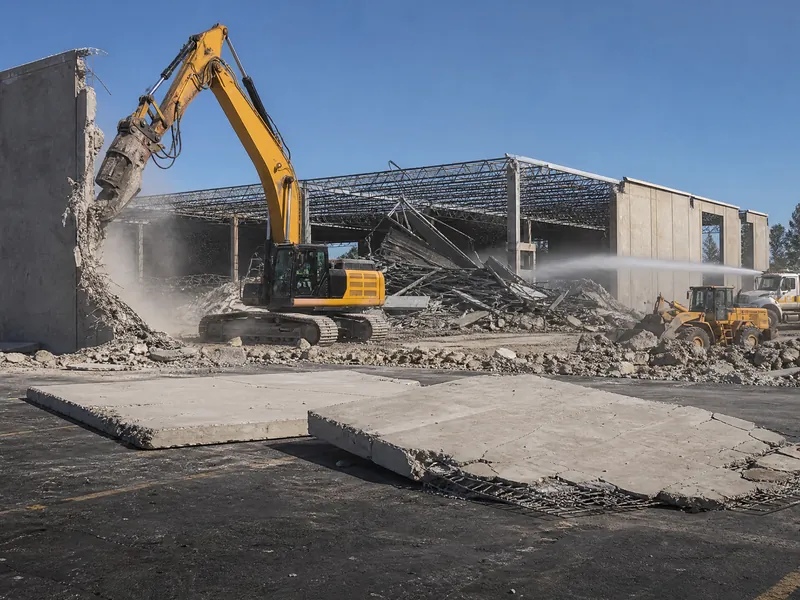
The structural demolition phase is meticulously planned to control the descent of materials and protect adjacent active facilities or public right-of-ways. We employ heavy-duty hydraulic breakers to fracture the thick concrete slabs and reinforced equipment foundations typical of metal casting plants. The resulting concrete rubble is often crushed on-site, providing a reusable aggregate base for future construction or final site grading. This comprehensive approach ensures that every aspect of the physical plant is efficiently and safely removed.
Sequence of work
How a project runs, stage by stage
Site walk and survey
We walk the structure with you, review drawings, and record structural condition, live utilities, hazardous materials and salvageable assets before any number is quoted.
Engineering and permits
An engineered demolition plan sets the sequence, exclusion zones and means of collapse. We file local permits and the federal pre-demolition notification, and collect utility isolation sign-offs.
Abatement and pre-clean
Regulated materials come out first under containment with clearance documentation, so the structural phase is never held up by a surprise inside a wall or a pipe chase.
Dismantling and teardown
High-reach machines, shears, torch crews and hand demolition work the sequence top-down or inside-out, with salvage separated as it comes out rather than picked from a mixed pile afterwards.
Processing and haul-off
Steel is sheared and shipped, concrete is crushed for reuse or hauled, and every regulated stream leaves under manifest to a permitted facility.
Grading and closeout
Foundations and slabs come out to the agreed depth, the site is graded and stabilised, and you receive manifests, clearance reports and closeout documentation.
Permits and notification
Asset Recovery And Scrap Metal Processing
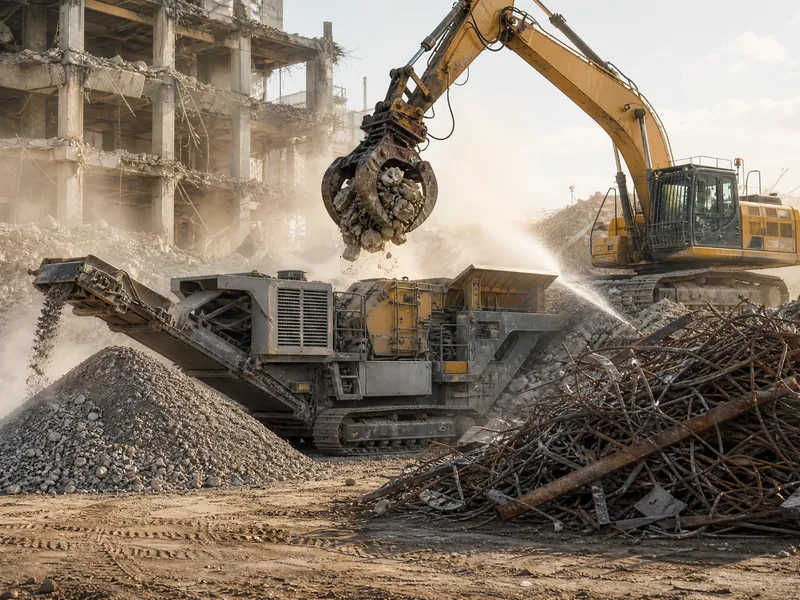
A significant advantage of our foundry demolition service is the aggressive pursuit of asset recovery and scrap metal salvage. Foundries contain vast quantities of valuable ferrous and non-ferrous metals, including heavy structural steel, copper wiring, brass fittings, and specialized alloy components. Our crews actively sort and process these materials as the teardown progresses, utilizing mobile shears and material handlers to prepare the scrap for transport to recycling facilities.
The value generated from this recovered metal is applied directly as a salvage credit against the overall cost of the demolition project. We maintain strong relationships with national scrap buyers and metal processors, ensuring that we secure competitive rates for the recovered materials. This integrated approach to asset recovery not only reduces the net cost of the wrecking project for the facility owner but also promotes sustainable industrial practices by diverting massive volumes of material away from landfills.
Salvage and recovery
Utility Isolation And Site Preparation
Before any heavy demolition begins, comprehensive utility isolation and de-energization must be completed to ensure a safe working environment. Foundries rely on massive electrical services, high-pressure gas lines, and complex water cooling systems. Our decommissioning process starts with the systematic lock-out and tag-out of all energy sources. We coordinate closely with local utility providers to physically disconnect and cap incoming services at the property line, eliminating the risk of accidental strikes during the wrecking phase.
Once the site is secured and the structures are removed, we focus on final site preparation. This involves the backfilling of deep equipment pits, trenches, and basements using clean fill or crushed concrete generated during the demolition. We perform final grading to establish a level, stable surface that meets the owner's specifications for future use. From the initial utility disconnects to the final pass of the bulldozer, we manage every detail of the site clearing process.
In-house trades
Capabilities that run alongside this work
Coverage
Where we take on this work
Common questions
Questions owners and engineers ask
How do you handle the deep pits and foundations left after removing foundry equipment?
We utilize heavy hydraulic breakers to fracture the reinforced concrete foundations and pit walls. Once the concrete is broken down and any embedded steel is removed, we typically crush the clean concrete on-site. This crushed material is then used to backfill the voids and pits, which are compacted in lifts to create a stable, level grade suitable for future development.
What is the process for managing hazardous refractory brick and silica dust?
We implement strict abatement protocols for hazardous materials. Refractory brick is tested for heavy metals and other contaminants; if hazardous, it is carefully removed, packaged, and transported to a licensed disposal facility. To manage silica dust, we use continuous high-volume water misting systems during all dismantling and concrete crushing activities, ensuring airborne particulates remain well below regulatory exposure limits.
How is the salvage credit calculated for the scrap metal recovered from the foundry?
As we perform the teardown, we segregate and process the ferrous and non-ferrous metals, including structural steel, copper, and heavy machinery components. We track the tonnage of recovered materials and apply current market rates for scrap metal. This total value is then presented as a salvage credit, which directly offsets the gross cost of the demolition project.
Do you handle the necessary permits and environmental notifications for the demolition?
Yes, we manage the entire permitting and notification process. This includes filing the required federal NESHAP asbestos notifications, securing local demolition permits, and coordinating with state environmental regulators. We ensure that all paperwork, including waste manifests and closure reports, is properly executed and provided to the client at the end of the project.
Can you perform selective dismantling if we are only retiring one casting line?
Absolutely. We frequently perform selective interior demolition and decommissioning within active industrial facilities. We establish strict exclusion zones, implement dust and noise controls, and carefully sequence the dismantling of the specific casting line or furnace. This allows your remaining plant operations to continue safely and without interruption while we remove the retired assets.
Ready to price the teardown?
Industrial Demolition USA provides the heavy equipment, specialized expertise, and rigorous safety standards required for complex foundry teardowns. We are ready to evaluate your facility and develop a comprehensive wrecking and asset recovery plan. Call us at 954-740-1983 or email electricalequipmentbuyers@gmail.com to discuss your project requirements.