
Overview
We tear down obsolete manufacturing facilities, automotive supplier plants, and aging distribution centers. Our crews handle the complete deconstruction process, from initial environmental abatement and utility severance to the final concrete crushing and site grading. Operating in a region defined by its manufacturing legacy along the St. Joseph River, we understand the complexities of taking down massive steel and concrete structures in dense urban or brownfield environments. Plant owners rely on our heavy equipment fleet to execute complex wrecking projects safely, clearing the way for new development across northern Indiana.
The work
Executing Teardowns In The St. Joseph River Valley
The unique physical geography of the South Bend region presents specific logistical challenges for heavy industrial dismantling projects. Situated directly along the St. Joseph River, many legacy manufacturing sites contend with high water tables and saturated alluvial soils that complicate deep foundation removal. Our operators are highly experienced in managing these hydrological realities, utilizing specialized excavation techniques to remove heavy concrete footings without destabilizing adjacent soils or causing uncontrolled water ingress into the work zone.
Winter weather in northern Indiana also dictates how we sequence our deconstruction schedules. Lake effect snow and severe freeze-thaw cycles impact material handling and heavy equipment operation. We plan our structural teardowns to account for these seasonal shifts, ensuring that high-reach excavators and shear attachments maintain optimal performance even in sub-zero conditions. When dismantling exposed steel frameworks, our crews implement strict wind load monitoring to prevent uncontrolled structural failure during sudden squalls blowing off Lake Michigan.
Method and sequence
Managing IDEM Compliance And NESHAP Notifications
Strict regulatory compliance forms the absolute baseline of every heavy industrial teardown we execute in St. Joseph County. Before any structural wrecking begins, we coordinate with the Indiana Department of Environmental Management (IDEM) to ensure all environmental remediation protocols are strictly followed. This includes filing the mandatory federal NESHAP 10-working-day notification for asbestos abatement, a critical step that must be completed prior to disturbing any regulated materials within the facility footprint.
Local permitting through South Bend municipal authorities requires detailed logistical planning, particularly regarding complex utility disconnects and traffic control for heavy haul routes. We manage the official sign-offs for severing high-voltage electrical feeds, industrial gas lines, and municipal water connections, ensuring the site is completely cold before our excavators track onto the property. Our environmental remediation teams handle the removal of hazardous materials, creating a safe, compliant environment for the subsequent mechanical demolition phases to proceed without interruption.
Regional coverage
Other Indiana cities we cover
Hazards and controls
Dismantling Automotive And Manufacturing Infrastructure
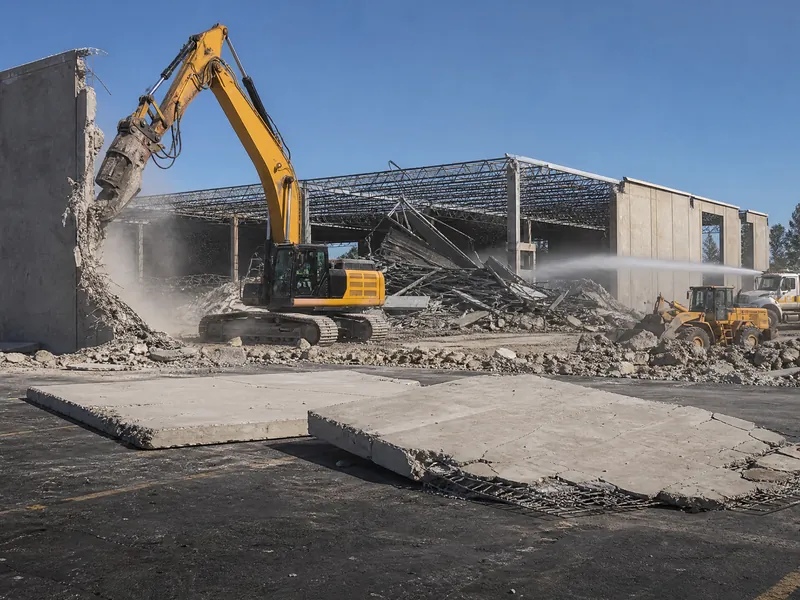
South Bend's extensive manufacturing history has left behind a sprawling landscape of massive, heavily reinforced industrial structures. We specialize in dismantling these legacy facilities, which often feature thick concrete slab floors, deep machine pits, and heavy structural steel framing designed to support overhead cranes. Taking down these robust buildings requires high-capacity hydraulic shears and grapples capable of cutting through thick steel I-beams and reinforced concrete columns with precision.
Our crews systematically deconstruct these plants, often utilizing selective interior demolition techniques to separate the heavy industrial components from the outer shell. We systematically remove obsolete stamping presses, conveyor systems, and industrial ovens, carefully rigging and lowering massive pieces of equipment to the ground for processing. Beyond the immediate South Bend area, our specialized crews frequently mobilize to nearby industrial centers like Elkhart to decommission RV and trailer manufacturing plants, or to Gary for heavier steel mill and refinery teardowns.
Permits and notification
Processing Structural Steel And Concrete On Site
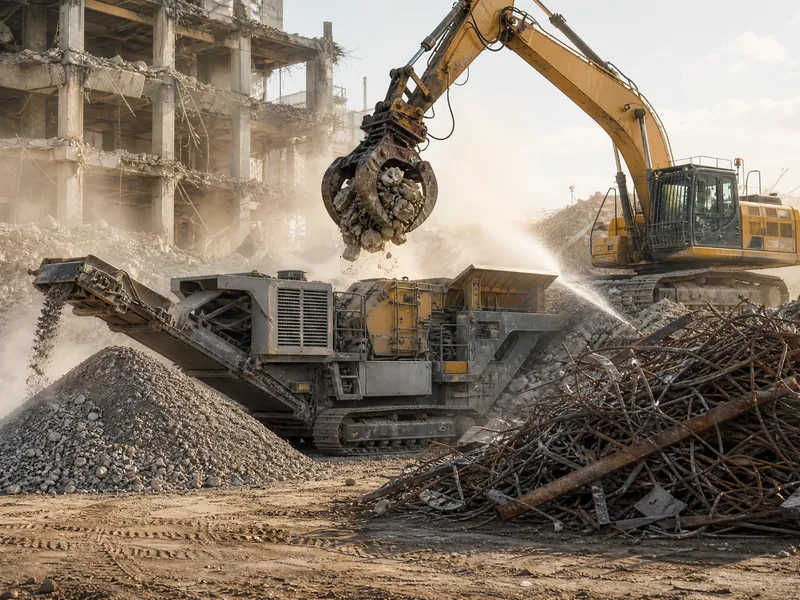
Highly efficient material processing is central to our core demolition methodology, directly impacting the overall project timeline and net cost. As we tear down a facility, our heavy excavators equipped with hydraulic shears immediately begin sizing the structural steel into manageable lengths. This processed scrap metal is then loaded onto heavy end-dump trailers and transported to regional recycling yards or directly to the integrated steel mills along Lake Michigan in Gary and Burns Harbor for melting.
Concrete demolition generates massive volumes of heavy rubble, particularly when removing thick industrial floor slabs and deep subterranean equipment foundations. Instead of hauling this heavy debris to local municipal landfills, we deploy mobile crushing plants directly to the South Bend job site. Our operators feed the raw concrete chunks into the crusher, which separates the embedded steel reinforcement using powerful magnets and reduces the concrete to a specified aggregate size for immediate backfill use.
Salvage and recovery
Recovering Value Through Industrial Asset Salvage
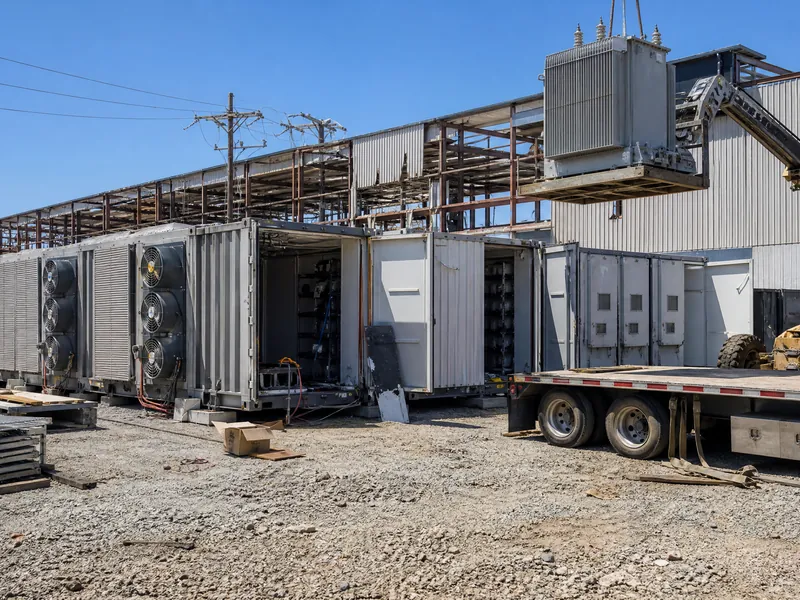
During heavy plant decommissioning, significant financial value remains locked in the facility's aging infrastructure and heavy metals. We systematically recover these valuable materials, which include heavy copper wiring, large electrical transformers, switchgear, and specialized industrial alloys. The salvage value of these recovered assets is applied directly as a credit against the client's total demolition cost, effectively lowering the overall financial burden of the complex teardown project.
Our specialized dismantling crews are trained to identify and extract high-value metals before the primary mechanical demolition phase begins. We systematically strip out extensive electrical conduit networks, remove heavy copper busbars, and carefully drain and extract large oil-filled transformers for specialized processing. The recovered materials are then routed to specialized processors in the Midwest who handle industrial-grade scrap. This targeted asset recovery requires precise rigging and careful handling to maximize the yield of clean, uncontaminated metals without delaying the main structural wrecking schedule.
Logistics
Navigating Dense Urban And Brownfield Constraints
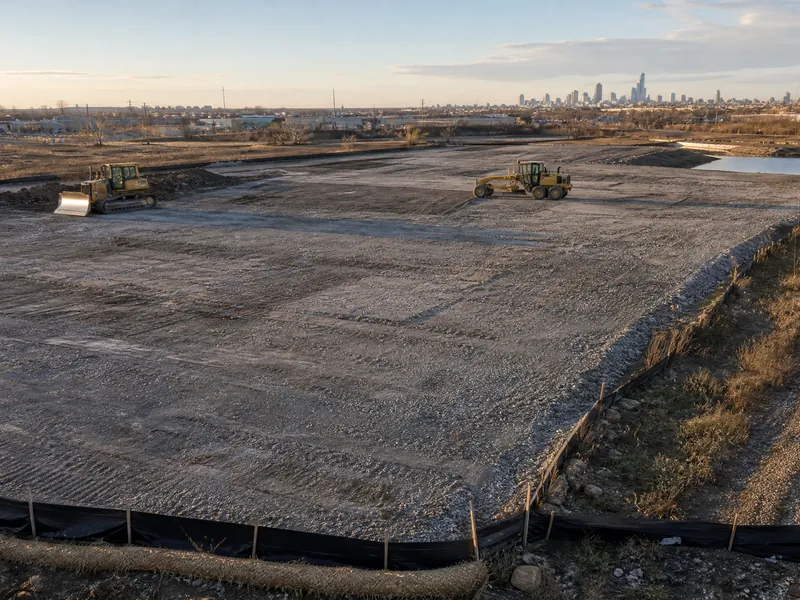
Many South Bend legacy industrial sites sit in densely developed areas or designated brownfield zones, requiring a highly controlled approach to structural demolition. When working in tight urban corridors, we employ top-down dismantling techniques, using high-reach excavators to carefully pick apart the structure piece by piece, dropping the debris safely within the building's own footprint to protect adjacent properties.
Dust suppression and vibration control are absolutely critical when operating near active rail lines, such as the Norfolk Southern or South Shore Line, or adjacent to operational commercial properties. We utilize high-volume water cannons and localized misting systems to effectively knock down airborne particulates directly at the source of the cut or crush. In complex brownfield environments, our site clearing operations are closely coordinated with ongoing soil remediation efforts. We carefully segregate clean demolition debris from potentially contaminated soils, minimizing the overall volume of material that requires specialized hazardous waste disposal.
Capabilities
Abatement, remediation and recovery
Common questions
Questions owners and engineers ask
What is the process for removing underground storage tanks during a plant teardown?
Extracting subterranean tanks requires careful excavation and strict adherence to IDEM regulations. We first pump out residual liquids and purge the vessel of combustible vapors. Once the atmosphere is verified safe, our excavators uncover the tank, shear the connecting piping, and hoist the unit out of the ground. The surrounding soil is tested for contamination, and the void is backfilled with clean, compacted aggregate.
How do you handle the demolition of tall industrial smokestacks?
Taking down elevated structures demands precise engineering and specialized equipment. Depending on site clearances, we may use a high-reach excavator equipped with a concrete processor to systematically chew the stack down from the top. In tighter urban environments, we often deploy remote-controlled demolition robots hoisted to the summit, which chip away the masonry or concrete, allowing debris to fall safely down the interior shaft.
Are you equipped to dismantle heavy overhead bridge cranes?
Yes, taking apart massive lifting infrastructure is a core part of our interior dismantling operations. We utilize heavy-duty hydraulic shears to cut the crane bridge into manageable sections while it is still elevated, or we use synchronized mobile cranes to lower the entire assembly to the floor. Once grounded, the steel components are rapidly sized for transport to regional scrap processors, clearing the overhead space.
What steps are taken to protect adjacent active rail lines during wrecking?
Operating near active freight corridors like the Norfolk Southern requires rigorous safety protocols and constant communication with the rail operator. We establish strict exclusion zones and utilize directional felling techniques to ensure all structural debris falls away from the tracks. We deploy continuous dust suppression systems and vibration monitoring equipment to prevent any disruption to the rail bed or passing train traffic during heavy foundation extraction.
How is the salvage value of our industrial equipment calculated?
The financial return on recovered assets is determined by current commodity market rates for heavy metals like copper, aluminum, and structural steel. We assess the volume and quality of the materials present in your facility, factor in the labor and equipment costs required for extraction and processing, and apply the net value as a direct salvage credit. This credit offsets the overall cost of the demolition project.
Ready to price the teardown?
Industrial Demolition USA delivers precise, heavy-duty dismantling and site clearing for complex manufacturing facilities across South Bend and northern Indiana. When you need a capable contractor to execute a safe plant retirement, contact our estimating team. Call 954-740-1983 or email electricalequipmentbuyers@gmail.com to discuss your project requirements.