
Overview
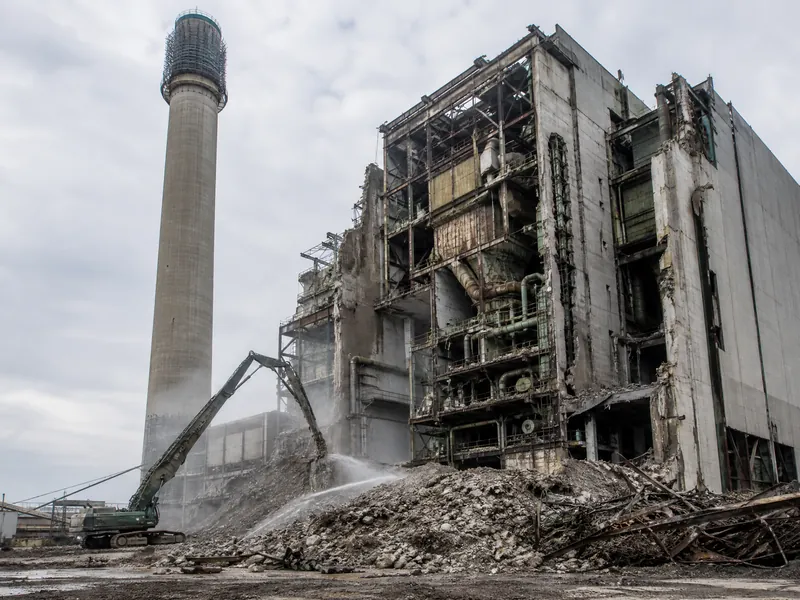
Owners call us for manufacturing buildings, retired generating structures, food and beverage plants, warehouse sites, and aggregate or cement handling properties that need a controlled teardown rather than a generic building knockdown. We manage the job through abatement, structural wrecking, material recovery, documentation, and final grading so the property is ready for its next use.
The work
A Small State With Tight Industrial Sites
Rhode Island may be compact, but industrial demolition here is rarely simple. Older mill-era construction, later warehouse additions, utility structures, marine storage areas, and distribution buildings are often packed into constrained footprints with limited swing room and close property lines. In Providence and Pawtucket, truck access, pedestrian protection, and coordination with nearby occupied buildings can shape the daily work plan as much as the structure itself.
Coastal conditions matter too. Salt exposure and repeated moisture cycles can weaken connections, corrode metal decking, and change how older industrial framing behaves during dismantling. That is why we do not approach Rhode Island projects as if they were open suburban teardowns. Equipment selection, debris containment, cut lines, and trucking plans are built around tight access and an aging industrial fabric that needs careful control.
Method and sequence
What Rhode Island Facilities Usually Involve
The state's industrial inventory includes regional manufacturing buildings, food and beverage processing properties, retired utility and generating structures, warehousing and distribution facilities, and bulk material sites tied to aggregate or cement handling. Each category brings different demolition problems. Processing plants can hide obsolete refrigeration systems, insulated piping, trench drains, and heavy housekeeping pads. Utility sites tend to combine structural steel, concrete pedestals, cable runs, and equipment bases that extend below grade.
Warehouse and distribution properties may look straightforward from the street, yet interior rack anchors, mezzanines, dock structures, and utility reroutes can add time once demolition begins. Around port or terminal-related sites, traffic flow and staging often deserve as much planning as the wrecking itself. We build the scope around those realities so the owner gets a controlled deconstruction effort rather than surprises discovered mid-project.
Local coverage
Cities we work in across Rhode Island
Hazards and controls
Urban Deconstruction Before Full Wrecking
Rhode Island jobs often benefit from a deconstruction-first sequence. We begin by isolating utilities, removing targeted equipment, and clearing interior hazards or interference items that block safe structural access. Abatement and remediation follow where asbestos, lead-containing materials, or other regulated substances are present. After that, we move into structural dismantling with the right mix of hand demolition, torch cutting, high-reach excavation, and crane-supported removal.
That order is especially important on tighter Providence-area and Pawtucket-area sites because there is less room for mixed debris piles, rehandling, and conflicting trades. Working in stages keeps the footprint cleaner and reduces the chance that one unresolved issue stops every other crew. Once the superstructure is down, we can address slabs, pits, foundations, and site clearing in a way that matches the owner's next use for the property.
Sequence of work
How a project runs, stage by stage
Site walk and survey
We walk the structure with you, review drawings, and record structural condition, live utilities, hazardous materials and salvageable assets before any number is quoted.
Engineering and permits
An engineered demolition plan sets the sequence, exclusion zones and means of collapse. We file local permits and the federal pre-demolition notification, and collect utility isolation sign-offs.
Abatement and pre-clean
Regulated materials come out first under containment with clearance documentation, so the structural phase is never held up by a surprise inside a wall or a pipe chase.
Dismantling and teardown
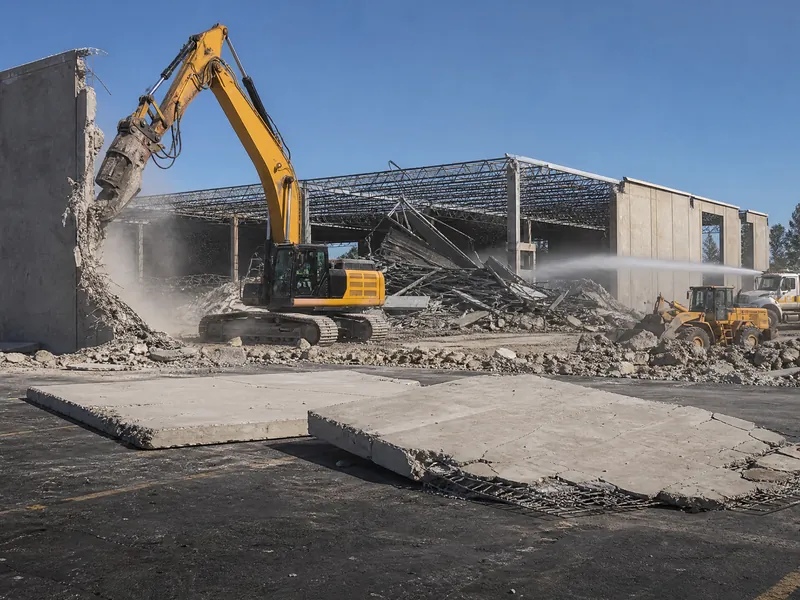
High-reach machines, shears, torch crews and hand demolition work the sequence top-down or inside-out, with salvage separated as it comes out rather than picked from a mixed pile afterwards.
Processing and haul-off
Steel is sheared and shipped, concrete is crushed for reuse or hauled, and every regulated stream leaves under manifest to a permitted facility.
Grading and closeout
Foundations and slabs come out to the agreed depth, the site is graded and stabilised, and you receive manifests, clearance reports and closeout documentation.
Permits and notification
RIDEM, Federal Notice, and Local Permits
Industrial demolition in Rhode Island has to be coordinated with RIDEM and with the federal NESHAP asbestos notification rules where they apply. We make that part of the front-end plan by confirming inspections, identifying required abatement, and matching the demolition start date to the environmental notice path. That work protects the owner from preventable delays and from the risk of beginning structural wrecking before the regulated steps are complete.
Municipal review is also part of the schedule. Providence and Pawtucket projects can involve local demolition permits, utility sign-off, police or traffic coordination where the site affects public ways, and final debris handling records. Because the state is compact, people sometimes assume approvals will move automatically. In practice, the safest approach is to prepare the filing package early and keep the field sequence tied to the permitted scope from day one.
Salvage and recovery
Regional Salvage Markets and Closeout
Rhode Island's size helps on the back end of demolition. Haul distances are often short, and the Port of Providence, I-95, I-195, and southern New England scrap and recycling outlets all influence how quickly material can leave the site. That improves turnover on constrained properties where steel, concrete, and mixed debris cannot sit in place for long. Fast, organized load-out is a production tool, not just a cleanup issue.
We separate carbon steel, stainless, copper-bearing electrical material, equipment scrap, and recyclable concrete wherever the scope supports recovery. The value of those streams is applied as a salvage credit against the demolition cost. At closeout, we remove debris, leave the site in the contracted graded condition, and provide manifests and disposal records so the owner has both a cleared parcel and the paperwork needed for redevelopment or continued remediation.
Common questions
Questions owners and engineers ask
Why are Rhode Island industrial demolitions often more controlled than open-field jobs?
Because many sites are tighter, older, and closer to adjacent occupied property. Access lanes, nearby businesses, pedestrian routes, and aging structural conditions all limit how aggressively a building can be brought down. A staged deconstruction sequence usually works better than trying to rush straight into full mechanical wrecking. That approach protects safety, keeps debris manageable, and supports a cleaner load-out on small footprints.
What environmental steps happen before demolition starts?
We begin with the inspection and notification path required for the structure, including the federal NESHAP asbestos rules where applicable and coordination with RIDEM. If regulated materials are present, abatement and waste handling have to be sequenced before broad structural demolition. Starting field wrecking before those steps are complete can disrupt permits, hauling, and the owner's broader redevelopment schedule.
Do coastal conditions change demolition methods?
Yes. Salt exposure and moisture can affect steel connections, deck attachment, roofing systems, and the condition of older industrial concrete. That does not stop the job, but it changes the plan. We pay closer attention to connection failure, selective cutting order, and containment because corroded members do not always behave like cleaner inland structural steel during dismantling.
Can salvage credit make a noticeable difference on Rhode Island projects?
It can, especially where the site contains structural steel, stainless process material, copper cable, mechanical equipment scrap, or dense electrical components. The value depends on quantity, quality, and current market conditions, but recovery is an important part of many industrial demolition estimates. We apply that value as a credit to the contracted work so the owner sees how material recovery affects the net cost.
What should the owner expect when the project closes out?
The owner should expect documented debris removal, disposal records, and manifests for regulated waste streams, along with the agreed site condition for slabs, foundations, fill, and grading. On redevelopment parcels, that paperwork can be as important as the physical cleanup because the next consultant, civil contractor, or buyer needs a clear record of what was removed and how the waste was handled.
Ready to price the teardown?
Rhode Island industrial demolition calls for careful urban access planning, disciplined abatement, and steady load-out management. Call 954-740-1983 or email electricalequipmentbuyers@gmail.com to discuss your Rhode Island demolition, dismantling, or decommissioning scope.