
Overview
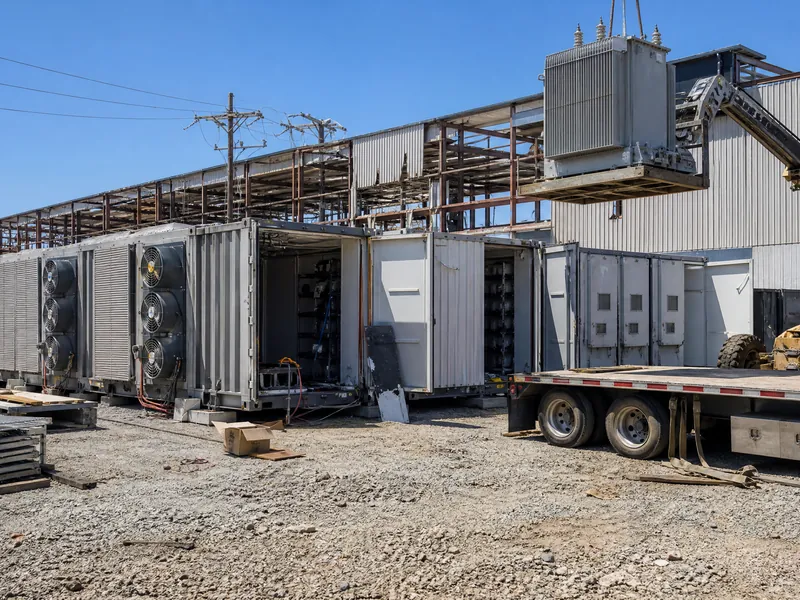
We execute precise teardown operations, managing everything from hazardous material abatement to structural wrecking and concrete crushing. Our project managers coordinate closely with the Pennsylvania DEP to ensure all environmental remediation and notification requirements are strictly met. We clear complex industrial sites safely, efficiently, and in full compliance with state and federal regulations. By integrating advanced asset recovery strategies with our heavy deconstruction capabilities, we deliver cost-effective solutions that prepare obsolete industrial properties for their next phase of commercial or industrial use.
The work
Systematic Teardown of Manufacturing and Textile Plants
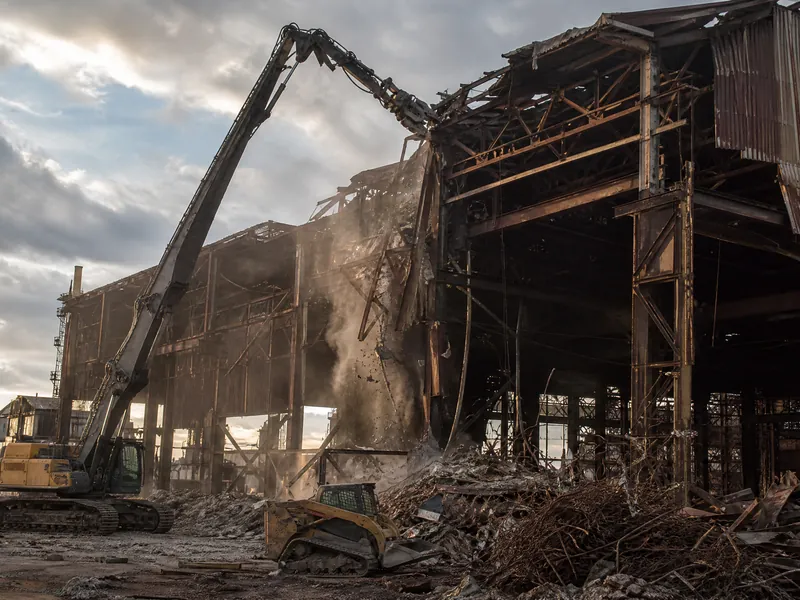
Reading's industrial heritage includes numerous multi-story brick and timber textile mills, as well as heavily reinforced machine shops. Deconstructing these aging facilities requires a methodical approach to manage heavy floor loads and degraded structural integrity. Industrial Demolition USA employs specialized equipment to carefully dismantle these buildings, utilizing high-reach excavators to bring down elevated sections safely.
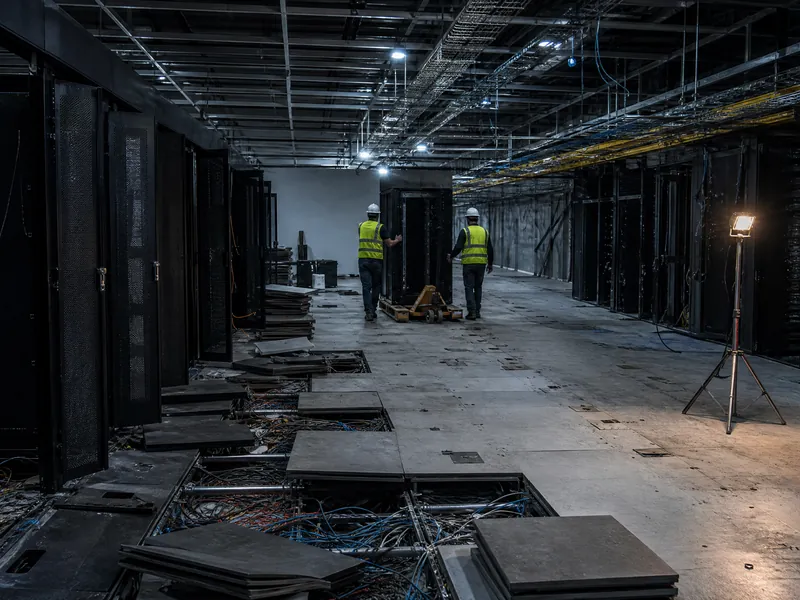
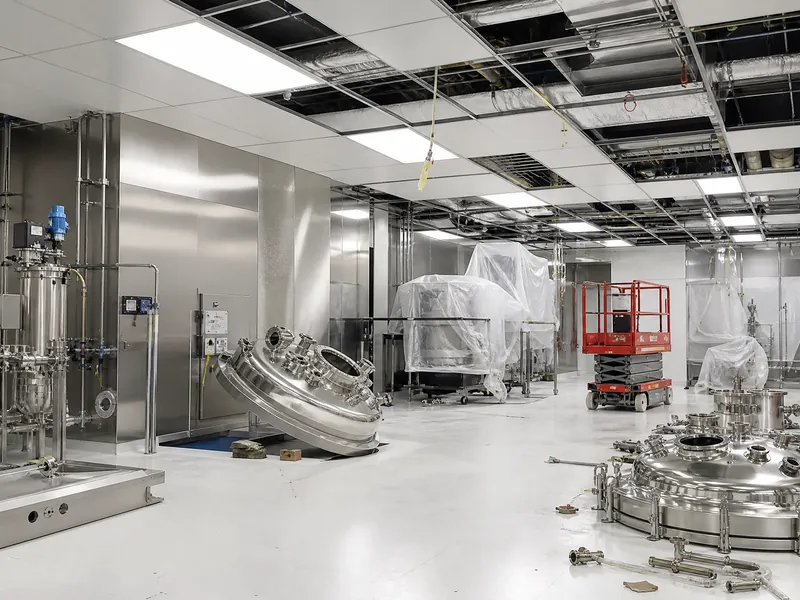
Our crews are skilled in selective interior demolition, removing obsolete machinery, heavy piping, and mechanical systems before addressing the main building envelope. We sequence the wrecking process to maintain structural stability throughout the project, preventing uncontrolled collapses. This systematic dismantling ensures the safety of our personnel and protects adjacent properties in Reading's often densely built industrial corridors, allowing for the efficient clearing of complex manufacturing sites.
Method and sequence
Pennsylvania DEP Compliance and Hazardous Material Abatement
Older industrial facilities in the Reading area frequently contain hazardous materials that must be addressed prior to structural demolition. Our teams are fully equipped to handle the rigorous environmental remediation required for these sites. We conduct detailed inspections to identify asbestos insulation, lead-based paints, and residual industrial chemicals, developing comprehensive abatement plans that align with state regulations.
We manage all mandatory notifications to the Pennsylvania DEP, ensuring that NESHAP requirements are fully satisfied before any abatement work begins. Our licensed professionals establish secure containment areas and utilize advanced air filtration systems to safely remove and dispose of hazardous substances. By prioritizing thorough environmental remediation, we eliminate liabilities and create a safe environment for the subsequent heavy deconstruction phases.
Regional coverage
Other Pennsylvania cities we cover
Hazards and controls
Maximizing Value Through Industrial Asset Recovery
A critical element of our decommissioning process is the strategic recovery of valuable materials embedded within industrial facilities. Reading's legacy machine shops and processing plants often yield significant quantities of recoverable metals. Our crews meticulously separate structural steel, copper wiring, aluminum components, and heavy industrial alloys during the dismantling process.
These materials are processed and prepared for transport to specialized recycling facilities. The financial value generated from this scrap metal salvage is provided to the client as a salvage credit, which directly offsets the overall cost of the demolition project. This asset recovery strategy not only improves the project's financial profile but also supports environmental sustainability by recycling massive volumes of industrial debris that would otherwise occupy landfill space.
Permits and notification
Navigating Urban Density and Access Constraints in Reading
Many of Reading's older industrial sites are situated within tight urban footprints, surrounded by active businesses, roadways, and residential neighborhoods. Executing heavy demolition in these constrained environments requires meticulous logistical planning and precise execution. Industrial Demolition USA engineers specific access routes for our heavy machinery and coordinates the efficient sequencing of debris removal to minimize local disruption.
We implement comprehensive protective measures, including robust scaffolding, debris netting, and engineered exclusion zones, to shield neighboring properties from dust and falling materials. Our project managers work closely with local authorities to manage traffic control and secure necessary permits for street closures or specialized transport. This careful navigation of urban constraints ensures that complex teardowns proceed safely and without incident.
Salvage and recovery
Utility Isolation and Pre-Demolition Preparation
Before any wrecking equipment is mobilized, thorough site preparation is essential to ensure a safe working environment. Our teams coordinate the complete isolation and de-energization of all facility utilities, a critical step in the decommissioning process. We work alongside local utility providers to safely cap high-pressure gas lines, disconnect heavy electrical feeds, and secure water and sewer connections.
Following utility isolation, we establish secure perimeters and implement comprehensive dust suppression and vibration monitoring systems. For facilities that share walls or infrastructure with active operations, we perform precise structural separation to ensure that the demolition activities do not impact ongoing business activities. This rigorous pre-demolition preparation lays the groundwork for a safe, efficient, and highly controlled dismantling operation.
Logistics
Concrete Crushing and Site Clearing Operations
The final phase of our industrial demolition process involves the removal and processing of heavy concrete foundations, slabs, and retaining walls. We utilize powerful hydraulic hammers to break apart these dense structures, clearing the subsurface of all remaining industrial infrastructure. To maximize efficiency, we frequently process this concrete on-site using mobile crushing equipment.
The resulting aggregate is used to backfill basements and equipment pits, providing a stable, compacted base for future construction. Our operators perform meticulous final grading, ensuring the site drains properly and meets the exact specifications required by the client. This comprehensive approach to site clearing leaves the property fully prepared for immediate redevelopment, marking the successful conclusion of the facility decommissioning project.
Capabilities
Abatement, remediation and recovery
Common questions
Questions owners and engineers ask
What is the process for asbestos abatement prior to demolition in Reading?
Before structural dismantling begins, we conduct a comprehensive hazardous materials survey. If asbestos is identified, we submit the required NESHAP notifications to the Pennsylvania DEP. Our licensed abatement teams then establish secure, negative-pressure containment zones to safely remove the asbestos-containing materials. Continuous air monitoring is conducted throughout the process to ensure safety and compliance. Only after the site has been certified clean and cleared by independent inspectors do we proceed with the heavy wrecking phase.
How do you determine the salvage credit for a decommissioning project?
Salvage credit is calculated based on the estimated volume and current market value of the recoverable metals within the facility. During the initial site assessment, our experts evaluate the structural steel, copper wiring, industrial machinery, and other non-ferrous metals present. We leverage our relationships with regional scrap buyers to secure competitive rates. This value is then applied as a direct offset to the gross cost of the demolition, providing the client with a reduced net project cost.
Do you handle the removal of underground storage tanks?
Yes, the decommissioning and removal of underground storage tanks (USTs) is a standard component of our comprehensive site remediation services. We handle the safe extraction of residual liquids, the excavation and removal of the tanks, and the testing of surrounding soils for contamination. All work is performed in strict accordance with Pennsylvania DEP regulations, and we provide the necessary closure documentation to certify that the site has been properly remediated and cleared of environmental liabilities.
How is dust and vibration controlled during a major teardown?
We implement stringent environmental controls to mitigate the impact of heavy demolition on the surrounding area. High-capacity water misting systems and specialized dust suppression cannons are utilized continuously to knock down airborne particulates during wrecking and concrete crushing. To manage vibration, we deploy seismographs at the site perimeter to monitor ground movement in real-time. Our operators adjust their dismantling techniques and equipment usage to ensure that vibrations remain well below the thresholds that could affect adjacent structures.
What documentation is provided at the completion of the wrecking work?
Upon completion of the project, Industrial Demolition USA provides a comprehensive closeout package. This documentation includes all environmental abatement clearances, copies of Pennsylvania DEP notifications, utility disconnect verifications, and detailed manifests for all disposed hazardous and non-hazardous materials. We also provide weight tickets for recycled metals and final site grading surveys. This complete record ensures that the client has full proof of regulatory compliance and proper site closure for their records and future development needs.
Ready to price the teardown?
When you need a reliable contractor for complex industrial dismantling in Reading, Industrial Demolition USA delivers safe and compliant results. Call us at 954-740-1983 or reach out via email at electricalequipmentbuyers@gmail.com to initiate your project planning and schedule a comprehensive site evaluation.