
Overview
Operating in subarctic conditions requires specialized equipment and rigorous planning to manage freeze-thaw cycles, permafrost considerations, and extreme weather constraints. Our crews mobilize to dismantle complex structures, isolate utilities, and process materials for asset recovery. We manage the entire lifecycle of the deconstruction process, from initial environmental abatement to final site clearing, ensuring the footprint is ready for its next phase of development.
The work
Managing Subarctic Demolition Logistics
Executing industrial demolition in Fairbanks demands a deep understanding of the local climate and its impact on heavy machinery and structural integrity. The extreme cold and prolonged freeze-thaw cycles dictate project sequencing and equipment selection. We utilize specialized hydraulic shears and high-reach excavators winterized for continuous operation in sub-zero temperatures. Our project managers schedule critical structural teardowns and concrete crushing operations to align with favorable weather windows, mitigating delays and maintaining strict safety protocols.
Beyond temperature control, permafrost preservation is a critical factor when dismantling heavy industrial facilities in the Alaskan interior. Ground disturbance must be carefully managed during site clearing and foundation removal to prevent thermal degradation of the underlying permafrost layer. We engineer our deconstruction methods to minimize ground pressure and thermal transfer, utilizing protective matting and controlled excavation techniques. This meticulous approach ensures the stability of the site for future construction while complying with stringent environmental regulations.
Method and sequence
Decommissioning Power Generation Facilities
The retirement of aging generating units in the Fairbanks region requires a systematic approach to decommissioning and asset recovery. These facilities often contain complex networks of piping, turbines, and electrical switchgear that must be safely isolated and dismantled. Our crews begin by verifying the complete de-energization of all systems, implementing rigorous lockout/tagout procedures before any wrecking activities commence. We then systematically dismantle the infrastructure, separating high-value metals and components for salvage credit.
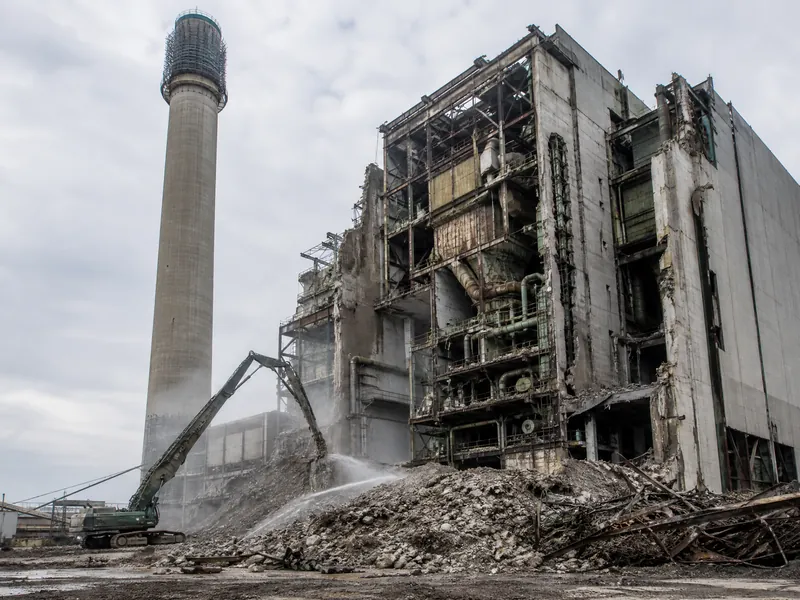
Environmental remediation is a significant component of power plant teardowns. We handle the abatement of hazardous materials, including asbestos insulation and lead-based paints, in strict accordance with Alaska DEC regulations. Our environmental teams establish negative pressure enclosures and utilize specialized filtration systems to prevent the release of contaminants during the deconstruction process. Once the hazardous materials are safely removed and manifested, we proceed with the structural demolition, utilizing controlled techniques to bring down boiler houses and cooling structures safely.
Hazards and controls
Dismantling Aggregate and Cement Operations
Aggregate and cement processing facilities present unique challenges due to their heavy construction and the presence of abrasive materials. Dismantling these structures requires robust equipment capable of cutting through thick steel and reinforced concrete. We deploy heavy-duty shears and pulverizers to break down silos, crushers, and conveyor systems. The abrasive nature of the residual materials necessitates frequent equipment maintenance and specialized cutting attachments to maintain operational efficiency throughout the teardown process.
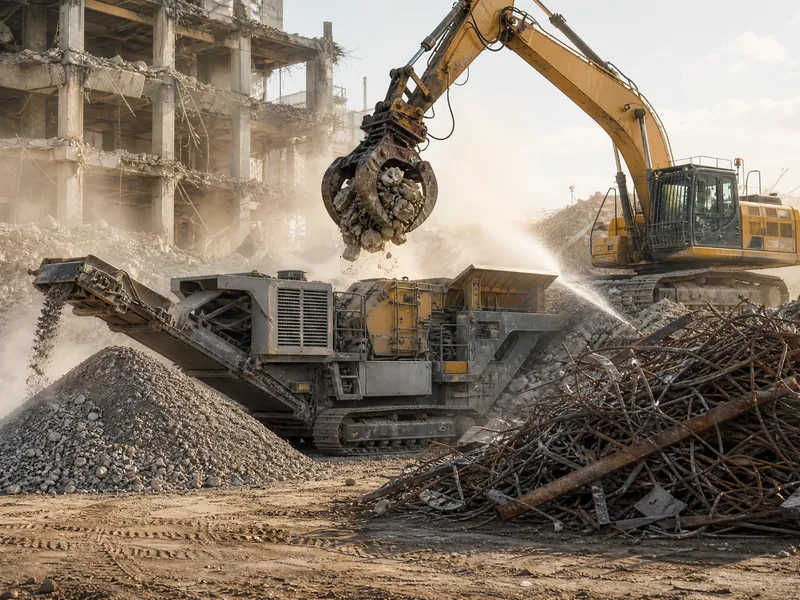
Material processing and site clearing are critical phases in the demolition of aggregate operations. We utilize mobile concrete crushers to process structural concrete into reusable aggregate, reducing transportation costs and landfill usage. Steel components are sorted and sized for scrap metal recovery, providing a salvage credit that offsets the overall net cost of the project. Our crews ensure that the site is graded and stabilized, leaving a clean footprint that meets the specific requirements of the property owner and local authorities.
Permits and notification
Navigating Alaska DEC Regulations
Compliance with environmental regulations is paramount in every industrial demolition project we undertake in Fairbanks. The Alaska Department of Environmental Conservation (Alaska DEC) enforces strict guidelines regarding the handling and disposal of hazardous materials, air quality management, and water pollution prevention. We manage all necessary notifications and permitting processes, including the federal NESHAP asbestos notification requirement, ensuring that our operations are fully compliant before any deconstruction begins.
Our environmental management plans detail the specific protocols for dust suppression, stormwater runoff control, and waste manifesting. We implement comprehensive monitoring systems to track air quality and ensure that our abatement and wrecking activities do not impact the surrounding community or the fragile Alaskan ecosystem. By maintaining transparent communication with regulatory agencies and providing detailed documentation at project closeout, we protect our clients from environmental liability and ensure a smooth transition to the next phase of site utilization.
Salvage and recovery
Asset Recovery and Material Processing
Maximizing the value of recovered materials is a core component of our demolition strategy in Fairbanks. We implement comprehensive asset recovery programs to identify and extract high-value components, such as transformers, motors, and specialized processing equipment, before the structural teardown begins. These assets are carefully dismantled and prepared for transport, generating a salvage credit that directly reduces the client's net cost for the demolition project.
The processing of scrap metal and structural materials is integrated into our deconstruction sequence. We utilize mobile shears and balers to size steel, copper, and aluminum for efficient transport to regional recycling facilities. Concrete and masonry are crushed on-site, providing a sustainable source of backfill material. This integrated approach to material processing minimizes waste, reduces transportation logistics, and maximizes the economic return for our clients, ensuring a cost-effective and environmentally responsible demolition process.
Capabilities
Abatement, remediation and recovery
Common questions
Questions owners and engineers ask
How do extreme winter temperatures affect the demolition schedule in Fairbanks?
Extreme cold requires specialized winterized equipment and careful scheduling. We plan critical structural teardowns and concrete crushing during favorable weather windows to maintain safety and efficiency. Our crews are experienced in subarctic operations, ensuring that the project progresses steadily despite the challenging climate.
What is the process for handling asbestos in older manufacturing plants?
Asbestos abatement is integrated into the initial phase of the decommissioning process. We establish containment zones and utilize specialized filtration to safely remove and package the hazardous materials. All abatement activities are conducted in strict compliance with Alaska DEC and federal NESHAP regulations, with full documentation provided at closeout.
How is salvage credit calculated for retired generating units?
Salvage credit is determined by the current market value of the recovered metals and equipment, such as copper wiring, turbines, and structural steel. We assess the recoverable assets during the planning phase and apply the estimated value as a credit against the total net cost of the demolition project.
Do you manage the utility disconnects before dismantling begins?
Yes, utility isolation is a critical first step. We coordinate with local utility providers to ensure the complete de-energization of electrical, gas, and water systems. Our crews implement rigorous lockout/tagout procedures to verify that all infrastructure is safe before any wrecking or deconstruction activities commence.
What documentation is provided at the completion of the project?
At project closeout, we provide a comprehensive documentation package that includes all permits, environmental manifests, safety records, and grading certifications. This documentation proves that the site was cleared and remediated in accordance with all Alaska DEC regulations, protecting you from future liability.
Ready to price the teardown?
Industrial Demolition USA provides engineered deconstruction and asset recovery services for complex facilities in Fairbanks and Anchorage. Contact our project management team to discuss your upcoming plant retirement or site clearing requirements. Call 954-740-1983 or email electricalequipmentbuyers@gmail.com to schedule a site evaluation.