
Overview
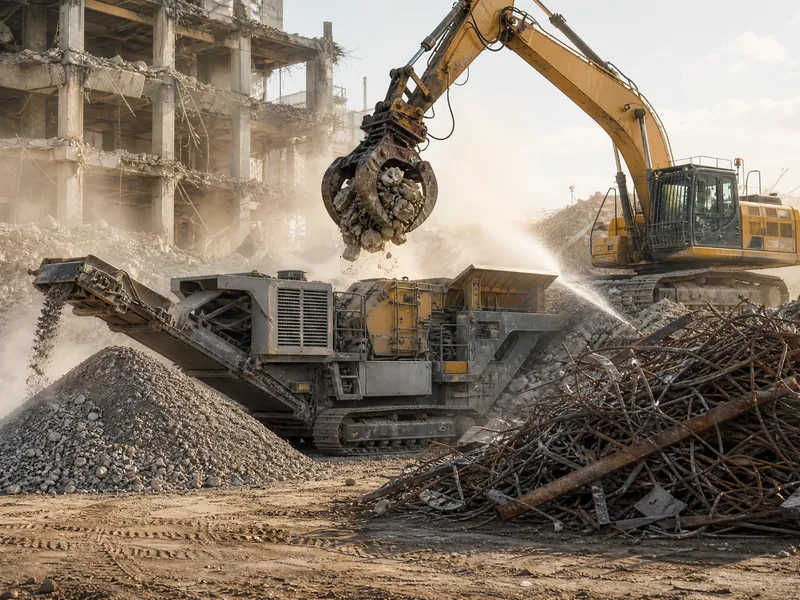
The demanding work involves complete structural teardowns, selective interior dismantling, and the systematic removal of heavy mechanical equipment from complex operating environments. We handle the entire sequence of deconstruction, from initial environmental remediation and site clearing to concrete crushing and scrap metal recovery. Salvage value from recovered structural steel, copper wiring, and industrial components is applied as a credit that offsets the client's net cost for the demolition project.
The work
Dismantling Port Facilities And Riverfront Industrial Structures
The industrial geography along the Delaware River and Christina River presents specific logistical constraints for heavy teardown projects. Marine terminals, bulk storage facilities, and riverside manufacturing plants operate in environments with high water tables and tidal influence. Heavy equipment positioning requires careful load distribution planning when working near bulkheads or on saturated soils. Coastal salt corrosion often degrades structural steel connections over decades, altering how a building behaves during controlled collapse.
Our crews execute the dismantling of these waterfront structures using high-reach excavators equipped with specialized shear attachments. We sequence the teardown to prevent debris from entering the waterways, utilizing containment booms and debris netting. Barge access allows for the efficient removal of heavy scrap metal and crushed concrete directly from the site, reducing the reliance on congested urban truck routes. When rail spur access is available, we load outbound materials directly onto gondola cars for efficient regional transport.
Method and sequence
Decommissioning Manufacturing Plants And Processing Facilities
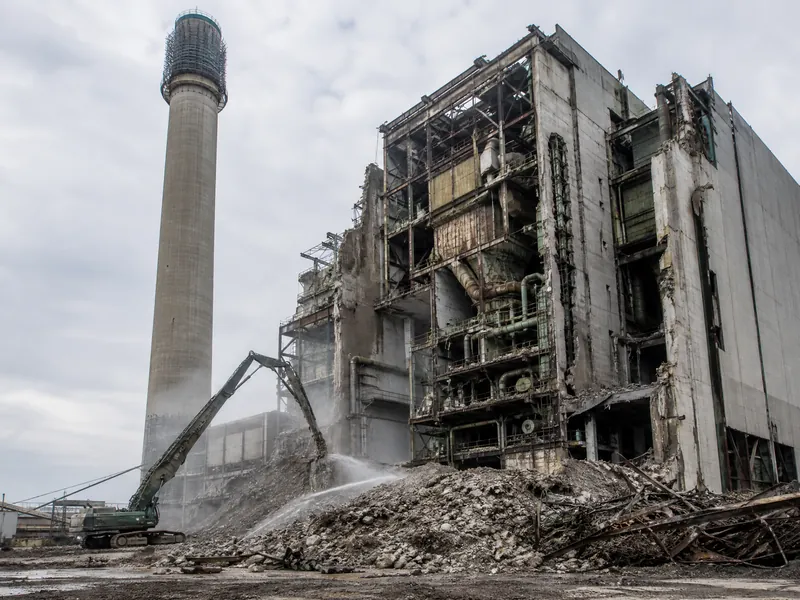
Wilmington's history as a center for chemical manufacturing, automotive assembly, and heavy industry leaves a legacy of complex structures requiring specialized deconstruction. Retired generating units, aggregate operations, and cement plants contain massive concrete foundations, heavy steel framing, and intricate piping networks. Food and beverage processing facilities often feature extensive stainless steel piping, large-capacity tanks, and specialized refrigeration systems that must be systematically drained, purged, and dismantled.
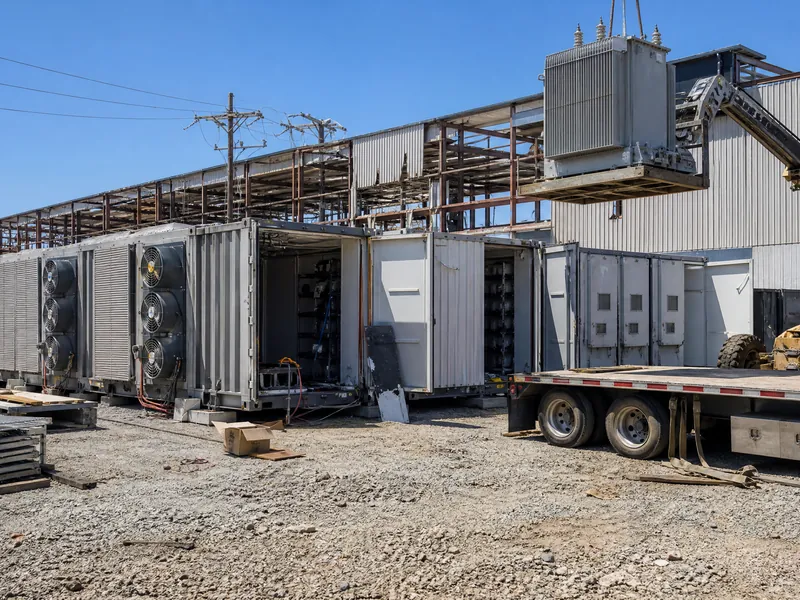
We approach these complex facilities with a strict focus on asset recovery and safe structural reduction. Interior demolition teams remove non-load-bearing components, hazardous materials, and valuable mechanical equipment before the main structural teardown sequence begins. We utilize torch cutting and mechanical shearing to dismantle heavy steel frameworks, carefully lowering large sections to the ground for further processing. The systematic recovery of structural steel, copper wiring, and heavy machinery provides a salvage credit that directly reduces the net cost of the demolition contract.
Hazards and controls
Managing DNREC Compliance And NESHAP Notifications
Regulatory compliance dictates the schedule and execution of every industrial teardown in Delaware. The Department of Natural Resources and Environmental Control (DNREC) oversees environmental remediation, asbestos abatement, and hazardous waste disposal. Before any structural demolition work begins, we submit the mandatory federal NESHAP 10-working-day notification to the appropriate environmental agencies. This notification period allows regulators to review the asbestos survey and abatement plan, ensuring that all hazardous materials are properly addressed before the building envelope is breached.
Local permitting involves coordinating with Wilmington city officials and New Castle County authorities to secure the necessary demolition permits and utility disconnect sign-offs. We work closely with local utility providers to verify that all electrical, gas, water, and sewer lines are physically severed and capped at the property line. This comprehensive approach to strict regulatory compliance prevents costly delays and ensures that the site is properly cleared for future commercial redevelopment.
Permits and notification
Concrete Crushing And Subsurface Foundation Removal
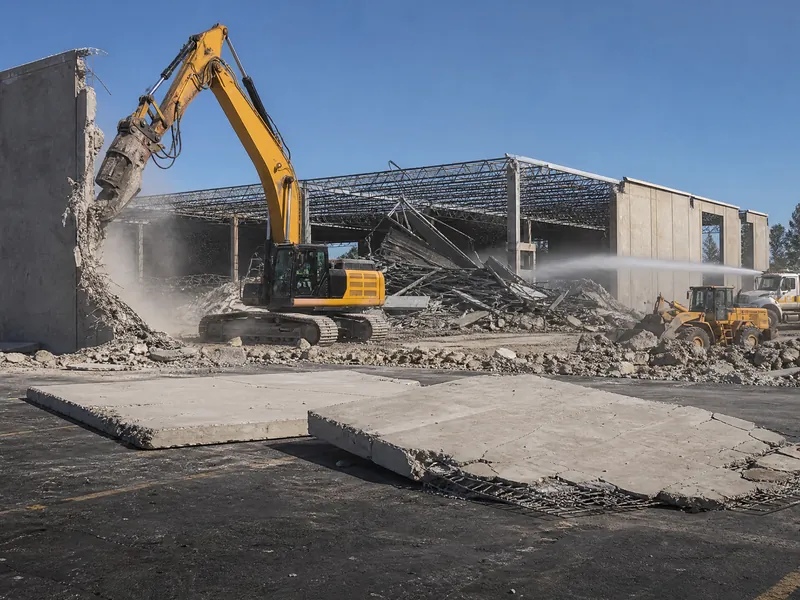
Heavy industrial facilities in the Mid-Atlantic region are typically anchored by massive concrete foundations, deep footings, and extensive slab-on-grade structures. Removing these subsurface elements requires heavy excavators equipped with hydraulic breakers and concrete pulverizers. The high water table in many parts of Wilmington complicates deep foundation removal, often requiring active dewatering systems to maintain a safe and stable excavation area. We systematically break apart the massive concrete, separating the embedded rebar for scrap metal recovery.
Once the concrete is broken down, we utilize mobile crushing plants to process the heavy material on-site. This operation produces a reusable aggregate product that can be left on-site for backfill or transported to other construction projects in the region. On-site concrete crushing significantly reduces the volume of outbound truck traffic, minimizing the impact on local roads and lowering disposal costs. The processed aggregate provides a stable, engineered base for future commercial construction.
Salvage and recovery
Navigating Dense Urban Access And Logistics
Executing heavy demolition within the dense urban environment of Wilmington requires precise logistical planning and traffic management. Many older industrial facilities are situated in tightly constrained areas, surrounded by active businesses, residential neighborhoods, and critical infrastructure. Moving heavy excavators, cranes, and transport trucks through narrow city streets demands careful coordination with local authorities and the implementation of comprehensive traffic control plans. We schedule the mobilization of oversized equipment during off-peak hours to minimize community disruption.
The removal of scrap metal and demolition debris is similarly constrained by urban logistics. We establish designated haul routes that avoid residential areas and prioritize major arterial roads leading to regional recycling centers. When working in neighboring industrial hubs like Newark, we leverage the proximity to major interstate highways to streamline the transport of materials. Efficient logistics management ensures that the project remains on schedule while mitigating the impact of heavy truck traffic on local roads.
Logistics
Scrap Metal Recovery And Regional Salvage Markets
The systematic recovery of ferrous and non-ferrous metals is a critical component of our industrial dismantling operations. We separate structural steel, copper wiring, aluminum components, and stainless steel piping during the teardown process. These materials are sorted, processed, and prepared for transport to regional scrap metal buyers and recycling facilities. The proximity of Wilmington to major industrial processing centers in Pennsylvania and New Jersey provides access to competitive salvage markets, maximizing the value of the recovered materials.
We apply the salvage value of these recovered metals as a credit against the overall cost of the demolition project. This net cost approach provides a clear financial benefit to the client, offsetting the expenses associated with heavy equipment operation, labor, and disposal. Our project managers track the volume and weight of all outbound scrap, providing detailed documentation of the recovered materials and the corresponding salvage credit. This transparent process ensures maximum financial benefit for the facility owner.
Capabilities
Abatement, remediation and recovery
Common questions
Questions owners and engineers ask
What is the process for handling utility disconnects before a teardown begins?
Securing utility disconnects is a mandatory first step before any structural dismantling can commence. We coordinate directly with local utility providers in New Castle County to physically sever and cap all electrical, gas, water, and sewer lines at the property boundary. This process requires formal sign-offs from the utility companies to confirm that the site is completely isolated from the municipal grid.
How do high water tables affect foundation removal in riverfront areas?
Proximity to the Delaware and Christina rivers means that many industrial sites contend with elevated water tables and tidal fluctuations. When excavating deep concrete footings, groundwater infiltration can destabilize the work area. We implement active dewatering systems, such as wellpoint pumping, to manage the water level. This allows our excavators to safely break apart and remove massive concrete foundations without compromising soil stability.
Why is the NESHAP notification required for industrial deconstruction projects?
The National Emission Standards for Hazardous Air Pollutants (NESHAP) mandate a 10-working-day notification period prior to the start of any commercial or industrial demolition. This federal requirement gives environmental regulators time to review the site's asbestos survey and abatement plan. We submit this documentation to DNREC and the EPA to demonstrate that all regulated asbestos-containing materials will be properly removed before the building envelope is breached.
Where does the crushed concrete go after a facility is demolished?
Processing concrete on-site using mobile crushers generates a valuable aggregate material. In many cases, this crushed concrete is retained on the property to backfill deep excavations, grade the site, or serve as a stable sub-base for future redevelopment. If the client does not require the aggregate for site restoration, we transport the material to regional construction projects, which reduces the volume of debris sent to local landfills.
Can salvage credits offset the expense of environmental remediation?
The value generated from recovered scrap metal, structural steel, and heavy machinery is applied as a direct credit to the overall project ledger. While environmental remediation and asbestos abatement represent significant upfront expenses, the salvage credit reduces the final net cost of the entire demolition contract. We carefully separate and process high-value metals to maximize this return, providing a financial offset that benefits the facility owner.
Ready to price the teardown?
Industrial Demolition USA provides the heavy equipment, specialized labor, and project management required to safely dismantle complex industrial facilities. Plant owners and facility managers rely on our expertise to execute complete structural teardowns and maximize asset recovery. Contact our estimating team at 954-740-1983 or email electricalequipmentbuyers@gmail.com to discuss your project.