
Overview
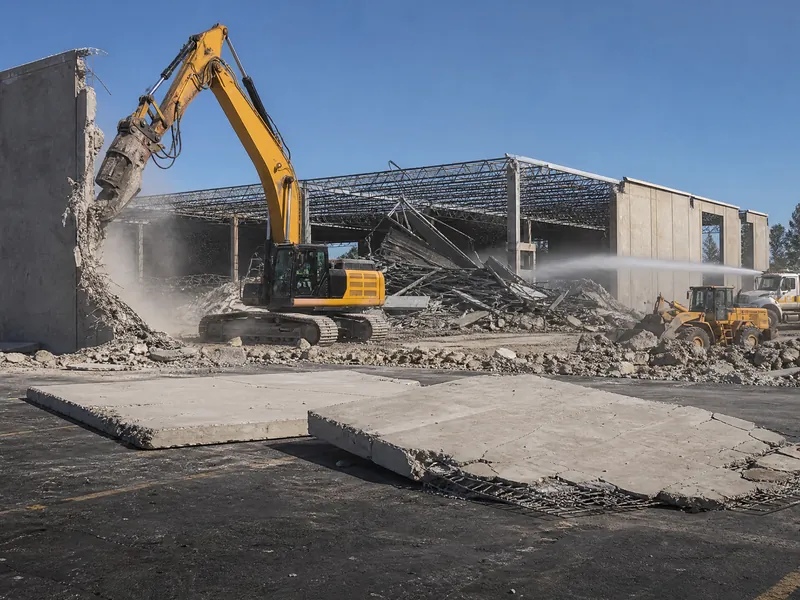
Our experienced crews manage every phase of the deconstruction lifecycle, from initial environmental abatement and utility isolation to heavy wrecking and final site grading. Operating in diverse industrial environments, we utilise advanced heavy equipment to safely bring down complex structures while mitigating risks to surrounding properties. Through strategic asset recovery and scrap metal processing, we generate valuable salvage credits that directly reduce the net cost of your demolition program.
The work
Executing Safe Utility Isolation and Site Preparation
Establishing a safe and secure work zone is the critical first step in any Springfield demolition project. Our crews coordinate extensively with local utility providers to ensure the complete disconnection and capping of all electrical, gas, water, and sewer services. We implement rigorous lock-out/tag-out procedures and physically verify that all systems are de-energised before any dismantling work begins. This meticulous utility isolation prevents accidental strikes and protects both our personnel and the surrounding infrastructure.
In complex industrial parks, isolating a specific structure often requires navigating shared utility networks. We carefully trace and map all lines, severing only those that service the building slated for teardown, thereby maintaining uninterrupted service to adjacent active operations. Following utility isolation and hazardous material abatement, we prepare the site for heavy equipment access. We establish reinforced staging areas and clear haul routes, ensuring that the subsequent wrecking and material load-out phases can be executed safely and efficiently.
Method and sequence
Dismantling Heavy Manufacturing and Assembly Plants
Springfield's industrial base includes significant manufacturing and assembly operations that eventually require systematic retirement and deconstruction. We dismantle these large-scale facilities using precision techniques that prioritise safety and environmental compliance. Our fleet of high-reach excavators, equipped with heavy-duty hydraulic shears and pulverisers, efficiently reduces steel-framed buildings and reinforced concrete structures. We carefully sequence the teardown process, ensuring that load-bearing elements are removed in a controlled manner to prevent unplanned structural failures during the wrecking phase.
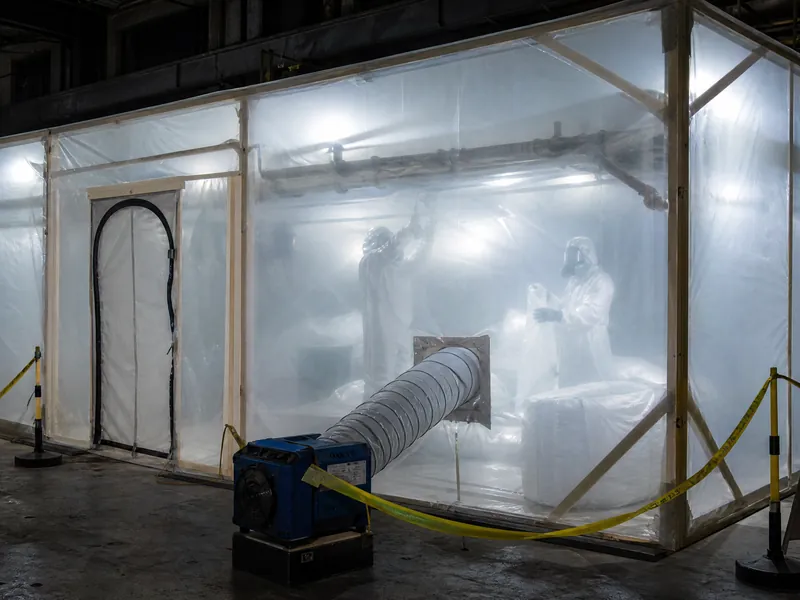
The decommissioning of manufacturing plants involves rigorous hazard mitigation before the heavy equipment is deployed. Our specialised teams conduct thorough abatement of asbestos, lead paints, and other regulated materials commonly found in older industrial facilities. We also manage the removal of residual chemicals and industrial lubricants from process piping and storage tanks. By addressing these environmental liabilities early in the project, we ensure that the subsequent structural demolition proceeds without regulatory delays or safety incidents.
Hazards and controls
Maximising Value Through Asset Recovery and Salvage
Recovering value from retired industrial facilities is a fundamental aspect of our demolition methodology in Springfield. Before structural wrecking commences, our asset recovery specialists identify and extract high-value machinery, electrical switchgear, and reusable industrial components. By carefully dismantling and preserving these assets, we generate a significant salvage credit that is applied directly against the gross cost of the deconstruction project. This strategic approach transforms obsolete infrastructure into a financial offset for the facility owner.
The processing of scrap metal is seamlessly integrated into our site clearing workflow. We utilise mobile shears and material handlers to process structural steel, heavy plate, and piping into dimensions suitable for regional recycling markets. Non-ferrous metals, including copper wiring and aluminium fixtures, are meticulously sorted to maximise their market value. Springfield's access to major highway networks and rail corridors allows for the efficient transportation of processed scrap to buyers, ensuring that the financial benefits of asset recovery are realised promptly.
Permits and notification
Decommissioning Retired Power Generation Infrastructure
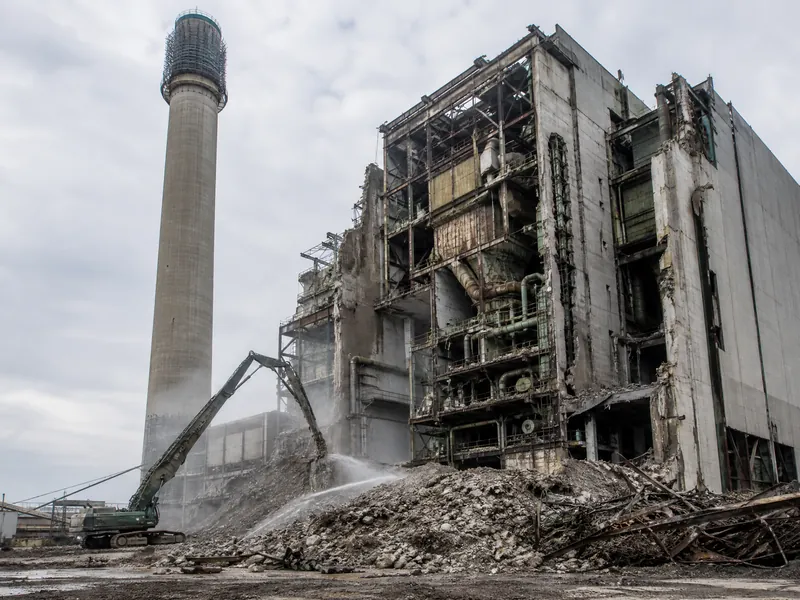
The retirement of aging coal units and power generation facilities in the Springfield region demands highly specialised demolition expertise. Tearing down massive boilers, turbines, and cooling towers requires meticulous engineering and precise execution. We employ a combination of traditional mechanical dismantling and, when necessary, controlled explosive demolition to safely fell towering structures. Our project managers develop detailed rigging and lifting plans to carefully lower heavy components, such as generators and transformers, to the ground for processing and asset recovery.
Environmental remediation is particularly critical during power plant decommissioning. We handle the safe removal and disposal of coal ash residues, asbestos insulation, and PCB-containing electrical equipment in strict accordance with Missouri DNR regulations. The massive concrete foundations and containment structures are systematically broken down using heavy hydraulic hammers. We process the resulting rubble on-site, separating the reinforcing steel for scrap and crushing the concrete for potential reuse as structural fill, thereby minimising the environmental footprint of the site clearing operation.
Salvage and recovery
Navigating Missouri DNR Compliance and Permitting
Successful industrial demolition in Springfield relies on thorough regulatory compliance and proactive permitting management. We handle all necessary notifications and approvals required by the Missouri Department of Natural Resources and local municipal agencies. This includes submitting the required federal NESHAP documentation for asbestos abatement and structural teardowns. Our team works closely with local authorities to secure wrecking permits, coordinate necessary road closures, and verify the proper disconnection of all municipal utilities prior to mobilisation.
The unique geological and environmental conditions of southwestern Missouri inform our site-specific demolition plans. We implement robust stormwater management protocols to prevent runoff and protect local water quality during the deconstruction process. Our engineering assessments account for local soil stability and bedrock depth when planning the removal of deep foundations and subterranean structures. Upon project completion, we deliver a comprehensive closeout package containing all disposal manifests and regulatory clearances, providing our clients with documented proof of compliant site remediation.
Capabilities
Abatement, remediation and recovery
Common questions
Questions owners and engineers ask
How do you handle the demolition of tall industrial structures?
Tearing down tall structures like silos, smokestacks, or cooling towers requires specialised techniques and engineered planning. We typically utilise high-reach excavators equipped with hydraulic attachments to systematically dismantle the structure from the top down. In cases where space permits and it is deemed the safest method, we may employ controlled explosive demolition to bring the structure to the ground safely. Every approach is backed by rigorous structural analysis to ensure a predictable and controlled collapse.
What is included in the environmental abatement process?
Environmental abatement involves the safe removal and disposal of hazardous materials before structural demolition begins. This includes identifying and removing asbestos-containing materials, lead-based paints, and PCB-contaminated equipment. We also drain and purge all process piping and storage tanks to remove residual chemicals or industrial fluids. Our certified crews perform this work under strict containment protocols, ensuring full compliance with Missouri DNR and federal regulations, and we provide all necessary disposal manifests.
Can the concrete from our demolished facility be reused?
Yes, concrete recycling is a standard practice in our site clearing operations. We use heavy hydraulic breakers to reduce concrete foundations, walls, and slabs into manageable pieces. Mobile crushing plants are then deployed on-site to process the rubble into a specified aggregate size. This crushed concrete can often be repurposed as backfill for the excavated areas or as a base layer for future construction, significantly reducing disposal costs and landfill usage.
How does the salvage credit impact the overall project cost?
The salvage credit directly reduces the net cost you pay for the demolition services. During the pre-demolition phase, we assess the value of recoverable scrap metal, structural steel, and reusable industrial equipment within your facility. The estimated market value of these materials is calculated and applied as a credit against the gross cost of the dismantling and remediation work. This integrated approach ensures you receive fair value for your retired assets.
What steps are taken to protect adjacent active operations?
When working in active industrial environments, we implement strict controls to isolate our work zone. We coordinate utility disconnects carefully to ensure neighbouring facilities remain powered. Dust and vibration are continuously monitored and mitigated using water suppression systems and engineered dismantling techniques. We also establish clear physical boundaries with fencing and debris netting, and we schedule heavy load-outs and disruptive activities to minimise interference with your ongoing plant operations and logistics.
Ready to price the teardown?
Industrial Demolition USA delivers the technical expertise and heavy equipment necessary to execute complex deconstruction projects in Springfield. We commit to completing your site clearing safely, efficiently, and in full regulatory compliance. Contact us at 954-740-1983 or email electricalequipmentbuyers@gmail.com to discuss your facility retirement needs.