
Overview
From initial asbestos abatement and utility disconnection to heavy wrecking and concrete crushing, our specialized teams manage every aspect of the decommissioning process. Working within Douglas County demands a thorough approach to urban logistics, riverfront access constraints, and strict environmental controls. Property developers and plant operators depend on our proven engineering protocols and adherence to Nebraska DEE standards to safely clear complex sites for commercial or industrial redevelopment.
The work
Strategic Wrecking of Complex Industrial Structures
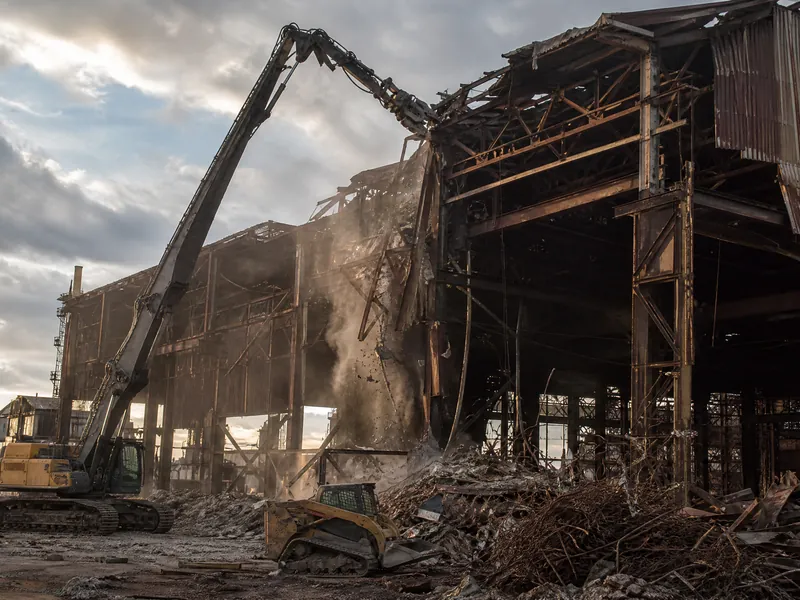
The diverse industrial base in Omaha, ranging from expansive warehousing complexes to specialized food processing plants, requires a highly adaptable approach to structural demolition. We engineer each teardown sequence to address the specific architectural and logistical challenges of the facility. Utilizing a fleet of heavy machinery, including high-reach excavators equipped with hydraulic shears, pulverizers, and grapples, our crews systematically dismantle steel frameworks, concrete silos, and heavy masonry walls. This controlled deconstruction method ensures that the structural integrity of the building is managed safely throughout the entire wrecking process.
In Omaha's dense industrial corridors, particularly near the Missouri River or active rail lines, precision is paramount. We frequently employ selective dismantling techniques to carefully remove sections of a facility without impacting adjacent active operations or critical infrastructure. This involves meticulous torch cutting, engineered rigging, and crane-assisted removal of heavy components. By customizing our demolition strategies to the unique physical environment of each site, we mitigate risks, control dust and vibration, and ensure that the project is executed with maximum efficiency and safety.
Method and sequence
Comprehensive Asbestos Abatement and Remediation
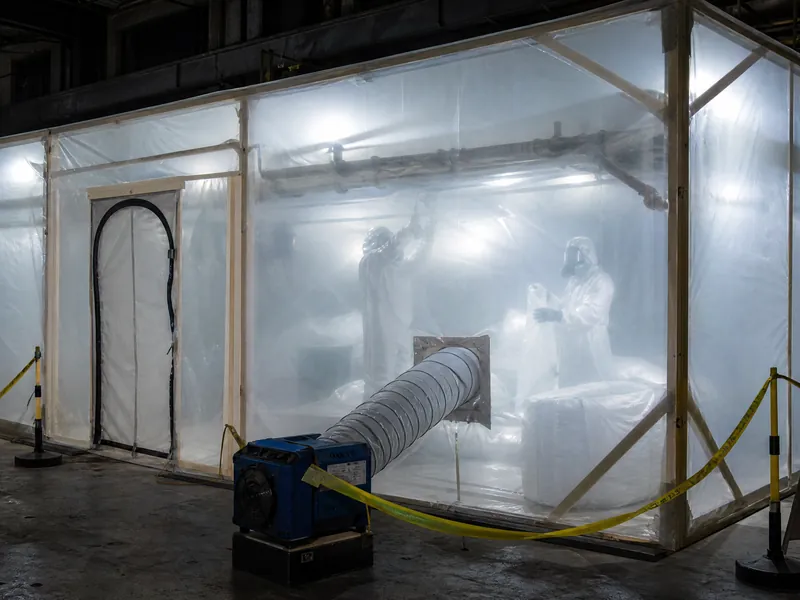
Prior to the commencement of any structural dismantling, thorough environmental remediation is essential to secure the site and ensure regulatory compliance. Industrial Demolition USA provides expert abatement services to manage hazardous materials frequently encountered in older Omaha industrial facilities. Our certified technicians are equipped to safely identify, contain, and remove asbestos-containing materials, lead-based paints, and other regulated environmental hazards. We conduct these operations under strict negative pressure containment, utilizing advanced HEPA filtration to prevent any cross-contamination of the surrounding area.
The decommissioning of manufacturing plants and retired generating units also necessitates the careful handling of residual industrial chemicals, lubricants, and potentially contaminated soils. We coordinate the systematic extraction, secure packaging, and transportation of these substances to approved disposal facilities in accordance with Nebraska DEE and federal NESHAP regulations. By integrating environmental remediation directly into our demolition workflow, we provide a streamlined, single-source solution that eliminates the delays associated with managing multiple subcontractors, ensuring the site is completely safe for heavy wrecking.
Hazards and controls
Asset Recovery and Scrap Metal Salvage Credits
Maximizing the financial return on recovered materials is a fundamental aspect of our industrial dismantling operations in Omaha. Through our comprehensive asset recovery program, we systematically identify and extract valuable metals and machinery components during the teardown process. Our crews utilize precise cutting and sorting techniques to segregate ferrous and non-ferrous metals, including heavy structural steel, copper wiring, industrial piping, and aluminum fixtures, ensuring they are prepared for optimal recycling.
The materials recovered from the site are transported to regional scrap processing facilities, where their market value is assessed. This salvage value is then applied as a direct credit against the client's overall demolition contract, substantially reducing the net cost of the project. We maintain rigorous documentation throughout the salvage process, providing clients with detailed weight tickets and transparent financial reporting. This strategic approach to asset recovery not only improves the economic viability of the decommissioning project but also supports sustainable practices by diverting significant volumes of industrial debris from local landfills.
Permits and notification
Facility Decommissioning and Utility Isolation
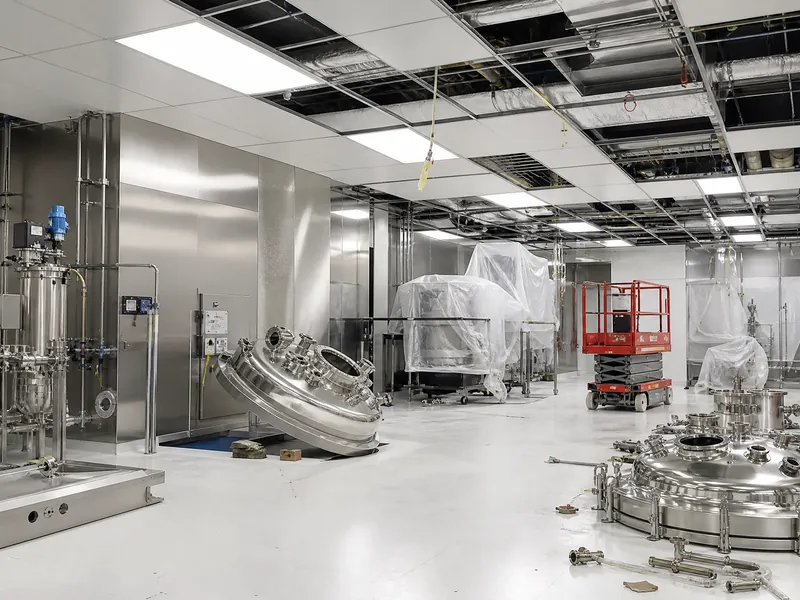
The safe and effective execution of an industrial demolition project requires the absolute isolation and neutralization of all facility utilities. Before any heavy equipment is deployed on an Omaha site, our specialized teams collaborate with local utility providers and plant engineers to verify the complete disconnection of electrical services, high-pressure gas mains, water lines, and industrial steam networks. We enforce stringent lockout/tagout procedures to ensure that all energy sources are entirely severed, protecting our personnel and the municipal infrastructure from accidental strikes or energy releases.
In specialized environments such as food and beverage processing plants, the decommissioning process also involves the meticulous purging of process piping, the draining of hydraulic systems, and the safe removal of integrated machinery. We systematically dismantle these internal operational networks, ensuring that no residual pressures, chemicals, or fluids remain within the structure. This comprehensive approach to utility isolation and facility decommissioning establishes a secure baseline, allowing the subsequent structural wrecking phases to proceed safely and without interruption.
Salvage and recovery
Site Clearing, Concrete Crushing, and Final Grading
The final stage of our comprehensive demolition service is the thorough clearing and preparation of the Omaha site for its subsequent redevelopment. Our site clearing operations encompass the complete extraction of all structural debris, concrete foundations, and subterranean footings. To maximize operational efficiency and minimize logistical costs, we frequently deploy mobile concrete crushers to process masonry and concrete rubble directly on-site. This process generates a clean, reusable aggregate that can be utilized as structural backfill or base material for future construction projects.
Following the removal and processing of all debris, our equipment operators execute final site grading to establish proper elevations and ensure effective stormwater management. We carefully contour the terrain to align with the client's specific redevelopment specifications, addressing any necessary soil compaction or stabilization requirements. Industrial Demolition USA delivers a fully cleared, level, and secure site, providing the client with a complete closeout package that includes all permits, disposal manifests, and regulatory documentation, marking the successful conclusion of the project.
Capabilities
Abatement, remediation and recovery
Common questions
Questions owners and engineers ask
How do you manage the environmental regulations for demolition in Omaha?
We handle all aspects of regulatory compliance for your Omaha project. This includes submitting the required pre-demolition notifications to the Nebraska DEE, specifically regarding NESHAP asbestos regulations, and securing all necessary structural wrecking permits from Douglas County. We ensure that all environmental assessments, abatement procedures, and disposal manifests are fully documented and compliant before and during the teardown.
What is included in the net cost of an industrial demolition project?
The net cost encompasses the gross expenses of engineering, hazardous material abatement, structural dismantling, and site clearing, minus the salvage credit generated from recovered materials. Factors such as the size of the facility, the complexity of the utility isolation, and local disposal fees influence the gross cost. The value of recovered scrap metal is applied directly to offset these expenses.
How do you handle the removal of heavy concrete foundations?
We utilize heavy excavators equipped with hydraulic breakers and pulverizers to systematically excavate and break down concrete foundations, slabs, and subterranean footings. To reduce transportation costs and environmental impact, we often process this concrete on-site using mobile crushers, converting the rubble into reusable aggregate that can be left on-site for your future backfill or grading needs.
Can you perform demolition work near the Missouri River or other sensitive areas?
Yes, we are experienced in executing demolition projects in environmentally sensitive or logistically constrained areas, including riverfront properties. We implement rigorous stormwater management and runoff control protocols to protect local waterways. Our controlled wrecking techniques and strict dust suppression measures ensure that the dismantling process does not negatively impact the surrounding environment or adjacent infrastructure.
What documentation is provided at the end of the project?
Upon completion of the site clearing and final grading, we provide a comprehensive project closeout package. This includes all municipal and state permits, environmental clearance certificates, hazardous material disposal manifests, and detailed weight tickets for all salvaged materials. This documentation ensures you have a complete, legal record of the facility's decommissioning and the proper handling of all materials.
Ready to price the teardown?
Industrial Demolition USA is equipped to handle the most demanding dismantling and site clearing challenges in Omaha. Contact our specialized team today to discuss your facility's requirements and arrange for a comprehensive project evaluation. Call us at 954-740-1983 or email electricalequipmentbuyers@gmail.com to get your project underway.