
Overview
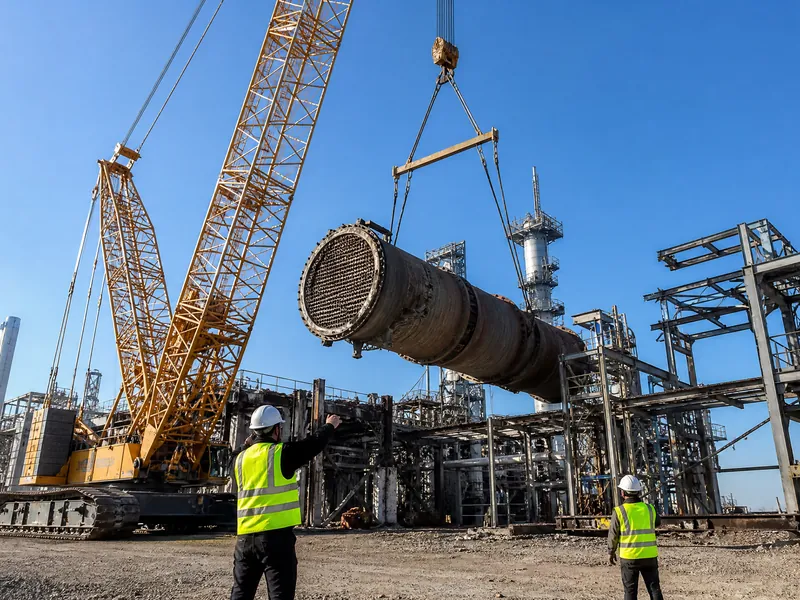
From the initial environmental remediation and utility isolation to the final concrete crushing and site grading, our wrecking crews manage the entire project lifecycle. Specialized high-reach equipment and engineered demolition techniques allow us to safely bring down complex industrial structures in both dense urban environments and expansive industrial parks. Facility owners rely on our controlled demolition solutions to prioritize safety, regulatory compliance, and operational efficiency when retiring aging infrastructure.
The work
Hazardous Material Abatement and NMED Regulations
Systematically addressing the environmental hazards present within legacy industrial facilities is required prior to initiating any structural dismantling. The safe removal of asbestos-containing materials, lead coatings, and other regulated wastes is performed by our specialized abatement crews in strict compliance with New Mexico Environment Department (NMED) guidelines. The complete pre-demolition notification process is handled internally, ensuring that all federal and state regulatory requirements are fully satisfied before the heavy wrecking equipment arrives on site.
Minimizing liability and maintaining the project schedule depends heavily on effective environmental remediation. Secure containment zones and advanced decontamination protocols are utilized during the removal process. Complete documentation of the waste stream is provided to the client after all hazardous materials are properly packaged, manifested, and transported to licensed disposal facilities. Proceeding safely and without regulatory interruption during the subsequent structural demolition is committed by this thorough approach to abatement.
Method and sequence
Systematic Decommissioning and Utility Air-Gapping
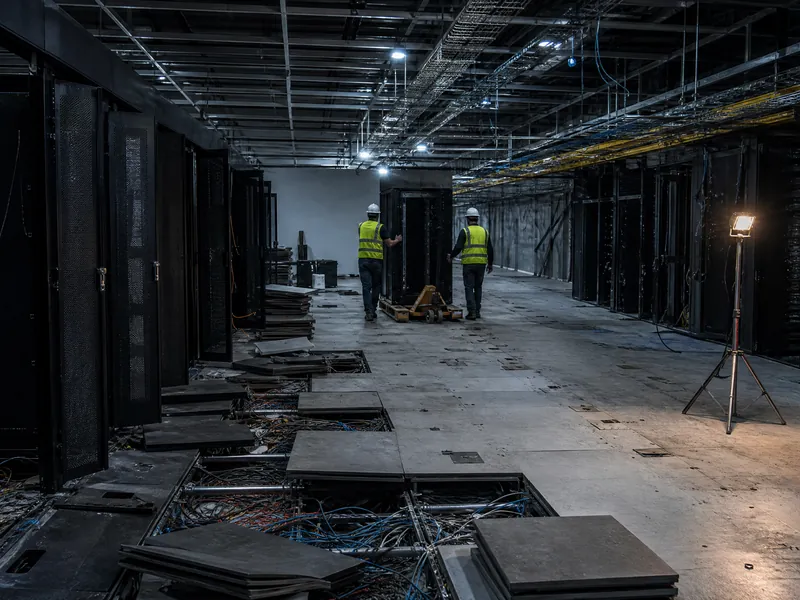
The complete isolation of the facility from its utility networks serves as a critical first step in any industrial teardown. Rigorous lockout and tagout procedures are executed by our decommissioning teams to secure all electrical, natural gas, water, and pneumatic systems. Connections are physically air-gapped and zero energy states are verified across the entire site, eliminating the risk of accidental discharges during the mechanical wrecking phase. Protecting our personnel and ensuring a safe operational environment relies entirely on this meticulous preparation.
The purging and cleaning of industrial process equipment, storage tanks, and piping networks is managed in addition to severing utility feeds. Any residual chemicals, sludges, or lubricants are carefully extracted, characterized, and manifested for legal disposal. The inherent dangers associated with live systems are removed by systematically neutralizing the facility's operational infrastructure, clearing the way for the aggressive dismantling of the physical structure.
Hazards and controls
Executing Plant Teardowns in the High Desert Environment
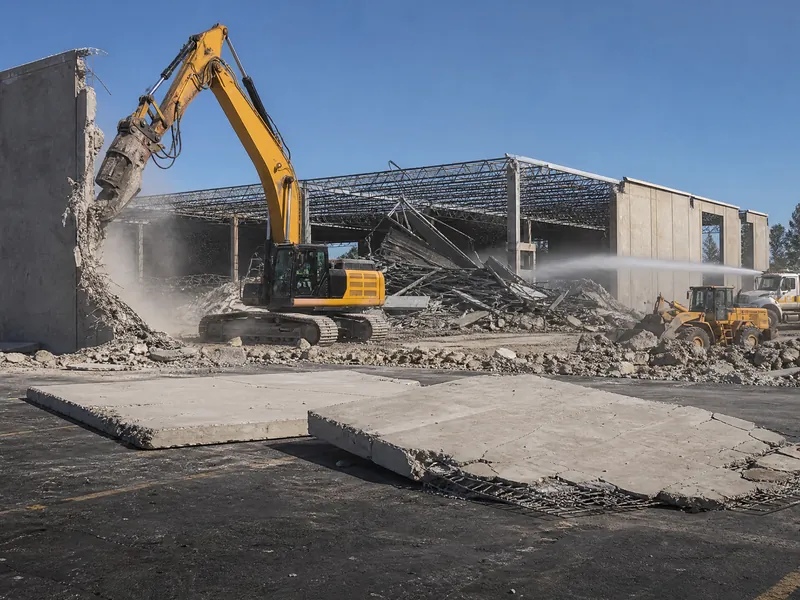
Managing large-scale facility retirements under unique regional conditions is essential for demolition contractors in the Albuquerque industrial sector. Heavy manufacturing plants, cement operations, and expansive warehousing facilities dominate the local industrial corridors, and we routinely dismantle these robust structures. Meticulous engineering combined with the deployment of heavy mechanical equipment forms the basis of our approach to deconstructing steel-framed buildings, concrete silos, and masonry structures. Hydraulic shears and grapples are utilized to systematically dismantle facilities, ensuring that all structural elements are brought to the ground in a controlled and predictable manner.
Stringent dust control measures are an absolute necessity during all wrecking activities due to New Mexico's arid climate. Comprehensive water suppression systems are implemented to mitigate airborne particulates, which protects both our workers and adjacent properties. To accommodate site access constraints and local traffic patterns, our project managers carefully sequence the demolition phases, allowing heavy equipment mobilization and material load-out to proceed without disrupting the surrounding community.
Permits and notification
Foundation Removal and Concrete Crushing Operations
The extraction and processing of the facility's concrete infrastructure, including deep foundations, heavy slabs, and retaining walls, is the focus of the concluding phase of our teardown process. Large excavators fitted with hydraulic hammers are deployed to break apart the concrete, carefully separating the embedded reinforcing steel for scrap recovery. Mobile crushing plants are frequently utilized to process the concrete debris into reusable aggregate right on the property, optimizing the site clearing process.
The need for heavy truck traffic is drastically reduced and costly landfill disposal fees are eliminated by processing the concrete on-site. Subsurface voids are filled and the ground is stabilized using the resulting crushed material, which is often repurposed as engineered fill to level the site. A clean, compacted site that is fully prepared for future industrial or commercial construction is delivered to the client after our crews complete the project by executing final grading operations.
Salvage and recovery
Scrap Metal Processing and Salvage Credit Generation
Substantial volumes of recyclable metals are consistently generated during large-scale demolition projects in Albuquerque, which we actively recover to improve the project's financial outcome. Valuable materials, including heavy structural steel, copper wiring, aluminum fixtures, and obsolete industrial machinery, are identified and segregated by our trained crews. Mobile shears and cutting torches are used to process these materials directly on the job site, reducing oversized components to dimensions suitable for immediate transport to recycling facilities.
The client's overall cost for the demolition services is offset by applying the value derived from this extensive scrap recovery effort directly as a salvage credit. Competitive valuation for the recovered metals is ensured through our strong relationships with regional scrap buyers. A more economical solution for the facility owner is delivered by prioritizing asset recovery within our wrecking methodology, which also significantly reduces the environmental impact of the demolition process.
Capabilities
Abatement, remediation and recovery
Common questions
Questions owners and engineers ask
Are NMED demolition notifications managed by your team?
Yes, we take full responsibility for all required regulatory filings. Our team prepares and submits the necessary asbestos and demolition notifications to the New Mexico Environment Department (NMED) well in advance of the mandated deadlines. This ensures your project remains fully compliant with state and federal environmental regulations, preventing any administrative delays before the work begins.
What materials contribute to the salvage credit during a teardown?
The salvage credit is calculated based on the current market value of the recoverable metals extracted during the demolition. This typically includes heavy structural steel beams, copper wiring, aluminum components, and obsolete industrial machinery. We estimate this value during our initial site assessment and apply it as a direct offset to reduce your net project cost.
Is your heavy demolition equipment available outside of Albuquerque?
Absolutely. Our heavy demolition capabilities extend throughout the region, and we frequently mobilize our crews and specialized equipment for industrial dismantling projects in Hobbs and other industrial centers across New Mexico. We possess the logistical resources to manage complex facility decommissioning anywhere in the state, ensuring consistent safety and performance.
What methods are used to control dust during the wrecking process?
Dust suppression is a major priority, especially given New Mexico's dry climate. We utilize high-volume water cannons, misting systems, and targeted hose lines to continuously wet down the structures during mechanical dismantling and material loading. This constant application of water effectively knocks down airborne particulates, ensuring compliance with local air quality standards and protecting neighboring properties.
When are hazardous materials removed from the industrial facility?
All hazardous materials, including asbestos and lead-based paint, are removed prior to any structural wrecking. Our specialized abatement teams establish secure containments and perform the remediation according to strict regulatory protocols. We manage the legal disposal of the waste and provide you with all necessary closeout documentation before the heavy equipment begins dismantling the building.
Ready to price the teardown?
Executing complex facility teardowns in Albuquerque requires the heavy machinery and technical proficiency delivered by Industrial Demolition USA. Reach out to our project management team to discuss your specific dismantling and site clearing requirements. Call 954-740-1983 or email electricalequipmentbuyers@gmail.com to arrange a detailed site evaluation.