
Overview
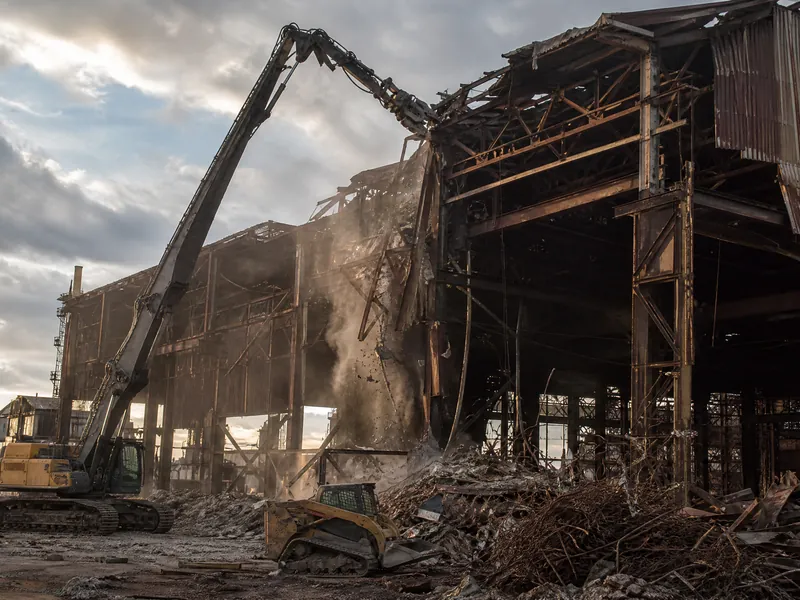
Our crews handle the complete lifecycle of facility retirement, from initial hazardous material abatement to final site grading. We manage the unique challenges of coastal industrial sites, including salt corrosion impacts on structural integrity and the logistical advantages of port access for material movement. Whether dismantling a retired petrochemical unit or clearing a legacy manufacturing site, we deliver controlled, engineered demolition that protects active operations and surrounding infrastructure.
The work
Petrochemical and Refining Facility Dismantling
The Corpus Christi industrial base is heavily concentrated in refining and petrochemical production, requiring specialized approaches to facility retirement. Dismantling these structures involves managing complex piping networks, pressure vessels, and process equipment that have often been exposed to decades of harsh chemical environments and coastal salt corrosion. Our crews utilize cold cutting techniques and specialized shears to safely separate interconnected systems without introducing ignition sources. We sequence the teardown to maintain the integrity of adjacent active units, a critical requirement in dense refinery footprints.
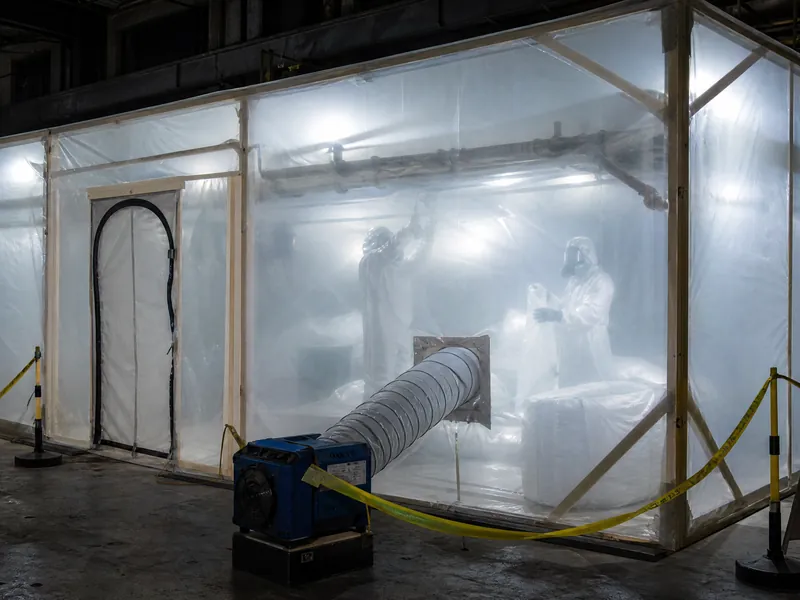
Before structural demolition begins, we coordinate comprehensive utility isolation and line blinding to ensure all process systems are fully de-energized and purged. We handle the removal of residual product lines and the abatement of hazardous materials, including asbestos insulation and lead-based coatings. By integrating environmental remediation with structural dismantling, we streamline the decommissioning schedule and reduce the overall risk profile of the project.
Method and sequence
Managing Coastal Demolition and Port Logistics
Executing heavy demolition in Corpus Christi requires adapting to specific regional conditions, particularly the coastal environment and high water tables. Soil stability and weather patterns dictate our approach to heavy equipment staging and crane placement during high-reach operations. We engineer our dismantling sequences to account for wind loads and potential severe weather events, ensuring that partially demolished structures remain stable throughout the project duration.
The proximity to deep-water ports and extensive rail networks provides significant advantages for material movement and asset recovery. We leverage these logistical channels to efficiently transport heavy scrap metal and salvaged components to regional processing facilities. This efficient material handling not only accelerates the site clearing process but also maximizes the salvage credit applied to the client's net cost. We coordinate closely with local transport authorities to manage the routing of oversized loads through the industrial corridors.
Hazards and controls
Environmental Remediation and TCEQ Compliance
Regulatory compliance is a foundational element of our demolition operations in Texas. We operate in strict adherence to the Texas Commission on Environmental Quality (TCEQ) regulations, managing all required notifications and permitting processes before mobilization. This includes filing the necessary NESHAP notifications for asbestos abatement and coordinating with local environmental agencies to ensure all work meets state and federal standards.
Our environmental remediation services address the legacy contamination often found at older industrial sites. We perform targeted soil remediation, underground storage tank removal, and the safe disposal of regulated building materials. Every waste stream is meticulously tracked, and we provide clients with comprehensive manifests and closeout documentation. This rigorous approach to environmental compliance protects facility owners from future liability and ensures the site is properly prepared for its next phase of development.
Permits and notification
Concrete Crushing and Site Preparation
Following the removal of above-ground structures, our focus shifts to processing the substantial volumes of concrete foundations, slabs, and containment structures typical of heavy industrial facilities. We deploy high-capacity mobile crushing spreads directly to the Corpus Christi site, reducing massive concrete elements into reusable aggregate. This on-site processing significantly reduces the volume of material that must be hauled away, lowering transportation costs and minimizing the impact on local roadways.
The crushed concrete can often be repurposed on-site as backfill or base material for future construction, providing a sustainable solution for site grading. We utilize heavy excavators equipped with hydraulic breakers and pulverizers to extract deep foundations and separate rebar from the concrete matrix. The recovered steel is routed to our scrap metal recovery stream, further contributing to the project's salvage credit. Our final site clearing leaves a clean, graded footprint ready for new industrial investment.
Salvage and recovery
Regional Coverage Across the Texas Gulf Coast
While our operations are heavily focused on the industrial sectors of Corpus Christi, our capabilities extend throughout the broader Texas Gulf Coast and inland regions. We regularly deploy specialized demolition crews and heavy equipment to support facility retirements in neighboring industrial hubs, including Houston, Beaumont, and Dallas. This regional density allows us to rapidly mobilize resources and adapt to shifting project schedules across multiple sites.
Our extensive experience in the Texas market means we understand the specific operational requirements of the state's dominant industries, from oilfield facilities in the Permian Basin to cement and aggregate plants. We bring the same level of engineering rigor and safety discipline to every project, regardless of location. By maintaining a strong presence across the region, we provide facility owners with a reliable, single-source contractor for their most complex decommissioning and teardown requirements.
Capabilities
Abatement, remediation and recovery
Common questions
Questions owners and engineers ask
How do you handle utility disconnects at a Corpus Christi refinery?
We coordinate directly with facility engineers and local utility providers to execute comprehensive air-gapping and line blinding. Every process line, electrical feed, and mechanical system is physically severed and locked out before any structural dismantling begins. We verify zero energy states across all systems to ensure the safety of our crews and the protection of adjacent active operations.
What permits are required for industrial demolition in Texas?
We manage all necessary permitting through the Texas Commission on Environmental Quality (TCEQ) and local municipal authorities. This includes filing the mandatory 10-day NESHAP notification for asbestos abatement, securing local demolition permits, and establishing approved stormwater pollution prevention plans (SWPPP) for the duration of the site clearing activities.
How is the salvage credit calculated for recovered materials?
We assess the volume and quality of recoverable scrap metal, alloys, and reusable components during the initial site evaluation. The value of these materials is calculated based on current regional commodity markets and is applied directly as a credit against the total cost of the demolition project. This offset reduces the net capital expenditure required for facility retirement.
Can you process concrete foundations on-site?
Yes, we deploy mobile crushing equipment to process concrete slabs, footings, and containment walls directly at the project location. We separate the embedded rebar for scrap recovery and crush the concrete into specified aggregate sizes. This material can be used as clean backfill to grade the site, significantly reducing the need for off-site hauling and disposal.
How do you manage dust and emissions during the teardown?
We implement aggressive dust suppression protocols using high-volume water cannons and targeted misting systems at the point of demolition. We monitor wind conditions and adjust our operations to prevent fugitive dust from impacting neighboring properties or active facility areas. All abatement of hazardous materials is conducted under negative pressure enclosures with HEPA filtration.
Ready to price the teardown?
Industrial Demolition USA delivers engineered dismantling and site clearing for the most complex industrial facilities in Corpus Christi. Contact our estimating team to discuss your upcoming plant retirement or decommissioning project. Call us at 954-740-1983 or email electricalequipmentbuyers@gmail.com to schedule a comprehensive site evaluation.