
Overview
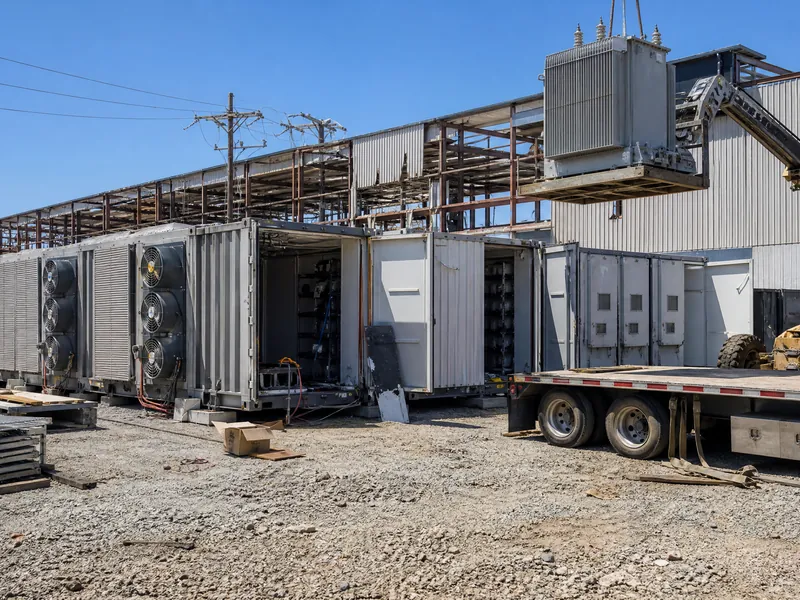
Idaho DEQ compliance and Ada County permitting are built into every project scope from day one. Salvage recovery on structural steel, copper, and process equipment is applied as a direct credit against your demolition cost, reducing out-of-pocket expense.
The work
Boise Industrial Facility Types We Demolish
Boise's economy has historically centered on food and beverage processing, regional distribution, and light manufacturing. Several large processing plants and cold-storage warehousing complexes have aged past economical retrofit and now require full deconstruction. We strip these structures systematically - removing process equipment, refrigeration systems, conveyor infrastructure, and insulated panels before structural wrecking begins.
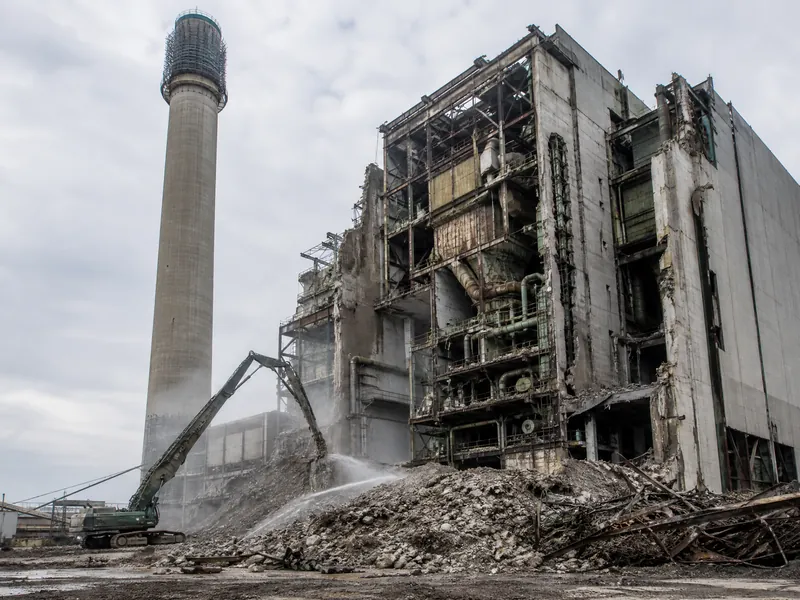
Aggregate and cement operations along the Boise River corridor and in the surrounding foothills present their own challenges. Dust suppression, concrete crusher staging, and haul-route coordination with Ada County road authorities are standard project elements we plan before mobilizing. Retired generating units, including older natural-gas peaker facilities, require careful decommissioning of electrical switchgear and fuel-supply infrastructure before any physical teardown.
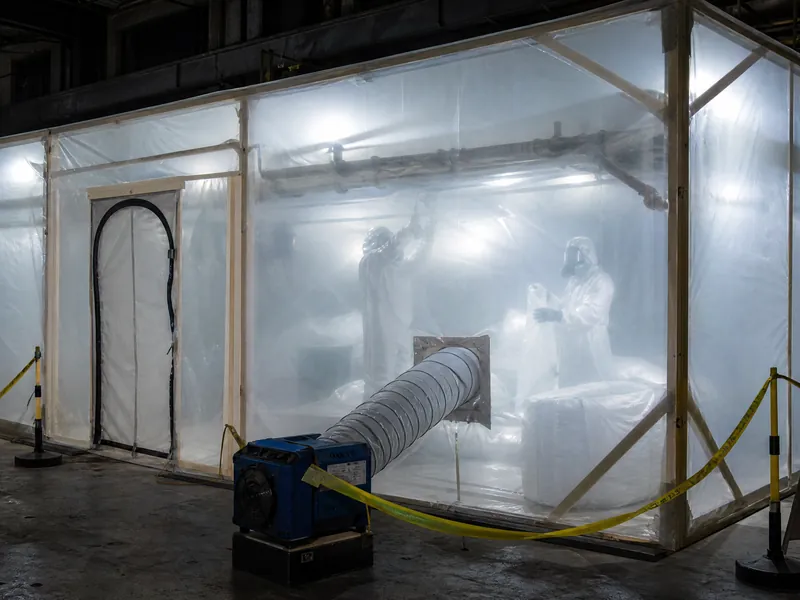
Warehousing and distribution centers - common near the I-84 corridor - are straightforward structurally but often contain asbestos-containing roofing materials and lead paint on steel members. We sequence abatement ahead of mechanical demolition so downstream salvage streams remain uncontaminated and recyclable to regional metal processors.
Method and sequence
Idaho DEQ Compliance and Pre-Demolition Notification
Idaho DEQ administers the state's asbestos National Emission Standards for Hazardous Air Pollutants program and requires written notification before any regulated demolition or renovation activity. Notification timelines, fee schedules, and inspection coordination are project constants we handle on behalf of the owner, removing administrative burden from your team.
Beyond DEQ, the City of Boise Building Department and Ada County Development Services issue demolition permits, right-of-way encroachment permits, and may require traffic-control plans for haul routes through commercial districts. We prepare and submit these documents as part of our pre-construction phase. Utility disconnection coordination with Idaho Power and Intermountain Gas is initiated early to avoid schedule delays.
For projects involving underground storage tanks or soil contamination - not uncommon on older industrial parcels near the Boise Rail Yard area - Idaho DEQ's Underground Storage Tank program may require concurrent remediation work. We scope those requirements into the project plan and coordinate with licensed environmental contractors when remediation runs parallel to physical wrecking.
Hazards and controls
Soil, Weather, and Terrain Factors in Boise
Boise sits in a high-desert basin at roughly 2,700 feet elevation. Soils in the valley floor are predominantly silty loam over basalt, offering adequate bearing capacity for crane mats and heavy equipment in dry conditions. Late-winter and early-spring thaw cycles can saturate surface soils, requiring temporary ground protection to prevent equipment rutting and site drainage violations.
Summer temperatures regularly exceed 100°F, requiring heat-safety protocols for crews and adjusted maintenance intervals for hydraulic equipment. Dust control is an active concern during dry months; water trucks and polymer dust suppressants are deployed on sites adjacent to occupied properties or roadways. Ada County air-quality rules align with Idaho DEQ standards and both are addressed in our site-specific execution plan.
The Treasure Valley's relatively flat topography simplifies crane positioning and material staging compared to projects in rougher Idaho terrain. However, proximity to the Boise Airport's flight corridors imposes crane-height restrictions for sites in the southwest quadrant of the city, a factor we confirm with FAA notification protocols before rigging tall structural picks.
Permits and notification
Salvage and Material Recovery Outlets in the Treasure Valley
Structural steel from Boise demolition projects moves efficiently to regional scrap processors in the Treasure Valley and to secondary steel consumers in the Pacific Northwest. Clean steel recovered from food-processing or warehouse structures can yield meaningful salvage credits that reduce net demolition cost for the owner.
Copper wiring and bus bar from industrial electrical systems, aluminum from process equipment frames, and stainless steel from food-grade processing vessels all have established buyers in this market. We segregate these streams on-site to maximize recovery value. Concrete rubble from slab and foundation demolition is processed through on-site crushing when site area permits, producing road base that can offset disposal costs or be used in the project's own backfill scope.
Usable process equipment - conveyors, compressors, chillers, overhead cranes - is inventoried during the deconstruction planning phase. If resale or redeployment is viable, that pathway is documented and the asset recovery credit flows directly to the client. Nothing is assumed to have zero value until it has been assessed.
Salvage and recovery
Project Logistics and Regional Reach to Pocatello
Boise functions as our regional staging hub for Idaho work. Equipment and crew mobilize efficiently from the Treasure Valley to sites across southern Idaho. Pocatello, roughly 230 miles to the southeast, has its own industrial base - legacy phosphate chemical processing, rail infrastructure, and manufacturing - and we serve those projects from the same operational network that supports Boise work.
Oversized equipment moves on permitted routes coordinated with Idaho Transportation Department. Rail access near the Boise Rail Yard corridor can simplify scrap metal outbound logistics on larger projects, reducing truck traffic on local roads. We build haul-route plans around Ada County weight restrictions and any city-imposed construction-activity hour limits.
For clients with multi-site portfolios spanning Boise, Pocatello, and points in between, we provide consolidated project management rather than treating each location as an independent engagement. Shared mobilization reduces overhead and keeps schedules coordinated when facilities are being decommissioned in sequence.
Logistics
How We Scope and Execute Boise Demolition Projects
Every engagement begins with a site walk and document review. We assess structural drawings when available, confirm hazardous-material survey results, identify utility tie-in points, and map equipment access constraints. That information drives a written scope of work and execution sequence before any contracts are signed.
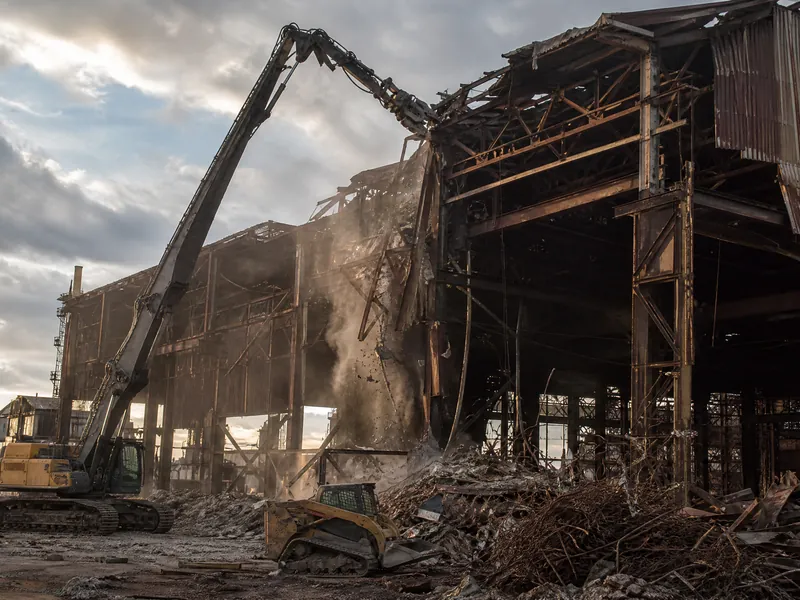
Demolition sequencing on industrial structures typically proceeds from interior deconstruction outward - removing process equipment, mechanical systems, and hazardous materials first, then proceeding to structural wrecking. This protects salvageable assets, keeps abatement and wrecking activities separated, and allows continuous material staging without congestion.
Close-out documentation includes waste-disposal manifests, DEQ notification close-out confirmation, permit sign-offs, and a site condition report. Owners receive a complete record suitable for environmental due diligence, property transfer, or redevelopment permitting. We do not hand over a cleared site without a paper trail that protects you through future transactions.
Capabilities
Abatement, remediation and recovery
Common questions
Questions owners and engineers ask
Does Industrial Demolition USA handle Idaho DEQ asbestos notification?
Yes. We prepare and submit the required pre-demolition notification to Idaho DEQ on your behalf, coordinate any inspection scheduling, and maintain documentation through project close-out. This is a standard part of our scope on any regulated demolition or renovation project in Boise, not an add-on service.
How does salvage value affect what I pay for demolition?
Recoverable materials - structural steel, copper, stainless, usable equipment - are assessed during project planning. Their market value is applied as a credit that directly reduces your demolition cost. We provide a clear accounting of salvage credits in the project close-out summary so the offset is transparent and documented.
Can you work on food processing plant teardowns specifically?
Yes. Food and beverage processing facilities are a common project type in the Treasure Valley. We handle stainless-steel vessel removal, refrigeration system decommissioning, insulated-panel deconstruction, and drainage system demolition. Abatement of any regulated materials is sequenced before structural wrecking begins.
Do you serve other Idaho cities beyond Boise?
Yes. We serve the full southern Idaho corridor, including Pocatello and other industrial markets across the state. Boise is our primary mobilization base. Multi-site projects spanning several Idaho locations can be managed under a single coordinated contract, reducing scheduling complexity and mobilization overhead for the owner.
What permits are typically required for industrial demolition in Boise?
Most projects require a City of Boise demolition permit, Idaho DEQ asbestos notification, and utility disconnection confirmations. Sites near the Boise Airport may need FAA crane-height notification. Ada County may require encroachment or haul-route permits depending on project location. We identify and obtain all required approvals before work begins.
Ready to price the teardown?
Industrial Demolition USA is ready to scope your Boise dismantling, decommissioning, or abatement project and deliver a clear plan that meets Idaho DEQ and local permit requirements. Contact us at 954-740-1983 or electricalequipmentbuyers@gmail.com to get started.