
Overview
We execute controlled teardowns that prioritize safety, regulatory compliance, and efficient material processing, whether clearing a brownfield site for new warehouse development or dismantling obsolete processing lines. Finally, our project managers deliver precise execution while offsetting the net cost of your project through aggressive scrap metal recovery that leverages regional barge and rail networks.
The work
Dismantling Steel Mills and Heavy Manufacturing Facilities
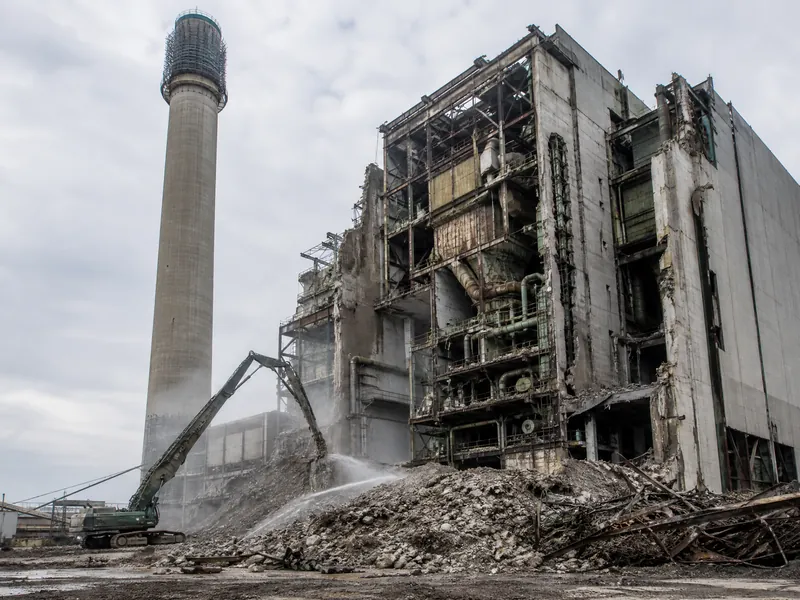
The legacy of primary metals production defines Granite City's industrial landscape. Tearing down these massive structures requires specialized engineering and heavy-duty attachments. We dismantle blast furnaces, rolling mills, and the extensive overhead crane runways that support them. These facilities feature heavy structural steel framing and thick concrete blast walls that must be systematically deconstructed. Our crews utilize high-reach excavators equipped with hydraulic shears to cut through heavy steel sections safely from the ground.
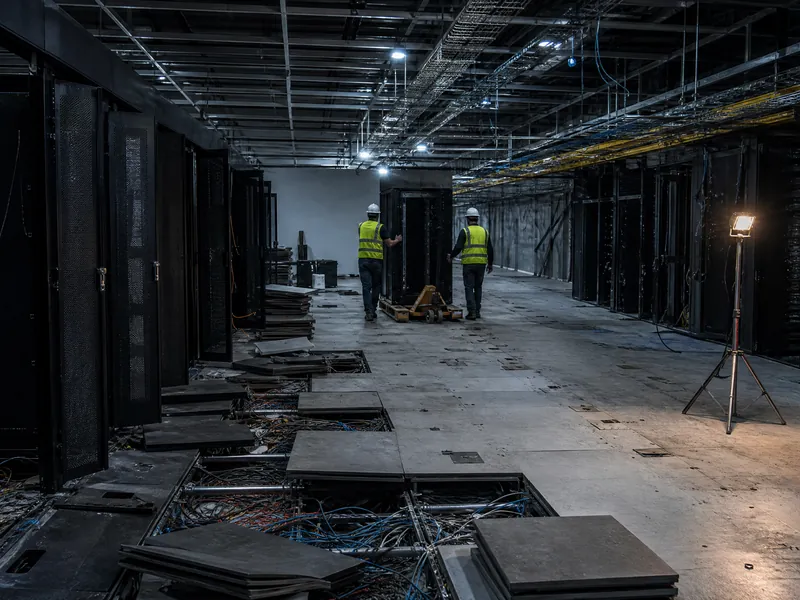
When decommissioning a manufacturing plant, we sequence the work to manage the immense weight of the materials. We remove heavy machinery and conveyor systems before tackling the primary structure. For facilities that are partially operational, we perform selective interior demolition, establishing strict dust controls to protect active production lines. The sheer scale of Granite City's industrial footprint demands a contractor capable of deploying multiple heavy machine crews simultaneously to maintain aggressive schedules. This systematic approach ensures complete safety.
Method and sequence
Navigating Alluvial Soils and High Water Tables
Executing demolition in the Mississippi River floodplain presents unique physical challenges. The alluvial soils and high water table in the Metro East area complicate the removal of deep industrial foundations, pits, and basements. When excavating massive concrete press pits or furnace foundations, groundwater infiltration is a constant factor. We deploy robust dewatering systems and shoring techniques to safely extract subterranean structures without compromising adjacent soils or levee systems.
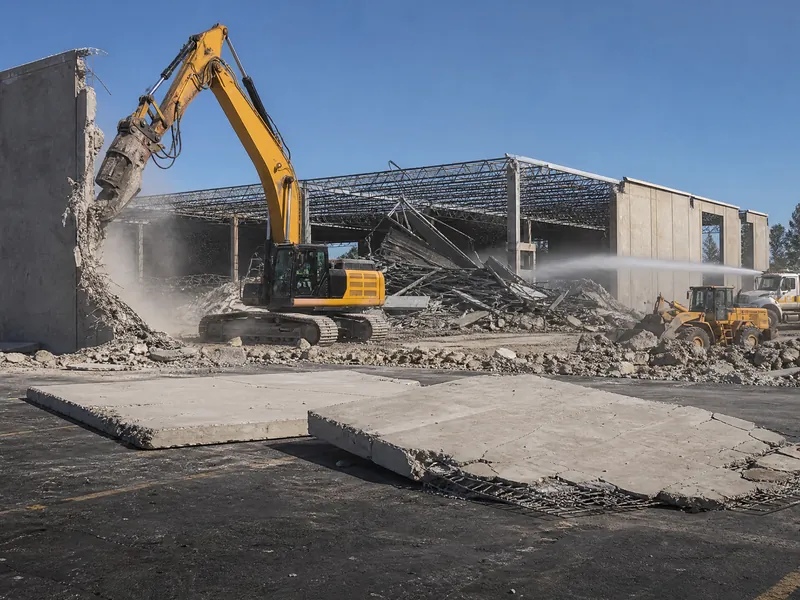
Once the concrete is pulled from the ground, we process it on-site. Our mobile crushing spreads reduce massive foundation blocks and slab-on-grade concrete into reusable aggregate. This crushed material is often used to backfill the deep voids left by foundation removal, stabilizing the site for future redevelopment. By crushing concrete on-site, we eliminate the need for thousands of truck trips to local landfills, significantly reducing project costs and minimizing the impact on local roads. This on-site process is critical for site restoration.
Hazards and controls
Scrap Metal Recovery and River Barge Logistics
The economics of heavy industrial demolition rely heavily on efficient scrap metal recovery. Granite City's strategic location offers unparalleled logistical advantages for moving massive volumes of salvaged steel. We process structural I-beams, plate steel, copper wiring, and heavy machinery directly on the job site, shearing and torch-cutting the metal to mill-ready dimensions. The salvage value of this material is applied as a credit against the client's overall demolition cost, driving down the net expense.
To maximize this credit, we leverage the region's transportation infrastructure. Proximity to America's Central Port and extensive rail networks allows us to load processed scrap directly onto barges or railcars. Moving thousands of tons of steel via the Mississippi River or the Terminal Railroad Association lines is far more efficient than relying solely on over-the-road trucking. This logistical efficiency ensures that scrap reaches the most competitive processing outlets. This approach maximizes financial value for the owner.
Permits and notification
Managing Illinois EPA and NESHAP Notifications
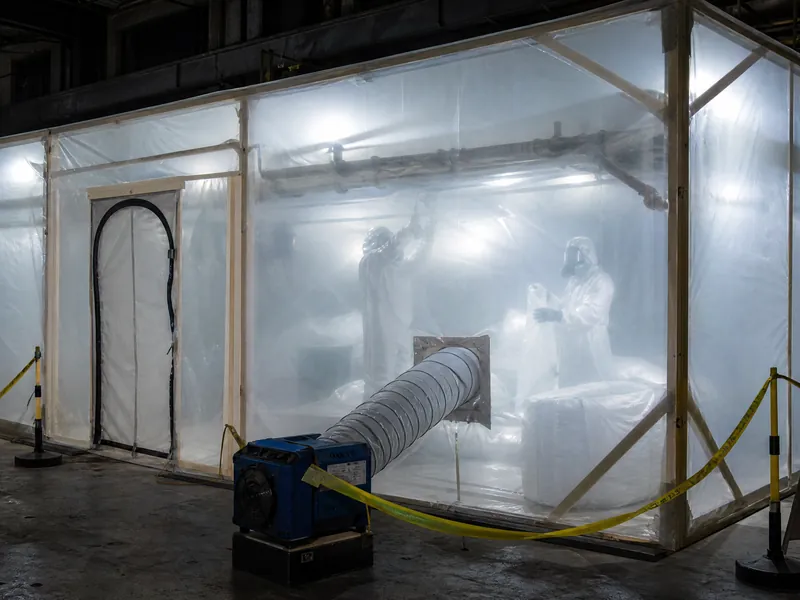
Regulatory compliance is the foundation of every teardown we execute. Before any structural wrecking begins in Granite City, we coordinate closely with the Illinois EPA and local Madison County authorities. We manage the mandatory 10-working-day NESHAP notification for asbestos, ensuring all federal and state environmental protocols are strictly followed. Our abatement teams remove asbestos-containing materials, lead-based paints, and universal wastes, securing the necessary clearances before heavy equipment mobilizes.
Beyond environmental remediation, we handle the complex web of local permitting and utility disconnects. Industrial sites require verified air-gapping of high-voltage electrical feeds, high-pressure gas lines, and industrial water mains. We work with local utility providers to secure official sign-offs, ensuring the site is completely cold before the first shear makes a cut. This rigorous administrative preparation prevents costly delays and ensures that the physical demolition proceeds without interruption, keeping the project on track. Our managers oversee this phase to ensure a seamless transition.
Salvage and recovery
Decommissioning Rail Yards and Distribution Hubs
Extensive rail yards and distribution centers support the region's industrial base, making Granite City a critical logistics hub. We decommission obsolete rail infrastructure, removing miles of track, wooden ties, and the contaminated ballast beneath them. Our crews dismantle railcar maintenance sheds, loading terminals, and the massive grain elevators that line the riverfront. The removal of these structures often involves working in tight corridors alongside active rail lines, requiring precise coordination with rail operators.
As the local economy evolves, many older industrial sites are being cleared for modern warehouse and distribution redevelopment. We perform complete site clearing, removing all above-ground structures, paved surfaces, and underground utilities. Our grading teams then prepare the site to the exact specifications required by the new developers. By delivering a clean, compacted, and certified pad, we accelerate the transition from a retired facility to a modern logistics center. This approach allows owners to quickly repurpose their real estate.
Logistics
Expanding Coverage Across Illinois
While our crews are heavily active in the Metro East region, Industrial Demolition USA provides comprehensive teardown services throughout the state. We mobilize specialized equipment and experienced personnel to tackle complex projects in Chicago, Peoria, and Rockford. From dismantling a retired coal-fired power plant downstate to clearing a sprawling manufacturing complex in the northern suburbs, we bring the same level of technical expertise and rigorous safety standards to every job. Our specialized teams expertly handle these unique challenges across the state.
Our nationwide footprint allows us to draw on a massive fleet of specialized demolition excavators, material handlers, and mobile crushers. We scale our resources to meet the demands of any project, regardless of size or location. By maintaining a strong presence across Illinois, we ensure that facility owners have access to a premier heavy industrial demolition contractor capable of executing the most challenging plant retirements safely and on schedule.
Capabilities
Abatement, remediation and recovery
Common questions
Questions owners and engineers ask
What is the process for removing deep concrete foundations near the Mississippi River?
Extracting deep foundations in Granite City requires managing the high water table associated with the river floodplain. We utilize heavy excavators equipped with hydraulic breakers to fracture the concrete, while running dewatering pumps to keep the excavation dry. Once removed, we crush the concrete on-site to create engineered backfill, stabilizing the void and preparing the ground for future construction.
How do you manage scrap steel generated from large manufacturing teardowns?
We process structural steel, heavy machinery, and piping directly on the job site using mobile shears and specialized torches. The material is cut to specific dimensions required by recycling mills. We then utilize Granite City's rail spurs and river barge access to transport the scrap efficiently. The value of this recovered metal is applied as a direct credit to offset project costs.
What permits are required for industrial wrecking in Madison County?
Executing a teardown requires coordination with multiple agencies. We secure demolition permits from Madison County or the City of Granite City. Crucially, we file the mandatory 10-working-day NESHAP notification with the Illinois EPA prior to any abatement or structural wrecking. We also manage all utility disconnect sign-offs to ensure the site is completely safe for heavy equipment operations.
Do you handle environmental remediation before structural demolition begins?
Yes, environmental abatement is a critical first step in our plant retirement process. Our specialized crews remove asbestos insulation, lead-based paints, PCB-containing transformers, and other hazardous materials. We ensure all universal wastes are properly manifested and disposed of at licensed facilities. Only after the Illinois EPA regulations are satisfied do we begin the physical dismantling of the structure.
How is the salvage value of heavy industrial equipment calculated?
The financial return on retired equipment and scrap metal is based on current commodity market rates and the logistical cost of moving the material. We assess the volume of ferrous and non-ferrous metals, including copper wiring and structural steel. Because we do not buy equipment outright, this calculated value is strictly applied as a salvage credit, reducing the net cost of your demolition contract.
Ready to price the teardown?
When you need a proven contractor to dismantle a heavy manufacturing facility or clear an industrial site in Granite City, we deliver precise and compliant execution. Our teams are ready to evaluate your plant retirement and develop a comprehensive wrecking plan. Call 954-740-1983 or email electricalequipmentbuyers@gmail.com to discuss your project.