
Overview
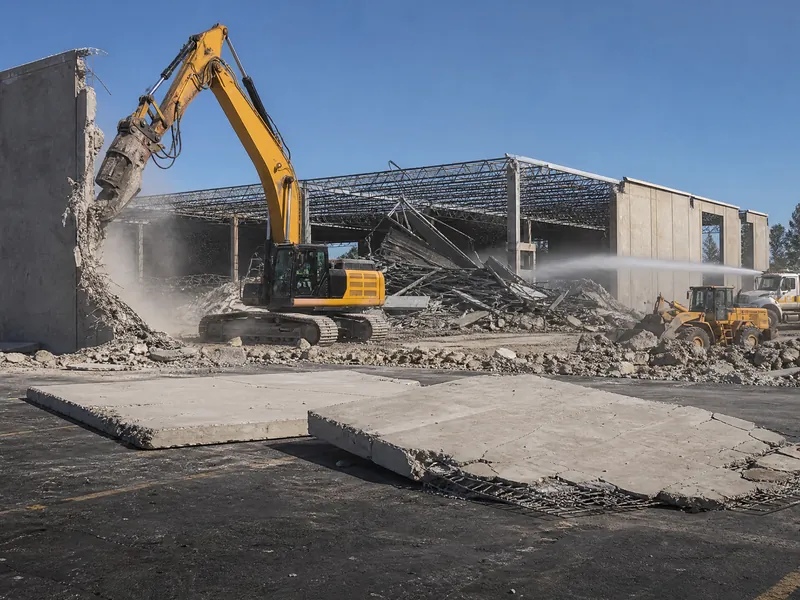
Davenport's position on the Mississippi River and its legacy of heavy manufacturing mean structures here often require complex abatement of asbestos and lead-based coatings before mechanical teardown begins. We manage Iowa DNR compliance, local permitting, and utility isolation as standard project components. Salvage value recovered from structural steel, copper, and process equipment is applied as a direct credit against your demolition cost.
The work
Davenport's Industrial Base and Facility Types
Davenport and the broader Quad Cities area have a deep history in heavy manufacturing, agricultural processing, and logistics. The industrial footprint includes sprawling farm-implement manufacturing complexes, grain milling operations, and extensive warehousing along the river and rail corridors. When these facilities reach the end of their operational life, they require specialized deconstruction techniques to manage their scale and structural complexity.
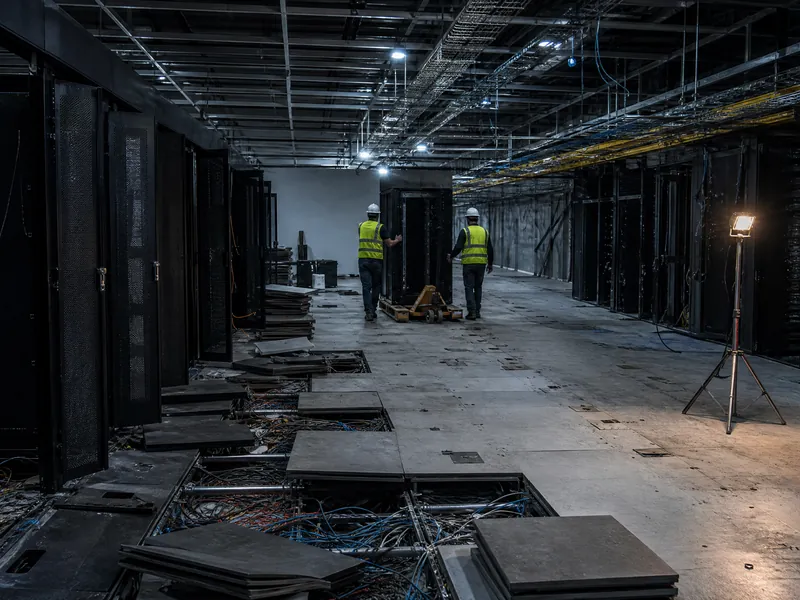
Food and beverage processing plants, common in the region's agricultural sector, present specific dismantling challenges. We systematically remove stainless steel process lines, ammonia refrigeration systems, and insulated paneling before structural wrecking begins. Retired generating units require careful decommissioning of electrical switchgear, fuel-handling infrastructure, and ash-handling systems. Aggregate and cement operations involve reinforced concrete silos and elevated conveyor galleries that demand controlled wrecking methods.
We assess each Davenport facility to identify structural risks, material streams, and utility isolation requirements. This front-end planning ensures the teardown is executed safely and efficiently, minimizing disruption to adjacent operations or neighboring properties.
Method and sequence
Iowa DNR Compliance and Local Permitting
The Iowa Department of Natural Resources (DNR) regulates asbestos abatement, hazardous waste management, and air quality for demolition projects statewide. Before any regulated teardown in Davenport, we coordinate the required asbestos survey, submit the NESHAP notification to Iowa DNR, and manage all abatement documentation through project closeout. The City of Davenport Building Division also requires a local demolition permit, which we secure on behalf of the client.
Utility disconnection coordination with MidAmerican Energy, Iowa American Water, and municipal sewer departments must precede mechanical wrecking. We manage those notifications and physical disconnections, reducing the administrative burden on your team. Stormwater controls required under Iowa DNR's NPDES general permit for construction activity are implemented site-wide when ground disturbance exceeds regulatory thresholds.
Projects located near the Mississippi River may carry additional review requirements related to floodplain management or levee protection. We identify those conditions early in project scoping so permitting timelines do not stall the demolition schedule.
Hazards and controls
Site Conditions: Soil, Weather, and River Logistics
Davenport's location on the Mississippi River directly influences demolition logistics and site conditions. The alluvial soils near the river can present bearing-capacity challenges for heavy equipment, particularly during spring thaws or periods of high water. We evaluate soil conditions during the pre-demolition site walk and deploy crane mats or temporary ground protection when necessary to ensure safe equipment operation.
Winter weather in eastern Iowa brings freezing temperatures and snow accumulation that can complicate excavation and foundation removal. We schedule soil-disturbance phases around seasonal conditions when the project timeline allows. Summer humidity and heat require specific safety protocols for crews, particularly those performing abatement work in containment.
The Mississippi River and the region's extensive rail network offer logistical advantages for material movement. When project scale warrants, we can coordinate barge or rail transport for outbound scrap metal, reducing truck traffic on local Davenport roads. We build haul-route plans around city weight restrictions and any imposed construction-activity hour limits.
Permits and notification
Abatement and Hazardous Material Management
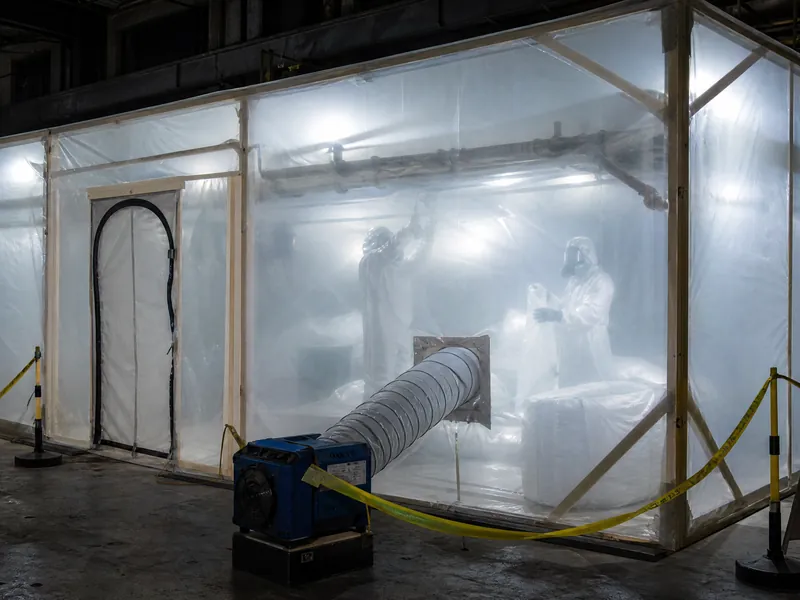
Legacy industrial facilities in Davenport commonly contain asbestos-containing materials in pipe insulation, boiler block, floor tile, and built-up roofing systems. Lead-based paint is standard on structural steel in any building erected before the 1980s. Retired generating units and older electrical substations may contain PCB-laden transformers or mercury switches. We manage the abatement of all these materials as an integrated part of the demolition scope.
Abatement is sequenced before structural wrecking begins. This prevents cross-contamination of salvageable materials and ensures compliance with Iowa DNR regulations. Licensed abatement subcontractors perform the removal under our supervision, and all hazardous waste is manifested to approved disposal facilities.
By handling abatement and demolition under a single contract, we eliminate the coordination gaps that often occur when owners hire separate contractors for each phase. The transition from clean-site clearance to mechanical wrecking is seamless, keeping the overall project schedule on track.
Salvage and recovery
Salvage Recovery and Material Disposition
Davenport's industrial infrastructure yields significant volumes of recoverable materials. Structural steel, copper wiring, aluminum components, and stainless steel process equipment are segregated on-site to maximize their salvage value. That value is applied as a credit against the total demolition cost, directly reducing the owner's net expense. The region's access to river and rail transport facilitates efficient movement of these materials to secondary markets.
Concrete rubble from foundations and slabs is often crushed on-site when space permits. The resulting aggregate can be used as backfill for the excavated foundation footprint or sold as road base, reducing both disposal fees and the need for imported fill material. We evaluate the economics of on-site crushing during the initial project scoping phase.
Usable process equipment is also evaluated for asset recovery potential. If a market exists for redeployment, we document the equipment condition and factor that value into the project pricing. Our goal is to divert as much material as possible from the landfill while maximizing the financial return to the client.
Logistics
Regional Coverage and Multi-Site Capabilities
While Davenport and the Quad Cities are a primary focus, our operational reach extends throughout Iowa. We regularly mobilize crews and equipment to serve industrial clients in Des Moines and other manufacturing centers across the state. This regional capability allows us to support clients with multiple facilities under a single, coordinated management structure.
Managing multi-site decommissioning projects through one contractor ensures consistent safety protocols, standardized documentation, and streamlined communication. We apply the same rigorous Iowa DNR compliance standards and project management processes whether we are wrecking a single warehouse in Davenport or decommissioning a portfolio of processing plants across the region.
Our project managers understand the logistical nuances of operating in Iowa's varied terrain and climate. We build realistic schedules that account for weather delays, transportation constraints, and local permitting timelines, ensuring that every project is delivered safely and efficiently.
Capabilities
Abatement, remediation and recovery
Common questions
Questions owners and engineers ask
Does Industrial Demolition USA handle the Iowa DNR asbestos notification for Davenport projects?
Yes. We manage the entire Iowa DNR NESHAP notification process, including coordinating the required asbestos survey, submitting the paperwork, and observing the mandatory waiting period before abatement begins. This is a standard component of our project management scope.
How does salvage credit work on a demolition project?
We identify recoverable materials like structural steel, copper, and usable equipment during the site assessment. The estimated market value of these materials is applied as a credit that reduces your overall demolition cost. The final credit is reconciled based on actual recovered volumes.
What permits are required for industrial demolition in Davenport?
Projects typically require a City of Davenport demolition permit, Iowa DNR asbestos notification, and utility disconnection verifications. Depending on the site, stormwater permits or floodplain reviews may also be necessary. We handle all permit applications and coordination.
Do you perform demolition work in other Iowa cities like Des Moines?
Yes. We serve industrial clients throughout Iowa, including Des Moines and other regional manufacturing centers. Our mobilization capabilities allow us to efficiently manage projects across the state, including multi-site decommissioning programs under a single contract.
Can you handle the abatement of hazardous materials before demolition?
Yes. We manage the full scope of abatement, including asbestos, lead-based paint, and PCB-containing equipment, before structural wrecking begins. This ensures regulatory compliance, protects salvageable materials from contamination, and streamlines the overall project schedule.
Ready to price the teardown?
Industrial Demolition USA is ready to evaluate your Davenport industrial facility and develop a comprehensive plan for abatement, dismantling, and site clearance. Contact us at 954-740-1983 or electricalequipmentbuyers@gmail.com to discuss your project requirements.