
Overview
Wichita jobs demand careful planning around large-footprint buildings, wind exposure, rail-served parcels, and mixed conditions near the Arkansas River corridor. We build the sequence around abatement, de-energisation, structural teardown, salvage recovery, and closeout so owners can retire old assets without creating new liability.
The work
Aviation Buildings Require Different Tactics
Wichita's industrial identity is closely tied to aviation manufacturing and the support trades around it. That means demolition here often involves wide-span production buildings, hangar-type structures, mezzanines, machine foundations, paint and finishing areas, utility corridors, and additions built at different times with different framing systems. Those facilities can look simple from the outside, but inside they usually contain dense utility networks, crane rails, process exhaust, air systems, and embedded equipment supports that have to be separated in the right order.
The work is rarely just a matter of knocking down a shell. We often begin with selective demolition, equipment removal, and decommissioning of internal systems so steel, concrete, and process materials can be handled safely. Large-span roofs and tall wall lines also require disciplined sequencing to avoid uncontrolled movement as sections are released. That is especially important when active buildings remain nearby on the same campus or when haul roads run close to the structure being dismantled.
Method and sequence
Wind, Soil, and Access on Wichita Sites
Wichita sites bring physical conditions that affect production every day. Strong winds can influence dust control, crane picks, torch work, and how lightweight debris is contained. Freeze-thaw cycles still matter in Kansas, but so do periods of heat and dry weather that can harden haul routes and increase airborne particulate if suppression is not continuous. Industrial parcels near the Arkansas River corridor may also present variable soils, drainage concerns, and older fill that changes how equipment is staged.
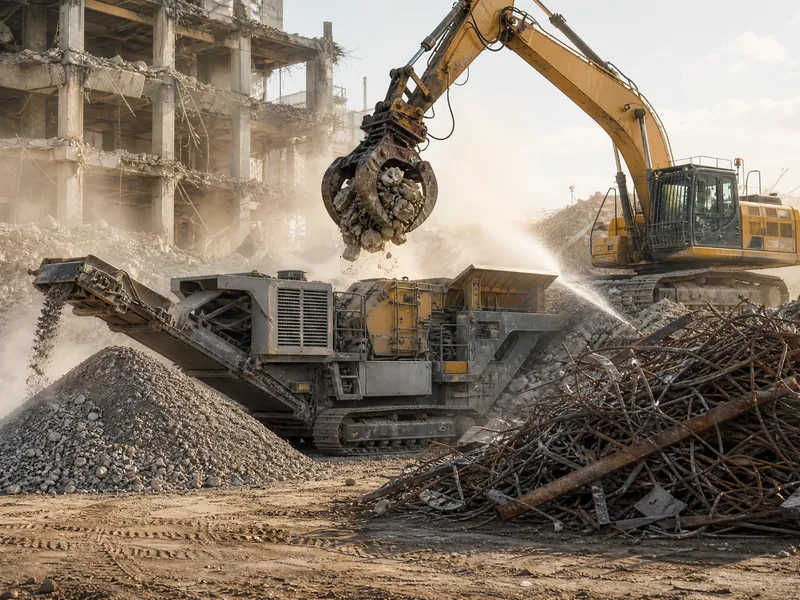
Access can be deceptively broad but still inefficient if it is not planned well. Many properties have rail spurs, expansive paving, separate truck gates, or long distances between laydown, loading, and processing areas. We build the demolition layout so excavators, processors, and haul trucks do not work against each other. That keeps the site safer and makes material segregation easier, which matters when salvage, concrete processing, and debris export are all happening at the same time.
Hazards and controls
Inside-Out Deconstruction for Active Campuses
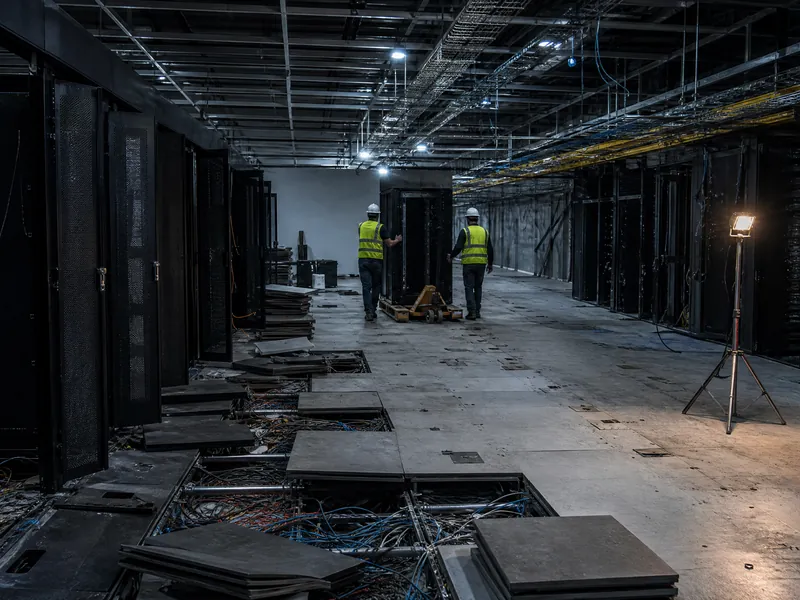
A number of Wichita projects happen on active industrial campuses where one portion of the property is being retired while another keeps operating. In those cases, selective demolition is not a small preliminary task. It is a core method. We may remove conveyors, process piping, electrical distribution, suspended equipment, or nonstructural partitions well before exterior demolition begins. That protects adjacent operations and prevents avoidable outages or contamination issues.
This inside-out approach also helps with liability control. When process residues, insulated lines, transformers, refrigerants, or dust-producing systems are identified and removed early, the main wrecking phase becomes cleaner and faster. It is a disciplined blend of decommissioning, abatement, and dismantling rather than a single event. Owners with related facilities in Kansas City or other Kansas markets often use the same approach because it keeps the demolition scope aligned with ongoing operations and future expansion plans.
Permits and notification
How We Bring Heavy Structures Down
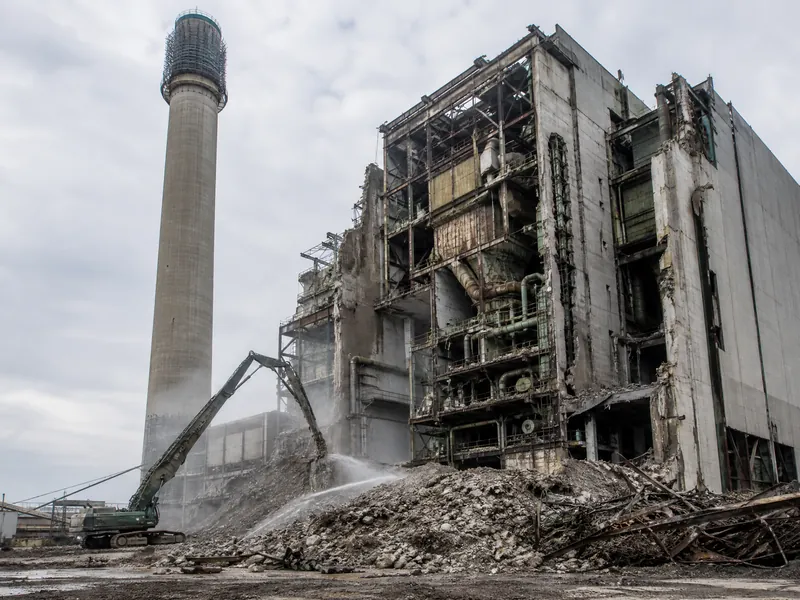
The structural phase begins only after utility isolation, environmental preparation, and selective removal are complete. For Wichita industrial facilities, that often means high-reach excavators with shears, grapples, and hammers; localized torch cutting for thicker steel; and mechanical breakdown of elevated supports, stacks, bins, or concrete frames. We pick a sequence that keeps the structure stable while opening clean working faces for processing and loading.
Foundations, pits, and heavy slabs are then addressed based on reuse goals. Some owners need complete removal for redevelopment. Others need cutdown to a specified elevation or selective extraction around new utility corridors. Concrete can be processed on site when space allows, reducing haul volume and improving schedule control. Throughout that phase, demolition and salvage work stay linked so recoverable steel, copper, motors, and stainless do not get buried in mixed rubble.
Salvage and recovery
KDHE Compliance and Utility Separation
Wichita demolition work is regulated at the state level through KDHE, with federal NESHAP asbestos notification requirements remaining a major front-end obligation. Before structural demolition starts, the site needs an asbestos inspection and the appropriate notification path based on the material findings and project scope. Industrial properties also need real review of lead coatings, oils, universal waste, refrigerants, and any process contamination that would change disposal or worker protection requirements.
Local permits and coordination with city departments are part of the same planning effort. Demolition can involve utility disconnect confirmation, traffic considerations for oversize equipment, and erosion or stormwater controls depending on the parcel. De-energisation is especially important on large Wichita plants because aviation and manufacturing buildings often have layered electrical distribution from successive expansions. We verify those systems in the field before dismantling begins so crews are not exposing live hazards inside roofs, walls, or below-grade trenches.
Logistics
Recovery, Remediation, and Final Documentation
Wichita projects often contain solid recovery value when demolition is approached with discipline. Structural steel, copper wire, stainless process material, motors, bus duct, and certain mechanical equipment can create salvage credit that lowers the owner's net cost. Aggregate and concrete material may also be processed for reuse or more efficient transport depending on the redevelopment plan and the available footprint for crushing and stockpiling.
The last phase is documentation and turnover. We provide manifests and closeout records tied to disposal, recycling, and regulated material handling, along with the agreed site condition after demolition. That can mean rough grading, debris removal, foundation cutdown, or a fully cleared parcel ready for civil work. The point is to close the project in a form an owner, lender, or redevelopment team can rely on, not merely to stop when the structure is gone.
Capabilities
Abatement, remediation and recovery
Common questions
Questions owners and engineers ask
Why do Wichita aviation or fabrication buildings take longer to demolish than they look from the outside?
Wide-span industrial buildings often hide dense internal systems such as crane rails, process exhaust, utility corridors, equipment pads, and layered additions from multiple eras. Those elements have to be decommissioned and separated before the shell can be brought down efficiently. The visible exterior is usually the easy part. The interior utility and equipment complexity is what sets the real schedule.
How do wind conditions affect demolition work in Wichita?
Wind changes dust control, crane operations, torch cutting, and containment of lightweight debris. It can also slow certain picks or require changes in how material is processed and loaded. We plan around that with suppression equipment, protected work zones, and sequencing that avoids exposing crews and neighboring property to unnecessary airborne material during dismantling.
Can you work on a site where part of the plant stays active?
Yes. That is where selective demolition and phased decommissioning are especially important. We isolate utilities, separate work zones, and remove internal systems in a sequence that protects active operations. The goal is to retire the target structures without creating outages, access conflicts, or environmental problems for the part of the campus that still has to run.
Does salvage credit apply on Wichita projects with large steel buildings?
Often it does. Structural steel, copper, motors, stainless, and certain electrical systems can provide meaningful recovery value when they are identified early and kept separate from general debris. We apply that value as a salvage credit against the demolition contract so the owner can see how recovery affects the project's net cost rather than treating it as an undefined afterthought.
What should an owner expect at project closeout?
The owner should expect the contracted site condition plus documentation that tracks disposal, recycling, and regulated material handling. If the scope includes grading, foundation cutdown, concrete processing, or targeted subsurface removal, those items are reflected in turnover as well. A good closeout package supports the next step, whether that is redevelopment, sale, or additional environmental work.
Ready to price the teardown?
Wichita demolition projects need careful sequencing for aviation buildings, heavy foundations, utility systems, and recovery value. Call 954-740-1983 or email electricalequipmentbuyers@gmail.com to discuss your Wichita industrial demolition scope.