
Overview
Our crews handle the complete lifecycle of facility retirement, from initial utility isolation and asbestos abatement to heavy mechanical wrecking and final site grading. We manage the logistics of moving heavy scrap and salvaged materials out of Calcasieu Parish, leveraging the region's deepwater port and rail infrastructure to maximise salvage credit against the net cost of the project.
The work
Petrochemical and Refinery Decommissioning
The industrial corridor surrounding Lake Charles is dominated by massive petrochemical complexes and refining operations. Retiring these facilities requires a demolition contractor capable of managing extreme hazards, including residual hydrocarbons, heavy metals, and complex piping networks. Industrial Demolition USA executes the systematic dismantling of distillation columns, cracking units, and storage tank farms. We deploy specialised high-reach excavators equipped with hydraulic shears to bring down tall structures safely, eliminating the need for personnel to work at height whenever possible.
Before any mechanical wrecking begins, our crews perform rigorous line breaking, purging, and blinding to ensure all process equipment is completely isolated and safe for deconstruction. We coordinate closely with plant engineering teams to protect adjacent live units during selective demolition within active facilities. Our approach prioritises the controlled separation of materials, segregating high-value alloys and heavy carbon steel to generate a salvage credit that offsets the overall cost of the teardown.
Method and sequence
Offshore Fabrication Yard Dismantling
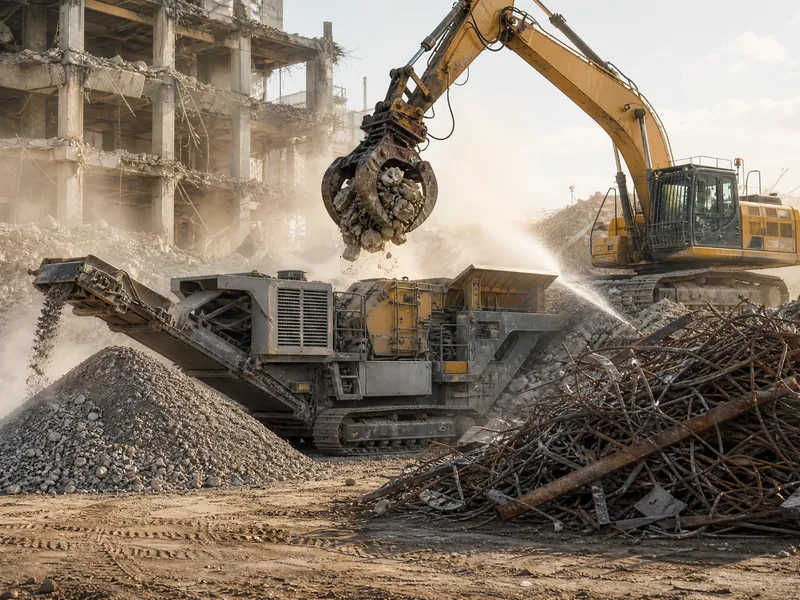
Lake Charles has a long history of supporting the offshore oil and gas industry through extensive fabrication yards and marine terminals. When these sprawling facilities reach the end of their operational life, they present unique demolition challenges. Industrial Demolition USA dismantles heavy crawler crane runways, massive assembly sheds, and reinforced concrete slipways. We utilise heavy-duty concrete crushing equipment to process thick foundations and slabs, reducing the material to reusable aggregate that can be left on-site for future development or hauled away.
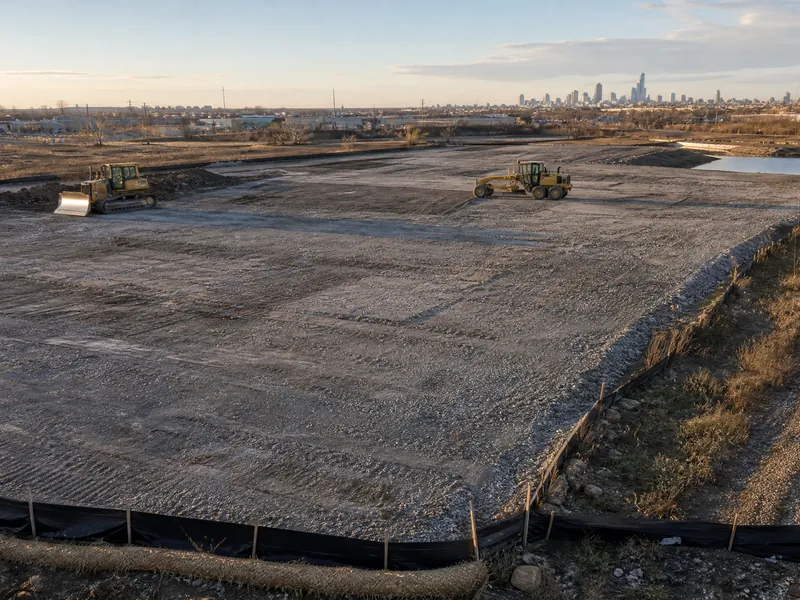
The proximity to the Calcasieu Ship Channel means that environmental protection is paramount during these teardowns. We implement strict stormwater management and sediment control measures to prevent any runoff from entering the waterway. Our abatement teams handle the removal of lead-based paints and asbestos-containing materials often found in older marine structures, ensuring full compliance with state and federal environmental regulations before structural demolition commences.
Hazards and controls
Navigating LDEQ Regulations and Permitting
Executing industrial demolition in Louisiana requires strict adherence to the regulations enforced by the Louisiana Department of Environmental Quality (LDEQ). Industrial Demolition USA manages the entire environmental compliance process for our Lake Charles clients. We handle the mandatory NESHAP notifications for asbestos abatement and coordinate the necessary permits for air quality and waste disposal. Our project managers are deeply familiar with the specific requirements for handling hazardous materials generated during the decommissioning of chemical plants and refineries.
We maintain meticulous documentation throughout the project lifecycle. From the initial hazardous materials survey to the final waste manifests and disposal receipts, we provide our clients with a comprehensive closeout package. This documentation proves that all materials, including regulated asbestos-containing material (RACM) and universal wastes, were handled, transported, and disposed of in accordance with LDEQ standards, protecting the facility owner from future liability.
Permits and notification
Asset Recovery and Scrap Logistics
A critical component of our demolition strategy in Lake Charles is the aggressive recovery of scrap metal and reusable industrial assets. We do not simply wreck structures; we systematically dismantle them to preserve the value of the materials. Our crews are skilled in the safe extraction of heavy electrical equipment, large-scale compressors, and high-alloy piping systems. The value of these recovered assets is applied as a direct salvage credit, significantly reducing the net cost of the demolition project for the client.
We leverage the excellent transportation infrastructure of Southwest Louisiana to move materials efficiently. Whether loading barges on the Intracoastal Waterway, utilising the extensive rail network, or dispatching heavy haul trucks via Interstate 10, we optimise the logistics of scrap removal. This efficient material handling keeps the project on schedule and ensures that the site is cleared quickly, ready for its next phase of industrial use.
Salvage and recovery
Regional Coverage Across Louisiana
While we maintain a strong focus on the heavy industrial concentration in Lake Charles, Industrial Demolition USA provides comprehensive demolition services across the state. Our crews frequently mobilise for large-scale teardowns in Baton Rouge, New Orleans, and Shreveport. We have the equipment fleet and the experienced personnel to handle multiple complex projects simultaneously, regardless of their location within Louisiana.
Our nationwide footprint, combined with our deep understanding of the Gulf Coast industrial market, allows us to deliver consistent, high-quality demolition services. We commit to strict safety standards and aggressive project schedules, ensuring that every facility retirement is executed with precision and professionalism. Whether it is a retired sugar mill in the southern parishes or a decommissioned power plant in the north, we bring the same level of expertise to every job site.
Capabilities
Abatement, remediation and recovery
Common questions
Questions owners and engineers ask
How is the salvage value of our equipment handled?
We apply the value of recovered scrap metal and reusable equipment as a salvage credit against the total cost of the demolition. This credit is factored into our initial proposal, providing you with a clear, reduced net cost for the project. We handle all the extraction, processing, and logistics of moving the material off-site.
Who is responsible for notifying the LDEQ?
Industrial Demolition USA handles all required environmental notifications, including the NESHAP 10-day notice for asbestos abatement, on your behalf. We coordinate directly with the Louisiana Department of Environmental Quality to ensure all permits and notifications are in place before any work begins, keeping the project fully compliant.
Can you work around active pipelines and live units?
Yes. We frequently perform selective demolition within operating petrochemical plants and refineries. We work closely with your facility managers to implement strict isolation protocols, vibration monitoring, and dust control measures to ensure our teardown activities do not disrupt your ongoing operations.
What happens to the concrete foundations?
Depending on your future plans for the site, we can either remove the concrete foundations entirely or crush them on-site. We operate heavy concrete crushing equipment that can process slabs and footings into reusable aggregate, which can be left on-site for grading or hauled away as required.
How do you manage the risk of severe weather in the Gulf Coast?
Our project schedules include contingencies for severe weather events typical of the Lake Charles area. We secure the site, tie down equipment, and implement robust stormwater controls to prevent environmental issues during heavy rain or hurricanes. Safety and environmental protection are our primary concerns during weather delays.
Ready to price the teardown?
Industrial Demolition USA is ready to execute your next facility teardown in Lake Charles. Call 954-740-1983 or email electricalequipmentbuyers@gmail.com to discuss your project requirements and schedule a site evaluation.