
Overview
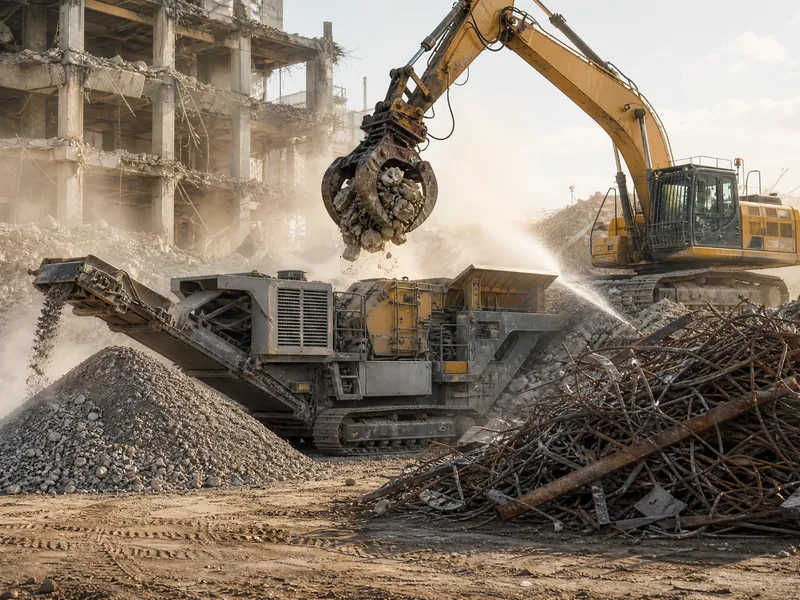
Work in this market often involves older fabrication space, foundry construction, utility congestion, and mixed soil conditions near the Grand River corridor. Our crews manage abatement, decommissioning, salvage, and final grading so the property is ready for redevelopment or the next industrial use.
The work
Where Grand Rapids Jobs Get Complicated
Grand Rapids industrial work is not generic teardown work. Older facilities in this market often combine heavy concrete, structural steel, pits, mezzanines, overhead cranes, and later additions built around active operations. That is common in west Michigan manufacturing buildings tied to metal fabrication, tool and die work, stamping support, and older warehouse conversions.
Local conditions also affect means and methods. Sites near the river corridor can have mixed fill, shallow groundwater, and limited laydown room, while outlying industrial parcels may have broad slabs and deep machine foundations damaged by decades of freeze-thaw cycles. Our demolition planning accounts for those conditions before equipment arrives, so wrecking, deconstruction, and remediation stay controlled instead of reactive.
Method and sequence
A Sequenced Teardown, Not Guesswork
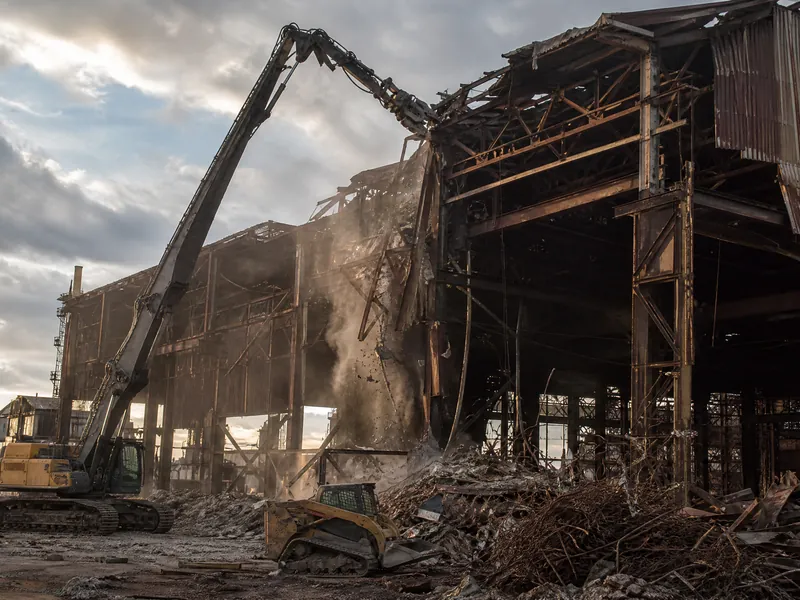
We start with utility mapping, lockout support, de-energisation, and pre-demolition walkdowns with the owner. After that, abatement and selective interior demolition open up the structure so crews can separate process equipment, remove hazardous building materials, and establish safe machine paths. Only when the building is ready do we bring in high-reach excavators, shears, breakers, loaders, and support trucks for structural dismantling.
That sequence matters on manufacturing sites with roof monitors, heavy crane rails, and interconnected additions. Steel frames are taken down in a stable order, elevated equipment is lowered or cut in controlled sections, and slabs are processed after above-grade wrecking is complete. The result is a cleaner demolition progression, better salvage recovery, and fewer schedule disruptions for owners and adjacent tenants.
Hazards and controls
Permits, EGLE, and Local Notifications
Industrial demolition in Grand Rapids usually requires both state and local coordination. We prepare the asbestos and renovation or demolition notifications required by Michigan EGLE, and we plan around the federal NESHAP asbestos notification timeline before structural work begins. If the city or township requires demolition permits, traffic control, utility releases, or dust and stormwater measures, we build those steps into the front end of the schedule.
Clients should expect pre-demolition paperwork to be part of the job, not an afterthought. Our scope can include abatement coordination, waste profiling, haul route planning, and closeout records for disposal and recycling streams. That documentation helps owners satisfy lenders, environmental consultants, internal safety teams, and redevelopment partners after the physical teardown is complete.
Permits and notification
Material Streams and Salvage Credit
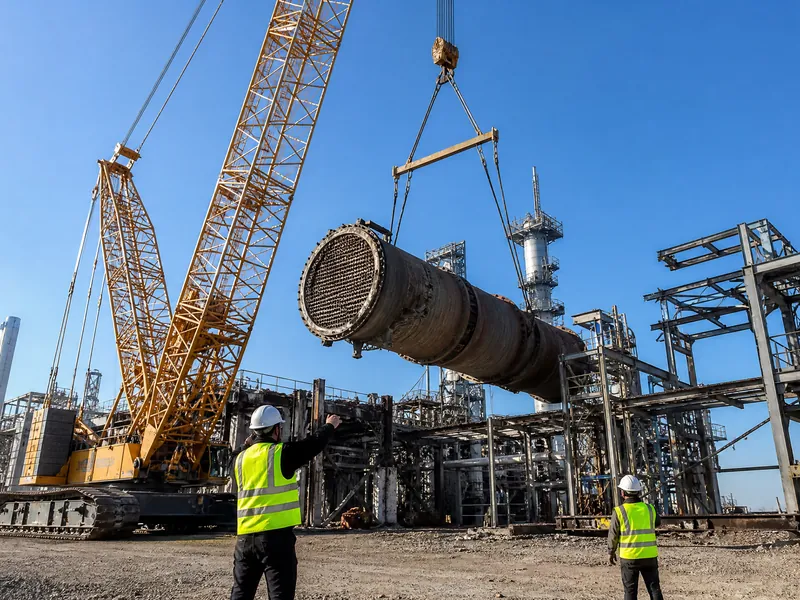
A Grand Rapids industrial site usually produces several recoverable streams if the work is staged correctly. Structural steel, stainless process components, copper cable, bus duct, aluminum, motors, and some redundant machinery can be separated during dismantling. Concrete and masonry can also be crushed or hauled to regional recycling outlets depending on the owner's redevelopment plan and the available footprint on site.
We apply salvage value as a credit against the demolition contract. That is different from acting as an equipment purchaser. The job is still contractor-led demolition, decommissioning, and asset recovery, with salvage proceeds used to reduce the net cost of the project where market conditions and material quality support it. Clear separation and clean loading are what protect that credit.
Salvage and recovery
Regional Reach Across West and East Michigan
Our Grand Rapids coverage extends well beyond a single ZIP code. We handle projects across western Michigan and can support larger retirements that tie into Detroit, Dearborn, and Flint when owners have multiple facilities or phased closures. That broader reach matters for companies consolidating stamping, warehouse, foundry, or utility assets across the state.
Michigan logistics also help with material movement. Highway access on US 131, I-96, and I-196 supports outbound scrap and demolition debris traffic, while regional steel and metal recyclers provide outlets for properly prepared loads. When the site is cleared, we can leave it rough graded, backfilled, and documented for the next contractor or for immediate redevelopment work.
Capabilities
Abatement, remediation and recovery
Common questions
Questions owners and engineers ask
What usually drives cost on an industrial demolition project in Grand Rapids?
The major drivers are abatement scope, utility isolation complexity, structural mass, foundation depth, access limitations, and the amount of processing required on site. Older plants with pits, crane beams, and multiple additions usually take more labor and sequencing than a simple warehouse shell.
Do you handle the EGLE asbestos notification process?
Yes. We coordinate the information needed for Michigan EGLE filings and plan the work around the federal NESHAP notification requirement. That includes timing for surveys, abatement sequencing, and the point at which structural demolition can legally begin.
Can salvage reduce the total demolition cost?
It can, when the project contains recoverable steel, nonferrous metals, or reusable industrial components in marketable condition. We treat that value as a salvage credit applied to the contract, not as a separate buying arrangement, and the actual credit depends on quantities, condition, and market timing.
Who disconnects power, gas, and water before teardown starts?
Final disconnects normally involve the owner, the serving utilities, and the demolition team working in sequence. We help identify what must be isolated, capped, drained, or verified so that dismantling crews are not working around live or pressurized systems.
What do we receive at project closeout?
Closeout can include haul and disposal records, recycling documentation, manifests where applicable, and confirmation of grading or backfill work performed under our scope. If the project includes abatement or environmental remediation, we coordinate the paper trail needed for owner files and redevelopment review.
Ready to price the teardown?
If you need an industrial demolition contractor in Grand Rapids, Industrial Demolition USA is ready to scope the work. Call 954-740-1983 or email electricalequipmentbuyers@gmail.com to discuss demolition, dismantling, abatement, and salvage planning for your site.