
Overview
Our deconstruction teams handle the full lifecycle of plant retirement, from initial environmental abatement to structural wrecking and final site clearing. Operating in the varied terrain of central Vermont requires rigorous planning to manage logistics, heavy equipment access, and material transport. We provide comprehensive decommissioning and asset recovery services to facility owners in Rutland, Burlington, and surrounding communities, ensuring strict compliance with state and federal regulations. Whether removing a legacy warehouse or dismantling complex processing equipment, we deliver engineered solutions that protect your schedule and liability.
The work
Decommissioning Regional Manufacturing and Aggregate Facilities
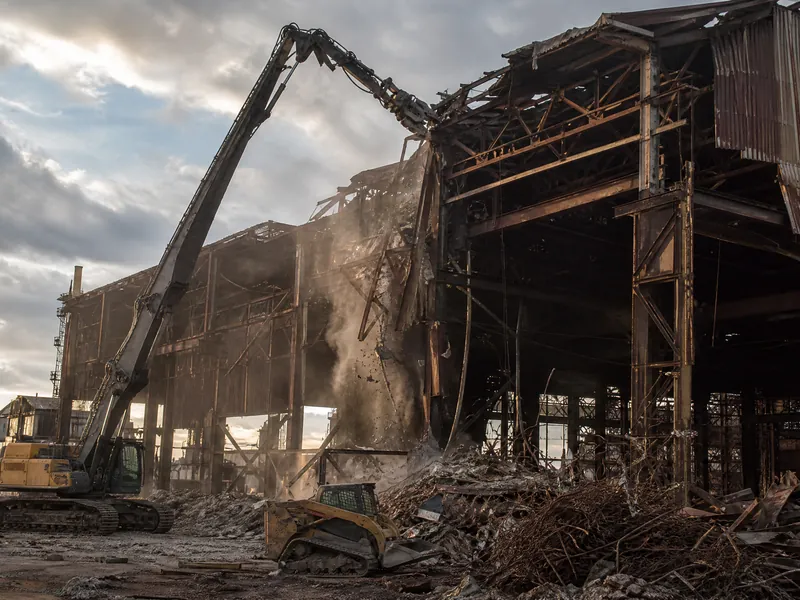
Rutland's industrial history includes significant aggregate, cement, and regional manufacturing operations, which require specialized heavy demolition techniques to safely retire. These facilities are typically constructed with massive concrete foundations, heavy structural steel frames, and complex material handling infrastructure. Our wrecking crews utilize high-capacity excavators equipped with hydraulic hammers and pulverizers to systematically break down these robust structures. We engineer the teardown sequence to safely manage the immense weight and stored energy inherent in these industrial buildings, preventing uncontrolled collapses and ensuring site safety.
The local terrain and weather conditions in central Vermont also dictate our approach to site logistics. Navigating heavy equipment and managing the transport of demolished materials requires careful coordination, especially during the winter months. We develop comprehensive site access plans that account for soil stability, freeze-thaw impacts, and local traffic patterns. By meticulously planning the deconstruction of these heavy industrial sites, we ensure that the project progresses efficiently while minimizing disruptions to the surrounding Rutland community.
Method and sequence
Navigating Vermont DEC Permitting and Notifications
Compliance with environmental regulations is a foundational element of every industrial demolition project we undertake in Rutland. Before any structural dismantling begins, our project management team coordinates extensively with the Vermont DEC to secure all necessary permits and submit required notifications. This includes the mandatory federal NESHAP notification for asbestos abatement, which must be filed well in advance of the teardown. We handle all regulatory paperwork, ensuring that the facility owner's liability is fully protected throughout the plant retirement process.
In addition to state-level compliance, we manage local Rutland county requirements regarding noise, dust control, and heavy vehicle routing. Our environmental remediation specialists conduct thorough site assessments to identify hazardous materials, including lead-based paint and universal wastes, developing targeted abatement plans. By integrating regulatory compliance directly into our overall deconstruction schedule, we prevent administrative delays and ensure that the site clearing operations proceed without interruption.
Hazards and controls
Engineered Wrecking and Structural Deconstruction Methods
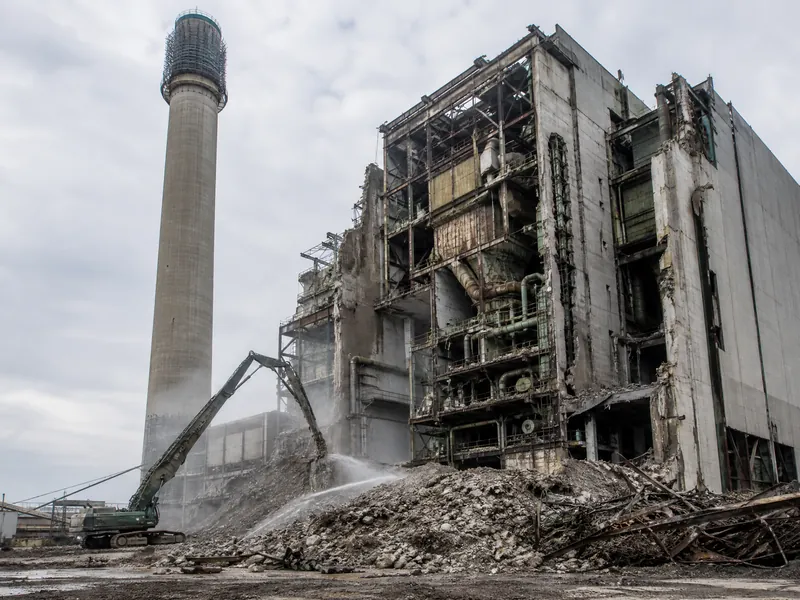
The safe removal of complex industrial structures requires more than just heavy machinery; it demands precise, engineered wrecking methodologies. Industrial Demolition USA employs advanced deconstruction techniques tailored to the specific architectural and structural characteristics of each Rutland facility. For tall structures such as silos or multi-story processing plants, we utilize high-reach excavators equipped with rotating shears to carefully dismantle the building from the top down. This controlled approach eliminates the risks associated with traditional wrecking balls and allows for the precise separation of recyclable materials.
When dealing with intricate internal structures or active adjacent facilities, we implement selective dismantling procedures. Our crews use specialized torch cutting and mechanical separation techniques to remove specific sections of a plant while leaving the remaining infrastructure intact. This level of precision is critical during partial plant upgrades or when decommissioning specific manufacturing lines. Every teardown is guided by a detailed engineering plan that dictates the sequence of cuts and the placement of equipment, ensuring maximum safety and efficiency.
Permits and notification
Maximizing Project Value Through Asset Recovery
A key advantage of partnering with Industrial Demolition USA is our ability to offset project expenses through strategic asset recovery. During the demolition of Rutland manufacturing plants and distribution centers, we recover substantial quantities of valuable scrap metal. Our crews are trained to identify and segregate ferrous and non-ferrous materials, including structural I-beams, copper piping, and heavy industrial machinery components. The salvage value of these recovered materials is applied as a direct credit to the client, significantly reducing the net cost of the decommissioning project.
Our material processing operations are conducted concurrently with the structural dismantling. Excavators equipped with specialized attachments shear and size the scrap metal directly on the job site, preparing it for efficient transport to regional recycling facilities. This integrated approach to salvage not only provides a financial benefit but also supports environmental sustainability by diverting thousands of tons of material away from local landfills. We provide transparent documentation of all recovered materials and the corresponding salvage credits applied to the project.
Salvage and recovery
Utility Isolation and Safe Plant Retirement
Proper utility isolation is a critical prerequisite for any safe industrial demolition project. Before our heavy equipment mobilizes for the teardown, our specialized teams execute comprehensive de-energization and utility capping protocols. In Rutland facilities, this involves safely disconnecting high-voltage electrical feeds, isolating high-pressure steam lines, and purging chemical or gas piping systems. We work closely with local utility providers and facility engineers to verify that all energy sources have been completely neutralized, creating a safe environment for the subsequent wrecking operations.
Once the utilities are secured and the above-ground structures are dismantled, we focus on the final site clearing and grading. We remove subterranean infrastructure, including concrete footings, utility vaults, and heavy equipment foundations. Trenches and voids are properly backfilled and compacted to prevent future settlement. The site is then graded to the client's specifications, ensuring proper drainage and leaving a clean, stabilized footprint that is fully prepared for its next phase of industrial or commercial development.
Capabilities
Abatement, remediation and recovery
Common questions
Questions owners and engineers ask
What is the process for handling asbestos during a plant teardown?
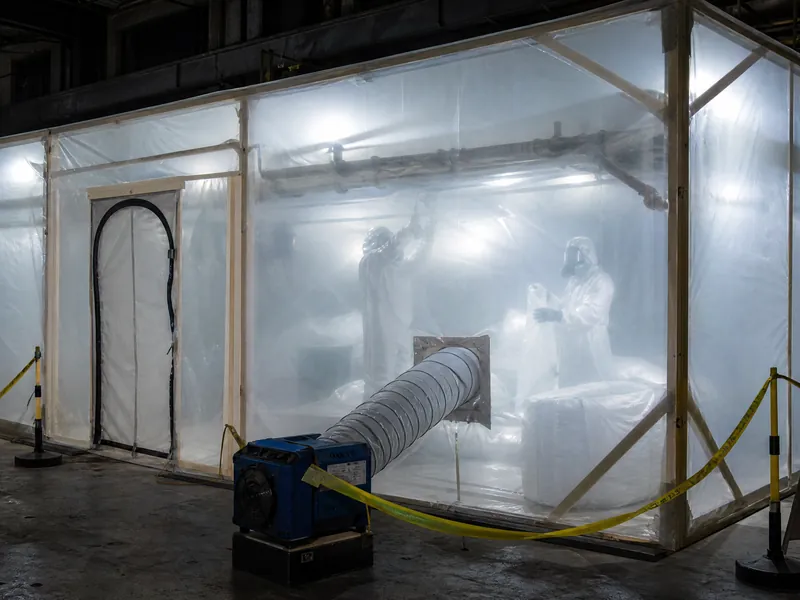
Prior to structural demolition, our certified abatement teams safely remove all asbestos-containing materials. We establish negative pressure containments and utilize specialized filtration systems to prevent any release of fibers. All hazardous materials are packaged and disposed of at approved facilities in strict accordance with Vermont DEC and EPA regulations.
How do you determine the salvage credit for our facility?
We conduct a thorough pre-demolition assessment to estimate the volume and type of recoverable metals, such as structural steel and copper. The current market value of these materials is calculated, and the resulting salvage value is applied as a credit that directly offsets the total cost of the wrecking project.
Are you equipped to demolish heavy concrete aggregate facilities?
Yes, we have extensive experience dismantling heavy concrete structures typical of aggregate and cement operations. We deploy massive excavators with hydraulic hammers and pulverizers to break down thick foundations and silos. We also offer on-site concrete crushing to process the debris into reusable backfill material.
How long does a typical industrial decommissioning project take?
The timeline varies based on the facility's size, the extent of required environmental remediation, and the complexity of the structural dismantling. After our initial site evaluation, we provide a detailed project schedule that outlines the duration of abatement, utility isolation, heavy wrecking, and final site clearing phases.
Who is responsible for disconnecting the utilities before demolition?
Industrial Demolition USA manages the entire utility isolation process. We coordinate with local Rutland utility providers and your facility engineers to safely de-energize electrical systems, cap water and sewer lines, and purge any process piping, ensuring the site is completely safe before deconstruction begins.
Ready to price the teardown?
Industrial Demolition USA provides the heavy equipment, engineering expertise, and regulatory knowledge required to execute complex plant retirements in Rutland. Reach out to our project management team to discuss your specific deconstruction requirements. Call 954-740-1983 or email electricalequipmentbuyers@gmail.com to arrange a detailed site consultation.