
Overview
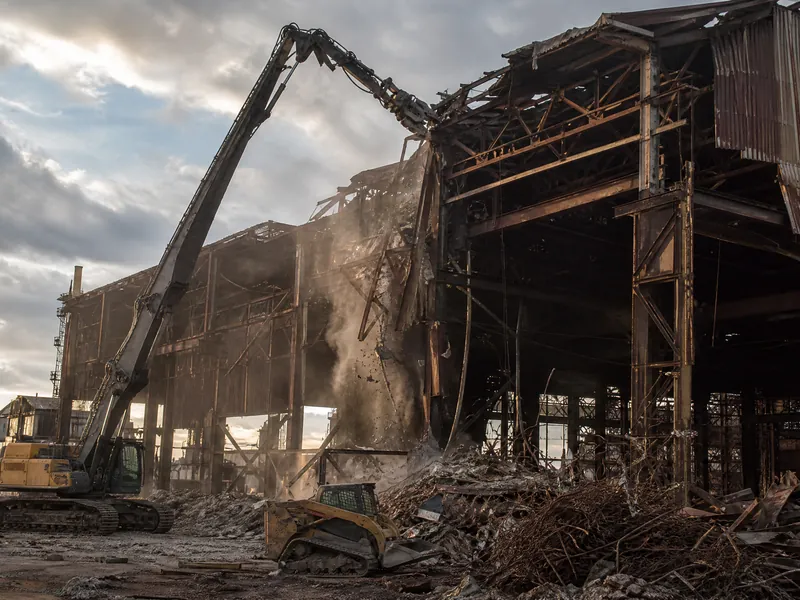
The industrial density along the Arthur Kill demands a contractor capable of executing precise deconstruction in highly constrained environments. Our experienced crews manage every aspect of the project, from initial hazardous material abatement to final site clearing and grading. We focus on executing the work safely while maximizing asset recovery, ensuring that the salvage value of recovered materials offsets the client's overall project cost.
The work
Dismantling Refineries and Chemical Plants
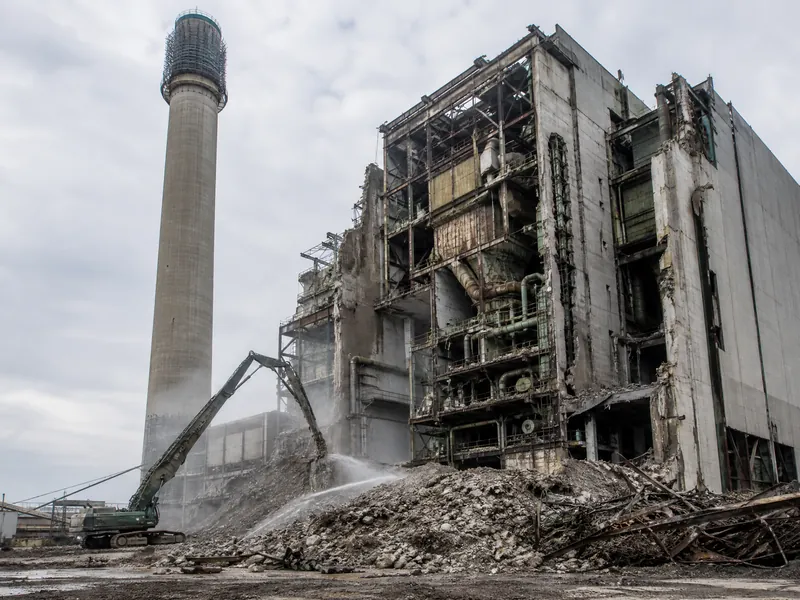
Elizabeth is home to a significant concentration of petrochemical and chemical processing facilities, many of which require specialized decommissioning as they reach the end of their operational lifecycles. Demolishing these structures involves navigating complex networks of process piping, storage tanks, and heavy machinery. Our crews utilize advanced torch cutting techniques and heavy-duty shears to systematically dismantle these facilities, ensuring that all hazardous energy sources are fully isolated prior to deconstruction.
The proximity of these plants to active waterways and neighboring industrial operations requires meticulous planning and execution. We implement stringent environmental controls to prevent runoff and contain dust during the wrecking process. By carefully sequencing the teardown, we mitigate risks associated with legacy contaminants and ensure that the dismantling proceeds without impacting adjacent properties or the sensitive coastal environment along the Arthur Kill.
Method and sequence
Port Warehousing and Structural Wrecking
The extensive port infrastructure in Elizabeth includes massive warehousing and logistics facilities that occasionally require complete removal to make way for modern development. Industrial Demolition USA deploys high-reach excavators and specialized attachments to bring down these large-scale steel and concrete structures safely. Our structural wrecking methods are designed to handle the heavy-duty construction typical of port facilities, including reinforced concrete floors and deep foundation systems.
During the demolition of these warehouses, we prioritize the segregation of materials to maximize salvage credit. Steel beams, roofing materials, and copper wiring are carefully extracted and processed for scrap metal recovery. This methodical approach not only reduces the volume of waste sent to landfills but also provides a direct financial benefit to the client by offsetting the net cost of the demolition services.
Hazards and controls
Asbestos Abatement and Environmental Compliance
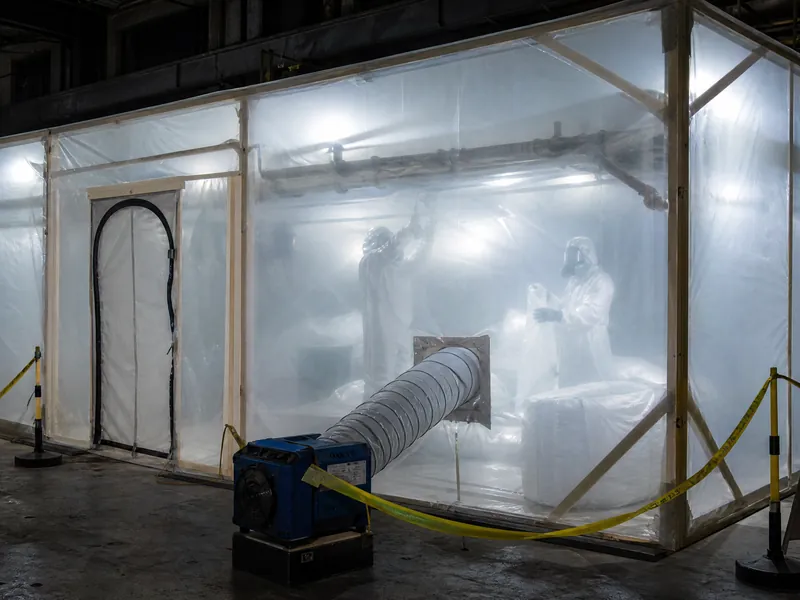
Before any structural teardown can commence, older industrial facilities in Elizabeth must undergo rigorous environmental remediation. Our certified abatement teams handle the safe removal of asbestos-containing materials, lead-based paints, and other hazardous substances commonly found in legacy industrial sites. We strictly adhere to all NJDEP regulations and federal NESHAP requirements, ensuring that all hazardous materials are properly contained, manifested, and disposed of at approved facilities.
Integrating abatement into our comprehensive demolition services allows us to maintain tight control over the project schedule. By managing both the remediation and the subsequent deconstruction, we eliminate the delays often associated with coordinating multiple contractors. Our clients can be confident that their site will be fully compliant and safely prepared for the heavy equipment operations that follow the abatement phase.
Permits and notification
Concrete Processing and Site Preparation
The demolition of heavy industrial facilities generates substantial volumes of concrete rubble from foundations, retaining walls, and structural supports. To manage this material efficiently, Industrial Demolition USA utilizes mobile concrete crushers directly on the job site in Elizabeth. Processing the concrete locally eliminates the need for thousands of truck trips to off-site disposal facilities, significantly reducing the logistical impact on the surrounding community and lowering transportation costs.
The crushed concrete is often repurposed as a stable base material for future construction or used to grade the site to the client's specifications. Our site clearing operations ensure that all subsurface obstructions are removed, leaving a clean, level property that is ready for immediate redevelopment. This comprehensive approach to site preparation is a critical component of our turnkey demolition services.
Salvage and recovery
Managing Logistics in a Dense Urban Hub
Operating in Elizabeth requires a deep understanding of the logistical challenges inherent in a dense urban and industrial hub. The heavy traffic along the Route 1 corridor and the constant activity around the port facilities demand precise coordination for equipment mobilization and material transport. We manage the complex logistics of moving oversized demolition equipment and hauling away scrap materials, ensuring that our operations do not disrupt the surrounding industrial activity.
Our regional coverage extends to sibling cities like Newark, Camden, and Trenton, allowing us to leverage a broad network of resources and disposal facilities. We secure all necessary permits for heavy hauling and coordinate with local authorities to establish safe traffic control measures around our job sites. This logistical expertise is essential for keeping complex decommissioning projects on schedule and within budget.
Capabilities
Abatement, remediation and recovery
Common questions
Questions owners and engineers ask
How does salvage credit impact the cost of a teardown in Elizabeth?
The salvage value of materials recovered during the dismantling process, such as structural steel and copper, is applied as a credit against the total cost of the project. We actively segregate and process these materials on-site to maximize their value, which directly reduces the net expense our clients pay for the demolition work.
What is the process for isolating utilities at a chemical plant?
Utility isolation is a critical safety measure before any deconstruction begins. We work with local utility providers and facility engineers to completely disconnect, drain, and cap all process piping, electrical feeds, and water lines. Our team implements strict lock-out/tag-out procedures to ensure the entire facility is de-energized and safe for our demolition crews to enter.
Do you handle the required environmental notifications for asbestos?
Yes, we manage all necessary regulatory notifications, including the federal NESHAP 10-day notice for asbestos abatement and any required filings with the NJDEP. Our comprehensive service ensures that all environmental compliance documentation is properly submitted and approved before we commence any remediation or wrecking activities on the site.
How do you control dust and debris during a large-scale implosion or teardown?
We implement robust dust control measures, including continuous water suppression systems and localized misting cannons, to minimize airborne particulates during the demolition process. We also establish secure perimeters and utilize debris netting where necessary to contain materials within the site boundaries, protecting neighboring properties and the surrounding environment.
What documentation is provided at the completion of the project?
At closeout, we provide a comprehensive documentation package that includes all waste manifests, recycling receipts, abatement clearance reports, and final grading surveys. This documentation serves as proof that the decommissioning and site clearing were executed in full compliance with all local, state, and federal regulations, protecting the client from future liability.
Ready to price the teardown?
Industrial Demolition USA is the contractor you can rely on for safe, efficient, and compliant industrial demolition services in Elizabeth. We have the heavy equipment and specialized knowledge to handle the most demanding teardowns and decommissioning projects. Call us at 954-740-1983 or email electricalequipmentbuyers@gmail.com to discuss your facility's requirements with our experts.