
Overview
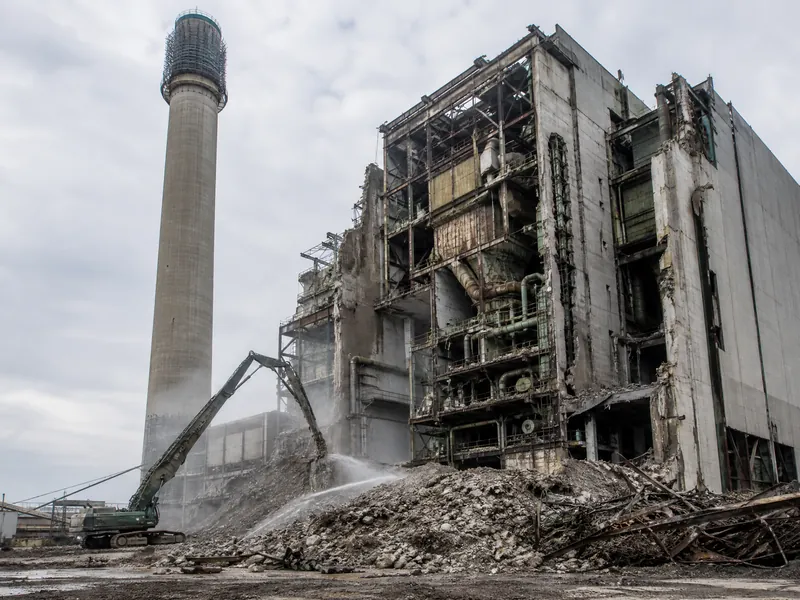
Our crews handle every phase of the wrecking process, from initial environmental remediation and utility isolation to the final concrete crushing and site grading. We operate as a primary contractor managing the entire scope of asset recovery, scrap metal processing, and structural removal. Plant owners rely on our heavy equipment fleet and experienced project managers to dismantle obsolete infrastructure safely, whether the site is a dense urban manufacturing block or a sprawling industrial complex.
The work
Executing Teardowns Along The Delaware River Industrial Corridor
The physical geography of the Delaware River basin dictates specific execution strategies for heavy demolition projects in this region. Facilities situated near the water often contend with high water tables, tidal influences, and the risk of seasonal flooding, which complicates subsurface removal and foundation extraction. Our operators are accustomed to managing these hydrological challenges when pulling deep concrete footings, extracting underground storage tanks, and removing heavy industrial slabs. We deploy specialized excavation equipment to handle saturated soils and ensure site stability.
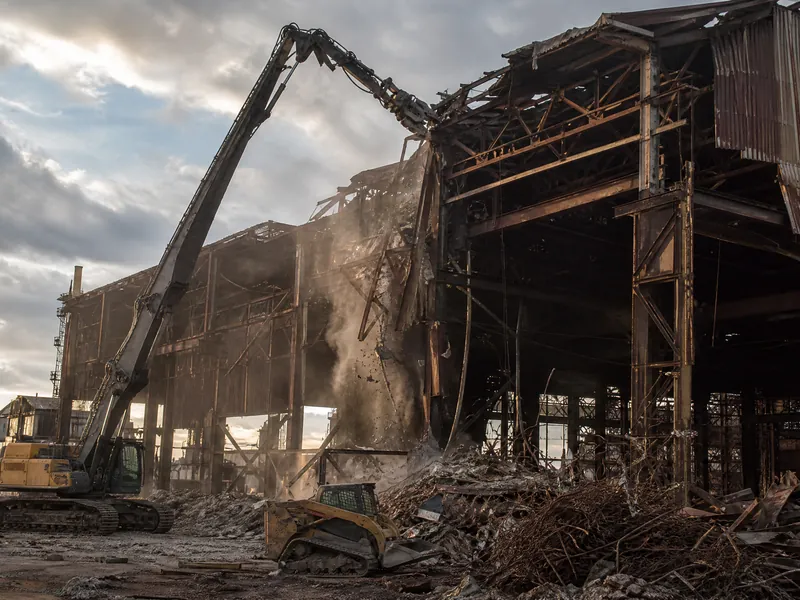
Beyond the immediate riverfront, the dense urban grid of the capital region presents significant access constraints for heavy machinery and material hauling. Moving high-reach excavators and mobile shears into tight manufacturing blocks requires precise logistical planning. We sequence the dismantling process to keep the active work zone contained, utilizing controlled drops and selective dismantling techniques to prevent debris from impacting adjacent active rail lines or neighboring commercial properties.
Method and sequence
Retiring Legacy Manufacturing And Chemical Processing Plants
The Route 1 corridor is heavily populated with legacy pharmaceutical plants and chemical processing facilities that require specialized decommissioning protocols. Tearing down these structures involves the systematic dismantling of complex piping networks, pressure vessels, cleanrooms, and specialized manufacturing lines. Our crews are trained to execute the selective interior demolition of these sensitive environments, carefully removing contaminated ductwork and process equipment before the main structural wrecking begins.
Environmental remediation is a critical component of chemical plant retirement. We coordinate the abatement of asbestos-containing materials and residual chemical contaminants in strict accordance with federal and state regulations. The removal of heavy industrial boilers, cooling towers, and exhaust stacks is executed with precision rigging and controlled cutting techniques. Once the hazardous materials are cleared, our high-reach excavators systematically dismantle the steel framing and concrete walls. The resulting scrap metal and concrete rubble are segregated on-site, maximizing the efficiency of asset recovery.
Hazards and controls
Managing NJDEP Notifications And Local Permitting Requirements
Regulatory compliance is the foundation of every successful industrial teardown in this region. Before any structural dismantling can commence, we must navigate the stringent requirements enforced by the New Jersey Department of Environmental Protection (NJDEP). This includes filing the mandatory federal NESHAP 10-working-day notification for asbestos abatement and demolition, which alerts regulators to the impending work and outlines our containment strategies. We handle this documentation process entirely, ensuring that all timelines are met and that the project remains in full compliance.
At the municipal level, securing the necessary city demolition permits involves coordinating with local building departments and utility providers. We manage the complex process of utility disconnect sign-offs, verifying that all electrical, gas, water, and sewer lines are properly capped and isolated before the heavy machinery arrives. This critical step prevents accidental utility strikes and ensures the safety of our operators and the surrounding community.
Permits and notification
Processing Structural Steel And Concrete For Asset Recovery
The recovery of valuable scrap metals and the processing of concrete rubble are integral components of our heavy demolition operations. When dismantling industrial facilities, we encounter massive quantities of structural steel, heavy I-beams, plate steel, and specialized alloys. Our mobile shears and torch-cutting crews process this material directly on the job site, sizing the steel to meet the specifications of regional scrap processors and foundries. The salvage value generated from this recovered metal is applied as a credit that directly offsets the client's overall net cost.
Concrete crushing is another major focus during the site clearing phase. Rather than hauling thousands of tons of concrete debris to local landfills, we deploy mobile crushing plants to process the material on-site. We pulverize foundations, retaining walls, and industrial slabs, separating the embedded rebar for scrap recovery and producing a clean, crushed aggregate. We leverage established relationships with scrap yards in Newark and Camden to ensure that structural steel and copper wiring are transported to the appropriate processing outlets.
Salvage and recovery
Retiring Power Generation Units And Heavy Utility Infrastructure
The decommissioning of retired power generation facilities, including legacy PSEG units, represents some of the most complex heavy demolition work we perform. These sites are characterized by massive structural components, including towering exhaust stacks, massive turbine halls, and extensive coal or ash handling infrastructure. Bringing down these structures requires specialized engineering plans, precise explosive felling techniques, and the deployment of our largest high-reach excavators to dismantle the heavy steel framing of the main boiler houses.
The removal of heavy electrical infrastructure is a critical phase of power plant retirement. We systematically dismantle massive step-up transformers, switchgear, and miles of heavy copper cabling. The extraction of transformer oil requires careful handling and specialized pumping equipment to prevent environmental contamination. Subsurface infrastructure at these utility sites often includes deep cooling water intake structures and heavy equipment foundations. We utilize heavy hydraulic breakers to extract these below-grade elements, ensuring that the site is completely cleared.
Logistics
Coordinating Regional Teardowns Across The Broader Metropolitan Area
While our operations are heavily focused on the capital region, our heavy demolition capabilities extend throughout the broader metropolitan area and neighboring industrial hubs. We frequently deploy crews to manage complex teardowns in nearby cities like Newark, Camden, and Elizabeth, handling everything from port warehousing demolition to the dismantling of aging manufacturing plants. This regional coverage allows us to mobilize heavy equipment and specialized personnel efficiently.
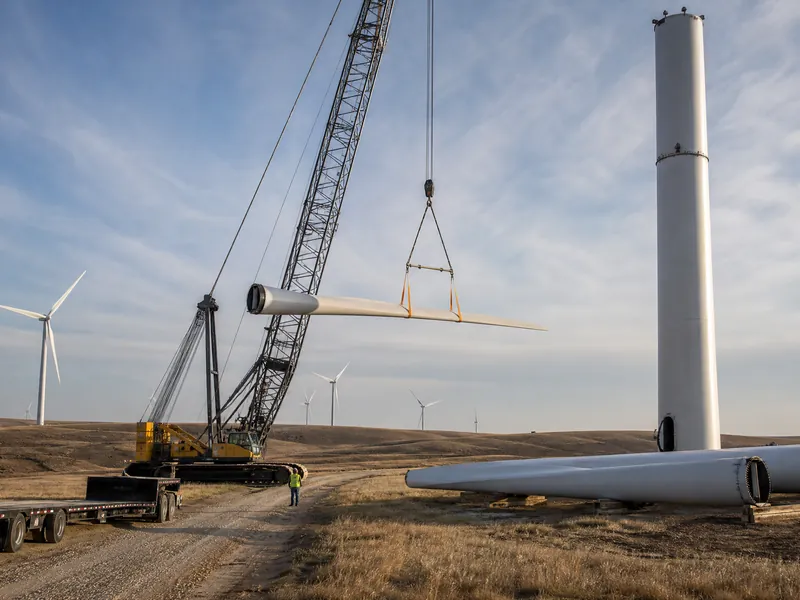
The logistical realities of moving heavy machinery across the region require careful route planning and coordination with state transportation authorities. We manage the permitting and escort requirements for transporting oversized loads, including our massive high-reach excavators and mobile concrete crushers, ensuring that our equipment arrives on-site safely. We apply the same rigorous safety standards, environmental compliance protocols, and efficient material processing techniques to every project, whether it is a single-building teardown or the complete leveling of a sprawling industrial complex.
Capabilities
Abatement, remediation and recovery
Common questions
Questions owners and engineers ask
What is the process for handling subsurface foundations near the river?
Extracting deep concrete footings in areas with high water tables requires specialized excavation techniques and continuous dewatering. We deploy heavy hydraulic breakers to fracture the concrete while utilizing industrial pumps to manage groundwater infiltration. The fractured rubble is then removed, and the resulting voids are stabilized with engineered backfill to prevent soil collapse and ensure site stability.
How do you manage the removal of heavy manufacturing equipment?
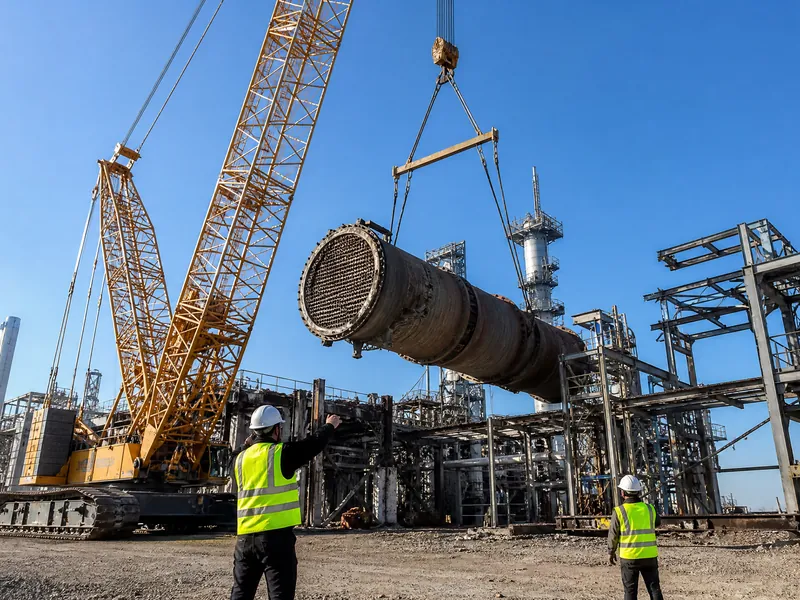
Dismantling massive industrial machinery involves precise rigging, torch cutting, and the use of heavy-lift cranes. Our crews systematically disassemble the equipment into manageable sections, carefully draining any residual fluids before the cutting begins. The processed metal is then loaded onto specialized flatbed trailers for transport to regional scrap processing facilities, ensuring the work area remains clear.
Are you equipped to handle the demolition of tall exhaust stacks?
Bringing down towering industrial chimneys requires rigorous engineering analysis and highly controlled execution methods. Depending on the site constraints, we utilize either high-reach excavators equipped with specialized attachments for top-down dismantling or engineered explosive felling to bring the stack down safely within a designated drop zone. This ensures minimal disruption to adjacent active facility operations.
What steps are taken to secure active utility lines before wrecking?
Securing active high-voltage electrical feeds, high-pressure gas lines, and industrial water mains is a critical part of our pre-demolition workflow. We work directly with local utility providers and municipal inspectors to obtain the necessary disconnect sign-offs, physically verifying that all services are capped before any heavy wrecking machinery is mobilized. This prevents accidental utility strikes during the teardown.
Where does the structural steel go after the building is dismantled?
Processed metal from our teardowns is transported directly to established scrap yards and foundries throughout the region, including major facilities in Newark and Camden. We size the heavy I-beams and plate steel on-site using mobile shears, optimizing the material for efficient transport. The salvage value recovered from this scrap is applied as a credit to offset the overall net cost.
Ready to price the teardown?
Industrial Demolition USA provides the heavy equipment and experienced personnel required to execute complex facility teardowns safely and efficiently. When you need a reliable contractor to manage your plant decommissioning or structural dismantling project, contact us. Call 954-740-1983 or email electricalequipmentbuyers@gmail.com to discuss your site requirements.